The papers lay in a neat stack on the coffee table, and Vera was reading the same line for the third time.
Certificate of inheritance.
A two-room apartment on the second floor, with windows overlooking the courtyard where Aunt Rita had once planted three lilac bushes.
“I still can’t wrap my head around it,” Vera said. “Dad is alive, Grandpa is eighty and still runs up the stairs faster than I do. And somehow I’m the one who suddenly gets an inheritance.”
“It didn’t just fall into your lap,” Artyom replied as he arranged boxes on a shelf. “Rita chose you. It wasn’t a lottery. It was a decision made by a grown woman who knew exactly what she was doing.”
“She could have left it to my brother. He has twins, no mortgage, and they’re renting.”
“She could have. But she didn’t. That means she had her reasons.”
 
Vera placed her palm over the documents as though trying to warm them.
Aunt Rita had lived through one enormous tragedy, followed by forty years of silence. A little boy, a pot of boiling water, a hospital—and then nothing but the lilacs blooming beneath her windows year after year.
“She once told me, ‘Vera, you’re the only one who ever came to see me without needing anything.’ I thought she was just saying it.”
“Sometimes words are a kind of will too,” Artyom said. “Just without an official stamp.”
Her phone vibrated.
“MOM” appeared on the screen, and Vera exhaled as though she were about to jump into freezing water.
“Listen, sweetheart, think about this properly,” her mother began without even saying hello. “Kirill has children. He needs that apartment more than you do.”
“Mom, I only accepted the inheritance a week ago. Could you at least let the lilacs bloom before everyone starts dividing it up?”
“You’ve always been a little selfish.”
“And you’ve always been completely impartial,” Vera replied. “Especially when it comes to your two children.”
The conversation ended quickly.
Vera put the phone down and stared at her hands for a long moment.
“I told her I’d think about it,” she admitted.
“Bad choice of words,” Artyom said. “To people like that, ‘I’ll think about it’ sounds like ‘I’ve already agreed, now you just need to pressure me until I say yes.’”
Two days later, someone rang the doorbell.
Three sharp rings in a row—the kind of ringing used by people who were certain the door would be opened for them.
Kirill stood on the doorstep, jacket unzipped, keys to someone else’s car dangling from his hand. Behind him stood Alisa with little Timosha in her arms, bundled up as though it were forty degrees below zero outside.
“Come in,” Vera said. “Give me Timosha, I’ll put a blanket down for him.”
 
“Don’t make a whole ceremony out of this,” Kirill said, taking off his shoes. “This conversation will take five minutes.”
They sat in the living room.
Alisa perched on the edge of the sofa with the baby on her lap. Kirill dropped into an armchair, spreading himself out as though he owned the place. Artyom sat quietly against the wall and said nothing.
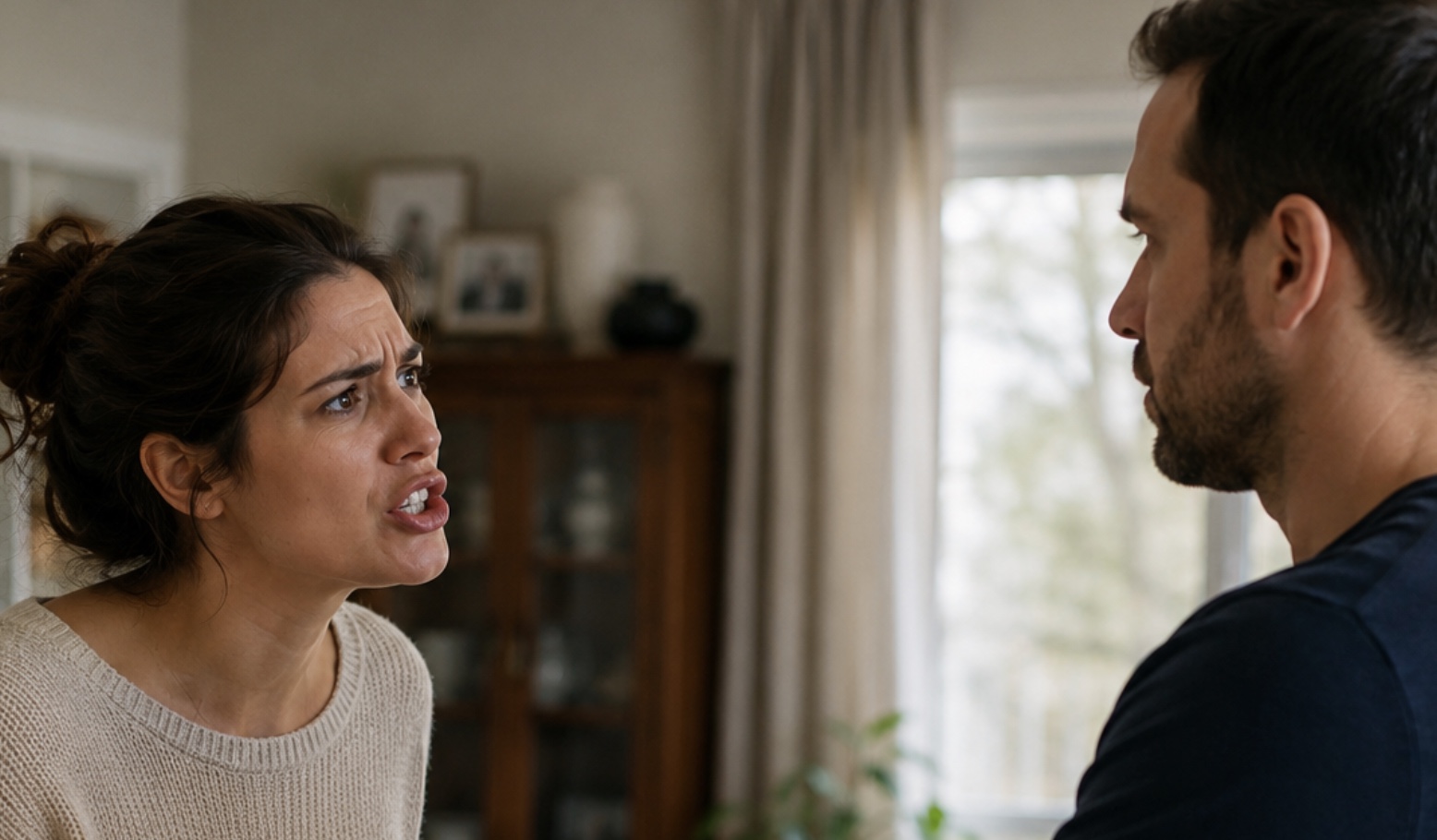
“Here’s how it’s going to be,” Kirill began, slapping the armrest with his palm. “Give me the keys and clear out the apartment by Friday. We’re moving in.”
Vera slowly lifted her head.
“What do you mean, clear out the apartment? Aunt Rita left it to me!”
“She left it to you on paper. Morally, it belongs to us. I have two children, remember? Two!”
“I remember. I bring them birthday presents every year. What does that have to do with Aunt Rita’s apartment?”
“It has everything to do with it! You live comfortably while we’re being dragged from one rental to another!” Kirill raised his voice. “Are you even human, or are you some kind of calculator?”
“I’m human,” Vera answered calmly. “Just a human being with legal documents.”
Kirill stood up, paced across the room, then spun around sharply.
“Do you even understand how this looks to the rest of the family? Everyone will say the sister threw her brother and his children out onto the street.”
“The family will say my brother came into my home, gave me an ultimatum, and ordered me to leave by Friday,” Vera replied. “That’s quite a story. I’d probably repeat it too.”
“Stop being sarcastic! Just give us the keys. We’ll live there for a while, and later you can transfer the apartment into my name. Like normal people.”
“‘We’ll live there, and then you’ll sign it over to me’ doesn’t sound normal. It sounds like a prepared script.”
Alisa adjusted her son’s hat.
“Vera, we really are struggling,” she said softly, but loudly enough for everyone to hear. “Rent, the stroller, formula… Every month feels like the last one.”
Kirill sat back down and changed his tone.
He talked about daycare, the cramped rental, and the landlords who were threatening to raise the rent. He spoke for a long time, carefully, with pauses in all the right places.
Artyom listened with his fingers clasped together.
Finally, he spoke.
“Kirill, can I ask one question? Just one. Then I’ll go back to being quiet.”
“What?”
 
“Alisa’s parents have a three-bedroom apartment. Why don’t you live with them?”
Kirill flinched as though someone had opened a window in winter.
“No one asked you. Sit there and keep quiet. You’re a guest.”
“I’m not a guest. I’m registered here. But my question still stands. There’s a three-bedroom apartment, there are children, and yet you’re supposedly homeless. Where’s the logic?”
“Stay out of our family business!”
“I already got dragged into it,” Artyom replied. “You came into mine.”
Alisa lowered her eyes.
Vera felt something change in the room. The air seemed heavier. The performance was ending.
“Second question,” Artyom continued. “The country house. Alisa inherited it about three years ago. You told us about it yourself over dinner. You were proud of it. Where is it?”
“We sold it,” Kirill muttered.
“Great. Where’s the money?”
“None of your business!”
 
“It became my business the moment you came here to count my wife’s money,” Artyom said, leaning slightly forward. “If you want to count someone else’s assets, you should be prepared to explain your own.”
“Who the hell are you to interrogate me?”
“Someone who knows basic arithmetic. And there was another five hundred thousand your in-laws gave you when Timosha was born. I remember that too. It was mentioned right in front of me.”
Kirill jumped to his feet, his face hardening.
“We lived! We ate! We bought clothes! We bought a car! What do you want, a financial report?”
“A car,” Artyom said with a nod. “The country house plus five hundred thousand—that’s at least half the price of a modest apartment. You chose wheels instead. Fine. Your choice. But then don’t come here claiming life forced you into a corner. The dealership did.”
“You’re twisting everything!” Kirill shouted. “This isn’t about the country house! It’s about Aunt Rita’s apartment!”
“No,” Vera said as she stood up. “It is about the country house. Because a principle has to work both ways, little brother. Otherwise it isn’t a principle. It’s convenience.”
“What principle?”
“A simple one. According to you, inherited property belongs to the whole family and should be divided according to who needs it most. Right?”
“Right!”
“Wonderful. Alisa has a brother. As far as I remember, he didn’t inherit anything. You sold the country house and spent the money. So Alisa should give him half. According to your own principle.”
Alisa’s head snapped up.
“That country house belonged to my grandmother! She left it specifically to me!”
 
Vera spread her hands.
“There it is. Do you hear yourself? When it’s yours, it was left personally to you. When it’s mine, suddenly it belongs to everyone.”
“Don’t compare the two!” Alisa snapped. “That house was practically falling apart. This is a city apartment!”
“So it isn’t about fairness after all. It’s about square footage. Thank you. Now everything is clear.”
Kirill stepped toward his sister, and Artyom stood too.
Not aggressively. Just enough to place himself beside Vera.
“Sit down,” he said evenly. “We’re still having a normal conversation. Don’t turn it into a show.”
“I’ll deal with my own family!”
“With your own family, do whatever you want. But she’s my wife.”
Vera looked at all of them.
Her brother’s lips had gone pale. Alisa held her child tightly. Artyom stood right beside her.
“You’re not getting the keys,” Vera said. “I’m not giving away Aunt Rita’s apartment, and I’m not dividing it. End of discussion.”
“You…” Kirill seemed to choke on the words. “Are you serious?”
“Completely. I’ve been torturing myself over this for a week. Honestly, I was thinking of selling it and giving you half the money. Artyom was actually the first person to suggest it.”
 
“So what stopped you?”
“You did. In forty minutes, you showed me exactly what your gratitude would be worth.”
Kirill gave a short, bitter laugh and pointed at Artyom.
“Now I understand! He’s poisoned your mind! He wants that apartment for himself! He’s an outsider in this family!”
“It’s a nice apartment. I won’t argue with that,” Artyom said with a shrug. “But Vera and I spent seven years renting. We survived. We can survive an eighth.”
“Then why are you getting involved?”
“Because it’s her inheritance. Her aunt. Her memories. Her right. Her money. And I’m going to defend that. The reason is simple: I’m her husband.”
“You talk pretty.”
“I do my best. At least I don’t show up demanding keys to someone else’s apartment while using a baby as my main argument.”
Kirill stormed toward the coat rack and grabbed his jacket.
“Choke on your damn apartment! Some family you are! When you’re dying, don’t expect anyone to bring you a glass of water!”
“Kirill,” Alisa said quietly.
Then, almost under her breath, looking at Artyom, she added:
“I wish I had a husband like that…”
Kirill heard her.
He turned so sharply that the coat rack swayed.
“What did you just say? Say it again!”
“I didn’t say anything…”
 
“Stay here!” he shouted, then slammed the door behind him.
The apartment became completely silent.
Timosha stirred.
Alisa hurriedly tried to pull his snowsuit back on, her hands fumbling with the sleeves.
“He’ll come back,” she said, though it wasn’t clear who she was speaking to. “He always comes back.”
“Do you want me to call you a taxi?” Vera asked.
“No. I’ll manage.”
Alisa left without looking at anyone.
Her footsteps echoed down the staircase for a long time.
Vera leaned against the door and locked it.
Two turns of the key.
Slowly.
“I would have given it to him,” she said. “Honestly. Another ten minutes, and I probably would have gone to get the keys.”
“I know,” Artyom said, rubbing the back of his neck. “Listen… did I go too far? I basically dismantled him in front of his wife. It was harsh.”
“What was harsh was him coming into my home with a schedule and telling me to be gone by Friday.”
“Still. Leaves a bad taste.”
Vera walked over and hugged him, resting her forehead against his shoulder.
 
“You did today what I wouldn’t have been able to do myself. You’re my hero.”
“A very modest hero,” Artyom muttered. “No cape and no apartment.”
“We do have an apartment,” Vera said. “We’re going there on Saturday. There are three lilac bushes beneath the windows. Aunt Rita planted them.”
“We’ll go. But I get to choose which wall we paint first.”
“Deal. Although you’ll obviously pick whichever wall requires the least work.”
“An intelligent man conserves his strength,” Artyom agreed. “Especially after battle.”
Vera laughed for the first time that entire difficult day.
 
Somewhere upstairs, a door slammed. The elevator groaned into motion. Life continued in its usual way—without ultimatums, without deadlines, and without anyone ordering her to leave by Friday.
Vera returned to the living room, gathered the papers into a neat stack, and placed them inside a drawer.
She wasn’t hiding them.
She was simply putting them where they belonged, the way you put away something you know, without question, is yours.