“Give me your bank card. Starting Monday, everything goes through me. You don’t know how to manage money.”
Inna set the shopping bag on a stool and pulled out a box of laundry detergent.
Valery was sitting at the kitchen table. His phone lay in front of him, displaying the bank statement for June. He had a week off work, and he had spent the entire week studying where the household money was going.
“Seven thousand four hundred on Saturday. What was that?”
“Underwear, a saucepan, detergent.”
“How much was the saucepan?”
“Two thousand nine hundred.”
 
“Are you out of your mind? We already have three saucepans.”
“We have one with a handle and two without.”
“Then we’ll cook in the ones without handles. I’m at the factory from six in the morning, while you sit here collecting cookware.”
Inna put the detergent under the sink. She had noticed long ago that if she stayed quiet, he finished lecturing her sooner.
“What am I here, some stranger off the street?” Valery tapped a finger against the table. “I carry this household. Alone. And you sit there pressing your little buttons for four hours a day and throw money away.”
“I work eight hours.”
“You sit at home. Working from home isn’t real work.”
Inna worked in a small room containing a desk, two monitors, and a safe where she kept company seals. She provided outsourced accounting services for six businesses: an auto repair shop, two dental clinics, a wholesale distributor, a transport company, and a small construction firm. She had managed their accounts alone for eight years, and every April she regularly worked until three in the morning.
Valery knew his wife did “something with tax reports.” He had never known how much she earned. During the first few years, she hadn’t told him because he laughed at her work. Later, she stopped telling him simply because keeping quiet had become a habit.
She contributed money to the household in a way that made her income look modest: thirty-five thousand rubles a month went into their joint account, while everything else went into a savings deposit at another bank.
By the second year of their marriage, she had saved eight hundred thousand rubles.
By the sixth year, the account held two million seven hundred and eighty thousand.
When her mother finally found out, she asked over the phone:
“Inna, why did you keep this quiet? For six years?”
“So I’d have something of my own.”
“But sweetheart, that isn’t exactly fair.”
“Mom, what isn’t fair is having someone ration out money to you for laundry detergent.”
Two days later, Raisa Petrovna arrived.
She came carrying two bags, a bath mat, and her own jar of chicory drink because, as she liked to say, “Store-bought coffee is poison, and we’re simple people.”
“Raisa Petrovna, those towels haven’t dried completely.”
“They’ll finish drying on a chair. I need my own towels. I’m used to them.”
Green-glass clip-on earrings dangled from her ears. She wore them even with a housecoat. In six years, Inna had never once seen her mother-in-law without those earrings.
“Innochka, why are you carrying the bags yourself? Tell Lerik to do it.”
 
“Lerik is tired from work,” Valery called from the other room.
“Exactly,” Raisa Petrovna agreed. “A man brings home the money, and a woman wears out her feet around the house. That’s how it was with your father and me. We lived together for forty years.”
That evening, she told her sister on the phone that her daughter-in-law seemed listless, always looking down at the table.
The washing machine had been leaking since May. A repairman had examined it and said the bearing was gone and replacing the machine would be cheaper.
Inna chose an inexpensive model for thirty-one thousand rubles. Delivery was scheduled for Friday.
On Thursday, Valery canceled the order.
“I canceled it. This one can still wash clothes.”
“It leaks under the bathtub. The tiles are starting to come loose.”
“Put a basin underneath.”
“Valery, it costs thirty-one thousand.”
 
“I spent sixty-two thousand in June on the new sound system for the car. I saved for that for a year. I have the right. But apparently you just have to have a brand-new washing machine drum.”
He had installed a subwoofer in the trunk and drove his garage neighbor around so they could listen to it together.
They had bought the car a year earlier: seven hundred thousand down, a loan of one million six hundred and fifty thousand, and monthly payments of forty-one thousand three hundred rubles.
Inna put a basin under the leaking machine.
A week later, while Valery was on shift, she had the new washing machine delivered herself and told him she had bought it on a zero-interest installment plan.
He believed her.
A zero-interest payment plan fit neatly into his understanding of the world.
His wife earning two hundred and fourteen thousand rubles a month did not.
One Saturday, Valery was painting a stepladder on the balcony while talking to his mother on speakerphone. His hands were covered in paint, so his phone was lying on the windowsill.
Inna was folding laundry in the hallway.
“Mom, stay out of it. I’ll deal with it myself.”
 
“Lerik, but what if she refuses?”
“Refuses what? Where’s she going to go? I’m registered here. Seventy-one square meters, brick building, fourth floor. Half of it is mine. We bought it during the marriage. She can give me three point two million and live however she wants. I’ll buy myself a two-bedroom apartment and still have money left.”
“And you think she’ll agree?”
“What choice does she have? Without me, she probably couldn’t even find the way to a notary’s office.”
Inna listened until the conversation ended.
Then she walked into her office, sat down at the desk, and opened a folder containing scanned documents.
There was the sale agreement for her one-bedroom apartment on Tutaevskaya Street. She had bought it in 2014, three years before the marriage, and sold it in 2019 for two million three hundred and fifty thousand rubles.
Then there was a bank statement showing a transfer from her mother: two million six hundred thousand rubles.
The payment description read:
“Gift to daughter, Gurova I. S., for the purchase of residential property.”
Her mother had sold her house in Tutaevo that year and moved in with her sister.
Let the girl have a home of her own, she had said.
The apartment had cost four million eight hundred and fifty thousand rubles.
It was registered entirely in Inna’s name.
That year Valery had bought himself a garage in Pyatyorka and had been perfectly satisfied.
Inna closed the folder and said nothing.
For another two weeks, she said nothing.
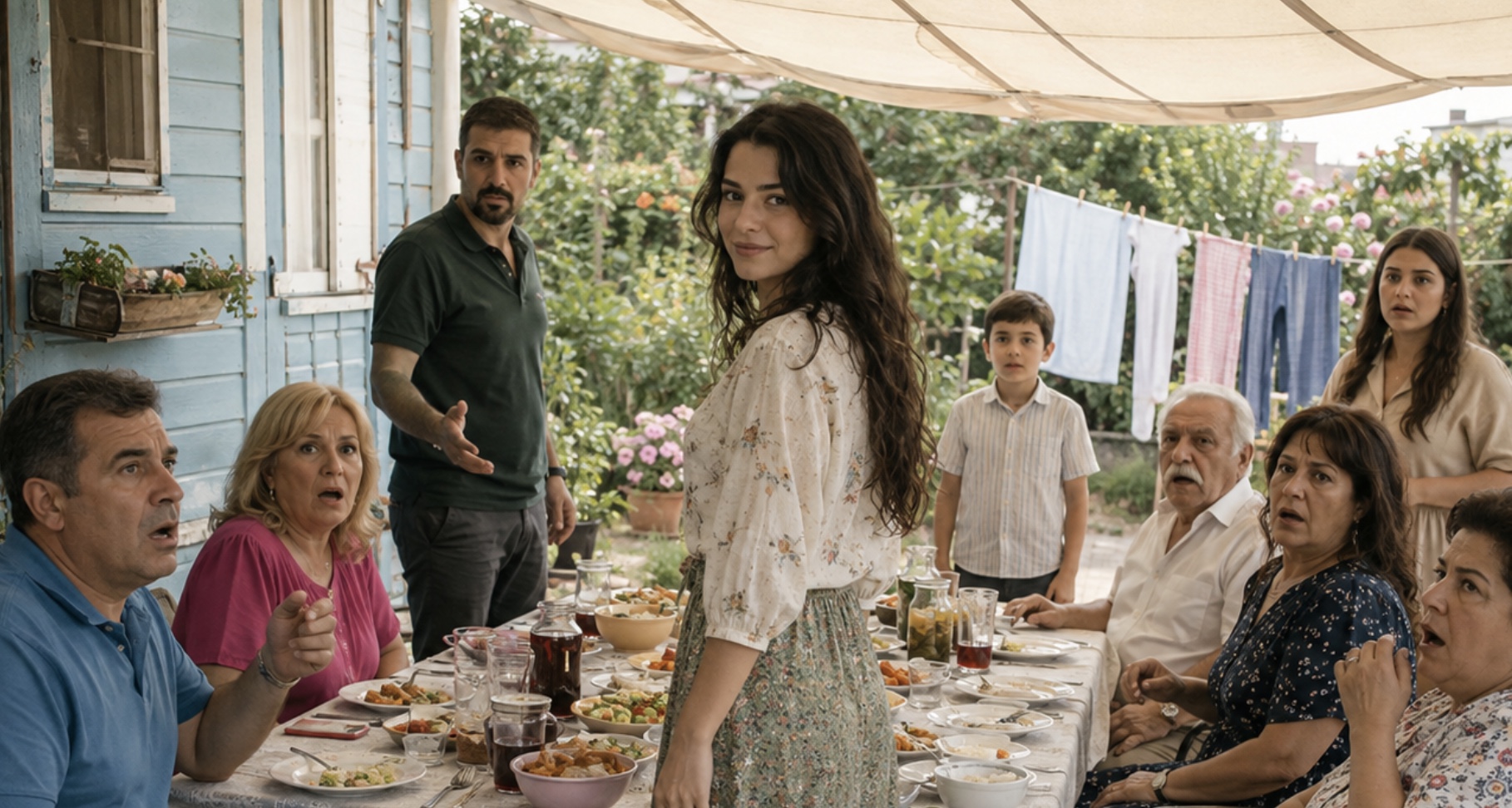
Raisa Petrovna’s sixtieth birthday was celebrated at the family dacha in Krasnye Tkachi.
 
There was a long table in the yard beneath a canopy and about fourteen guests: Raisa Petrovna’s sister, two neighbors, relatives by marriage, men from the garage cooperative, and Pyotr Arkadyevich, who lived two plots away and owned an auto repair shop on Magistralnaya Street.
Raisa Petrovna wore a fuchsia satin blouse and the same green clip-on earrings.
“We’re simple people,” she announced to the guests, “but I raised my son by myself, and just look at what a fine man he turned out to be.”
Valery stood up to make the third toast.
By then, he was already loud.
“I’ll tell you something. A man is supposed to carry the burden. And I do. The house is on me, the car is on me, my mother is on me. Even everything she’s wearing”—he gestured toward Inna with his shot glass—“was bought with my money. Right down to her shampoo. Let her say otherwise.”
Someone laughed.
One of the men slapped him on the back.
Inna pushed her glass of fruit drink aside.
“Don’t, Valera.”
“What do you mean, don’t? You don’t want the truth? She earns thirty thousand with all her little keyboard buttons, if that.”
Pyotr Arkadyevich, who had been eating silently for the past half hour, looked up.
“Wait. What thirty thousand?”
“Well, how much else would it be?”
“Inna Sergeyevna handles my service center alone for one hundred and twenty thousand a month. And that’s cheap. She hasn’t raised my rate in two years. And she has five other clients. I personally introduced Slava from the dental clinic to her.”
The entire table fell silent.
The woman sitting to Inna’s right stopped chewing.
 
“One hundred and twenty?” Raisa Petrovna repeated. “For what?”
“For the whole accounting package across my businesses,” Pyotr Arkadyevich said, reaching for the bread. “I had an inspection last week, and even the tax officer told me, ‘You have an excellent accountant.’”
Valery remained standing with the shot glass in his hand.
His mouth opened.
Then closed again without a sound.
He sat down and tried to put the glass beside his plate, missed the edge, and it tipped onto its side.
The moment they got home, he started.
“So you’ve been making a fool out of me for six years.”
“You never asked.”
“I never asked? You did this on purpose! You sat there laughing behind my back while I broke myself at the factory! Where’s the money, Inna?”
“In savings.”
“How much?”
“Two million seven hundred and eighty thousand.”
He dropped onto a stool.
“You hid that from me. From your husband. What do you call that?”
“A savings account.”
“I call it betrayal! You humiliated me in front of my mother! In front of everyone! You kept quiet deliberately so you could pull this stunt one day!”
“Valera, a week ago your biggest concern was a saucepan that cost two thousand nine hundred.”
“Because that was my money! And now it turns out you’re practically a millionaire while I’m the idiot paying all the household bills!”
“You don’t pay the household bills.”
 
“What?”
“The utilities come out automatically from my card. Nine thousand two hundred. So does the car loan—forty-one thousand three hundred. The insurance, the vehicle tax, the garage—three thousand a month. And your mother’s medication, six thousand eight hundred. I order it and have it delivered.”
He said nothing.
“Want separate finances?” Inna asked. “Fine. Let’s separate them.”
“Fine! And then we’ll see how long you last!”
On Monday morning, she canceled the automatic payments.
All six of them.
Then she transferred one hundred and eighty-six thousand rubles to him with the note:
“For kitchen cabinets, 2020.”
It was the only expensive household item he had bought entirely himself, and he reminded her of it during almost every argument.
That was all she did that day.
She said nothing else.
Eleven days later, the bank notified him that his payment was overdue.
He stormed into her office holding his phone.
“You didn’t pay the loan!”
“It’s your loan. The car is yours.”
“We’re a family!”
“You said we were separating our finances.”
“I meant groceries! I didn’t mean you could deliberately ruin my credit history! My loan payment is overdue!”
“Forty-one thousand three hundred. Due by the twentieth. The banking app is already on your phone.”
He calculated everything aloud: loan payment, utilities, fuel, garage.
 
Out of his seventy-nine-thousand-ruble salary, he would have less than twenty thousand left.
He recalculated it on a piece of paper.
Then he went out onto the balcony.
When he came back, he sounded like a different person.
“Innus… come on. We both got carried away. Put the automatic payments back. I’ll repay you when I get my bonus.”
“No.”
“Then I’m filing for division of property. Half the apartment is mine. Seventy-one square meters. I’ve already asked around.”
“Keep asking.”
He went to see a lawyer on Wednesday.
Inna waited until Thursday, then placed three documents on the kitchen table.
The sale agreement for her premarital one-bedroom apartment: May 23, 2019, two million three hundred and fifty thousand rubles.
A bank statement showing her mother’s gift: two million six hundred thousand, specifically marked as money given to her daughter for purchasing property.
And the purchase agreement for the current apartment: four million eight hundred and fifty thousand, dated June 6, 2019.
“Add it up yourself.”
He did.
The total came to four million nine hundred and fifty thousand.
“There was one hundred thousand left over,” she said. “It went toward the kitchen backsplash and the hallway. Paid from my card. The receipts are in the file.”
 
“But we bought the apartment while we were married!”
“Yes. During the marriage. With my personal property and money gifted specifically to me. Article 36 of the Family Code: premarital assets and gifts are separate property. Property bought using those funds can also remain separate if the source of the money can be proven. Here’s the bank statement proving it.”
He was silent.
Then he said:
“I’m registered here.”
“You are. Registration doesn’t equal ownership. You can’t dispose of the apartment. And after divorce, the owner can apply through court to have a former family member removed from the registration.”
Inna opened an old conversation on her phone from 2019.
“Read this. May twenty-ninth. You wrote it.”
“In, register it however you want. I only care that nobody touches my garage. I don’t get involved in all that paperwork.”
“My lawyer told me the exact same thing,” Valery admitted quietly. “Almost word for word.”
It took him four days to pack.
He took the subwoofer, the bedroom television, the winter tires, and a box of tools.
Raisa Petrovna had left for the dacha even earlier, on the same evening as the argument about the loan.
Before leaving, she stopped in the hallway and said:
“Innochka, think about it. My son is a good man. He’s just proud. He simply didn’t know you were so well-off.”
“He never asked.”
“You could have told him yourself.”
On that point, her mother-in-law was right.
And Inna knew it.
For six years she had deposited thirty-five thousand into the joint account while listening to Valery tell guests that he supported the household by himself.
 
Keeping quiet had suited her.
She knew she would have an answer ready if the day ever came.
And eventually, that day did come.
Their divorce was finalized in September through the civil registry office.
They had no children.
A month later, he called her at ten o’clock at night.
“Listen… how do you iron shirts without creasing the collar?”
“You don’t.”
“And another thing. The pasta turned into one big lump. I rinsed it, but it still stuck together.”
“Valera, why are you calling me?”
“No reason. Mom was in the hospital for a week, I’ve been working shifts, the apartment is a mess. Maybe we overreacted.”
“We didn’t overreact. You stood in front of people and said everything in my home belonged to you, right down to my shampoo. There were witnesses.”
“I was drunk!”
“I know.”
She ended the call and blocked his number.
He called again in December from someone else’s phone.
Could she lend him one hundred thousand rubles for two months?
The loan was eating up most of his salary, he explained, and he was renting an apartment from his mother’s friend for twenty-eight thousand a month.
“No,” Inna said.
“This is exactly why men don’t want to get married anymore. Because of women like you.”
Inna discovered she was pregnant in August, when she was four weeks along.
By then, Valery was already living with his mother, and they were no longer speaking.
Her daughter was born at the end of March.
Because fewer than three hundred days had passed since the divorce, the registry office automatically listed Gurov Valery Nikolaevich as the father on the birth certificate.
Nobody asked Inna whether she wanted that.
 
She did not apply for child support.
She hired a housekeeper three times a week.
By the fifth month after the birth, she was working again with a laptop beside the crib.
Her client list grew to seven.
And she bought the same model of washing machine she had wanted all along.
Valery found out about the child two years later.
A neighbor from the dacha—the same woman who had been sitting to Inna’s right at Raisa Petrovna’s birthday table—saw Inna with a stroller outside the clinic in Suzdalka.
That same evening, purely out of curiosity, she phoned Raisa Petrovna.
Valery called from a new number.
Inna answered only because she didn’t recognize it.
“I was told you have a child. A little girl. She’s two.”
“Two years and three months.”
 
“Is she mine?”
“Legally, you’re listed as her father. It happened automatically. I didn’t file any statement requesting it.”
“So she is mine,” he said. “And you kept quiet for two years? Do you understand what you’ve done?”
“Yes.”
“I’m her father! I have rights! I haven’t contributed a single ruble because I didn’t even know! I would have helped!”
“In December, you were asking me to lend you one hundred thousand.”
“That’s different!” he shouted, then abruptly stopped.
When he spoke again, his voice was quieter—the same voice he had once used when calling her “Innus.”
“Inna… what’s her name, at least?”
“That information won’t change anything for you.”
“You don’t have the right to erase me from her life. My name is on the birth certificate.”
“It is. Go to court and request an official visitation arrangement. From that same day, you can start paying child support. A lawyer will explain everything. You already know the way to the office.”
She could hear him breathing into the phone.
“I’ll think about it.”
“Do that.”