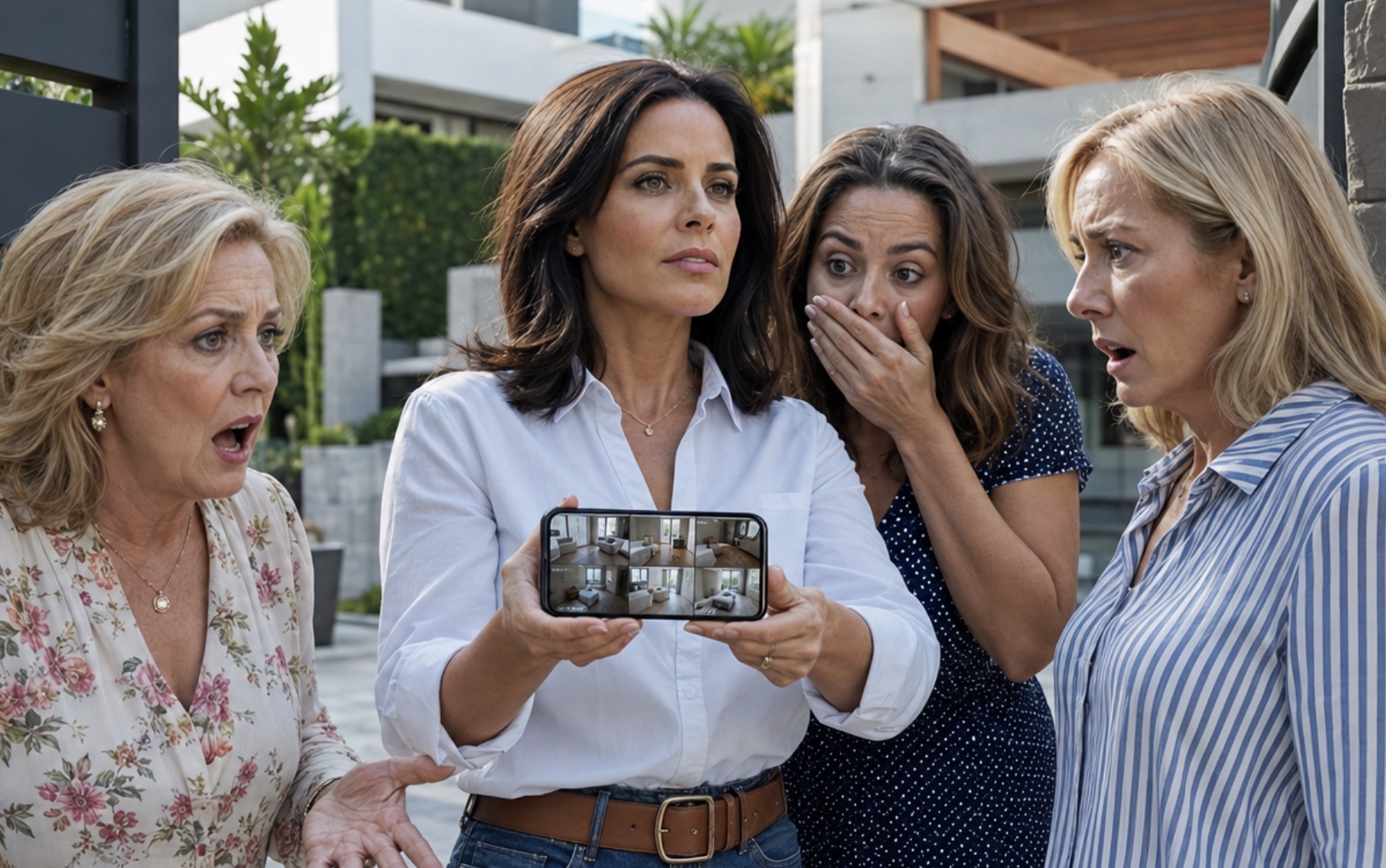
“I’m starving! I live on nothing but porridge!” Lidia Vasilyevna complained loudly to a neighbor outside the apartment building, clutching a bag of cherries. “I eat one spoonful of oatmeal in the morning, and that’s it. In the evening, I drink water to trick my stomach.”
Arina stopped beside the gate and slowly raised her eyebrows.
The sunlight was painfully bright, and the asphalt shimmered in the heat. Two women sitting on a bench near the entrance were fanning themselves with newspapers. Lidia Vasilyevna had her back turned to her daughter-in-law, but she was speaking loudly on purpose, making sure her complaint spread across the courtyard faster than the dry August dust.
Her neighbor, Raisa Semyonovna, clicked her tongue sympathetically.
“Oh, Lida, that’s terrible. You’ve just had surgery. You need proper food.”
“Who cares about me?” Lidia Vasilyevna pressed the bag against her chest. “My son is always at work, and his wife spends the entire day doing her own things. All she cares about is manicures and new dresses. Meanwhile, I sit alone in my room. Thank goodness there’s at least some grain in the house.”
Arina looked at the bag of cherries and then at Lidia Vasilyevna.
The cherries were expensive—large, dark, and glossy. Arina herself had bought them at the market that morning because her mother-in-law had complained the previous day that, after her operation, she wanted “something summery, soft, and sweet.”
“Lidia Vasilyevna,” Arina said calmly.
Her mother-in-law’s entire body jerked.
Raisa Semyonovna immediately straightened on the bench as though she had been caught searching through someone else’s wardrobe.
“Oh, Arinochka!” Lidia Vasilyevna said, producing a sudden smile. “I only came outside for some fresh air.”
“And to tell everyone that I’m keeping you alive on porridge?”
The neighbor lowered her eyes toward her knees.
For several seconds, Lidia Vasilyevna blinked rapidly. Then she lifted her chin with wounded dignity.
“I never said anything like that. I was simply sharing my feelings like a normal person. An elderly woman’s heart is troubled, and you immediately start attacking me.”
“Was your heart troubled before or after the cherries?” Arina asked.
Raisa Semyonovna covered her mouth with the newspaper.
Lidia Vasilyevna tightened her grip on the bag.
“You see?” she said, turning toward the neighbor. “She’s mocking me now. Just as I told you—there is no respect in that house.”
Arina did not argue.
She had understood long ago that debating Lidia Vasilyevna in front of an audience was like pouring oil onto a hot frying pan. Her mother-in-law would immediately transform herself into a victim. Her voice would become weak and exhausted, she would clutch her side, mention her operation, her loneliness, ungrateful young people, and the difficult fate of a woman who had “sacrificed her entire life for her family.”
“All right,” Arina said. “We’ll discuss it at home this evening.”
“What is there to discuss?” her mother-in-law asked cautiously.
“Dinner. It won’t be porridge.”
Arina opened the gate and walked into the yard.
The house belonged to her.
Not to her husband. Not to his mother. Not to “the whole family.”
Arina had purchased the modest two-story house in a settlement outside the city before she was married. At the time, she had worked as an administrator at a private clinic while also managing patient appointments for several doctors. Later, she became a coordinator at a medical center, married Vadim, and repeatedly heard her mother-in-law remark, with carefully disguised bitterness, that her son had “married very successfully.”
Arina had only smiled.
She did not feel the need to explain that Vadim had moved into her home not because she had been desperate to provide for someone, but because the arrangement had been convenient for both of them.
Lidia Vasilyevna had moved in at the beginning of May.
After undergoing surgery, she needed assistance: someone to monitor her medication, prepare suitable meals, help with dressings during the early stages, and ensure she followed a calm recovery routine.
At first, the arrangement seemed reasonable.
“My mother will stay with us for a couple of months while she recovers,” Vadim had said. “I don’t want her to be alone in her apartment.”
Arina had not objected.
She had immediately established several conditions: the arrangement was temporary, nobody would reorganize the rooms, nobody would take command of the household, and there would be no talk about how they now had a “shared home.”
Vadim had nodded so convincingly that Arina had almost believed him.
For the first two weeks, Lidia Vasilyevna behaved quietly.
She took her medication according to schedule, thanked Arina for making soup, requested peeled apples, watched television series in the guest bedroom, and occasionally called Arina “daughter.”
Arina never responded to that particular word, but she did not comment on it either.
Then her mother-in-law began to regain her strength.
First, she started lifting the lids from pots and sighing. Then she began asking why Arina’s chicken was not as tender as the chicken she used to cook. Soon she was requesting cottage cheese, fish, berries, expensive cheese, and biscuits “without all that palm oil you young people eat.”
Arina bought everything.
Not because she was afraid of her mother-in-law, but because a recovering patient genuinely needed nutritious food.
In June, Lidia Vasilyevna first told a neighbor that she was being “poorly fed.”
Arina learned about it when Raisa Semyonovna awkwardly asked whether the household needed help purchasing groceries.
At the time, Arina decided not to escalate the situation.
She showed the neighbor the refrigerator, where the shelves held containers of prepared meals, fruit, yogurt, cottage cheese, vegetables, cottage-cheese pancakes, steamed cutlets, and baked fish.
Raisa Semyonovna turned crimson and left, muttering that she must have misunderstood something.
But Lidia Vasilyevna did not stop.
In July, Vadim’s cousin Zhanna called Arina and cautiously asked:
“Please don’t take this the wrong way, but is it true that Aunt Lida barely gets anything to eat in your house? She told my mother that she feels ashamed to ask for another piece of food.”
Arina gave a short laugh—not because she found it funny, but because the accusation was so absurd.
“Zhanna, yesterday she asked me to buy apricots, soft cheese, turkey, and marshmallow sweets. I bought everything. Which part of that sounds like starvation to you?”
Zhanna became embarrassed, but the conversation left Arina with an unpleasant feeling.
The gossip itself did not bother her as much as the pattern behind it.
Her mother-in-law ate well, made requests, selected the best items, hid food in her bedroom—and then portrayed herself as a suffering victim behind Arina’s back.
She did it cleverly, too.
She rarely accused Arina directly. Instead, she spoke in hints, allowing listeners to create the ugliest possible version of events in their own minds.
Arina disliked being made into a character in someone else’s performance.
There were security cameras in the house.
They had been installed the previous summer after several burglaries occurred in the settlement. One camera covered the gate and front entrance, another monitored the yard, and a third faced the kitchen, where there was a door leading onto the terrace.
The kitchen camera was not intended to spy on family members. It had been placed there because burglars had once attempted to enter a neighboring home through a terrace door.
Everyone in the house knew about the cameras, including Lidia Vasilyevna.
Vadim himself had shown his mother the security application on his phone and joked that even their zucchini was now under protection.
For a long time, Arina never reviewed the recordings.
But after overhearing the conversation outside the building, she decided she had had enough.
She entered the house, placed her bag on the hallway cabinet, and walked into the kitchen.
An empty plate covered with crumbs from cottage-cheese casserole sat on the counter. A spoon lay beside it. A cup and saucer were in the sink.
That morning, Arina had left cottage-cheese casserole, chicken soup, sliced cucumbers, yogurt, and a container of berries for her mother-in-law.
Half of it was already gone.
She opened the refrigerator.
Only a small amount of soup remained. A corner piece of casserole was left. The berries had disappeared entirely.
Meanwhile, on the second shelf sat an untouched pot of buckwheat porridge—the very dish Lidia Vasilyevna constantly presented as the symbol of her suffering.
Arina closed the refrigerator and smiled without amusement.
When Vadim returned home that evening, she did not immediately start making accusations.
Arina rarely began a serious conversation without preparing herself.
Vadim was not unintelligent, but he was extremely convenient for his mother. Whenever he was expected to recognize manipulation, he preferred to believe that his mother was “simply elderly and nervous.”
Arina knew that if she confronted him without evidence, he would begin smoothing things over.
So she gathered facts first.
For three days, she reviewed the security footage.
She did not watch every minute obsessively. She only checked the kitchen recordings during the daytime and opened the clips triggered by motion.
The results were almost comical.
On Monday, Lidia Vasilyevna ate oatmeal at nine in the morning.
At ten forty, she removed cottage-cheese pancakes from the refrigerator, covered them generously with sour cream, and carried the plate into her bedroom.
At noon, she returned for peaches.
At two, she reheated soup, but before doing so, she cut a piece of chicken and ate it beside the stove.
At four, she took yogurt and biscuits.
At six, after hearing Vadim’s car outside, she sat at the table with a tiny portion of porridge and arranged an exhausted expression on her face.
On Tuesday, she placed half the baked fish inside a container, hid it in a shopping bag, and carried it into her room.
An hour later, she returned for the lemonade she had personally requested “in case guests came over.”
No guests came.
On Wednesday, Lidia Vasilyevna stood over the sink eating strawberries so that she would not have to wash a plate.
Then she spent several minutes selecting the softest piece of meat in the refrigerator.
That evening, she told Vadim weakly:
“I hardly managed to eat anything today. I have no appetite. It must be because I’m so weak.”
Arina saved several clips separately, carefully marking each one with the date and time.
She did not do it with delight or cruelty. She was methodical.
Then she completed another task.
She created a spreadsheet listing the grocery expenses from the previous two months. The receipts had been stored in the supermarket application and sent to her email.
Arina recorded only the items purchased specifically at Lidia Vasilyevna’s request: cottage cheese, fish, turkey, berries, fruit, cheese, fermented dairy drinks, sweets, diet crackers, almonds, fruit candy, and honey.
The final list was substantial.
She showed everything to Vadim on Thursday evening.
He was sitting on the terrace after a difficult day at work, drinking cold water and attempting to tell her about a problem with one of the company’s suppliers.
Arina placed a tablet in front of him.
“Watch this.”
“What is it?”
“Your mother starving.”
Vadim frowned.
“Arina, please, don’t start. She’s recovering from surgery. Things are difficult for her. Maybe she said something thoughtless to the neighbor.”
“Vadim, watch.”
On the screen, Lidia Vasilyevna confidently opened the refrigerator, removed a container of turkey meatballs, placed four on her plate, and glanced toward the doorway.
Then she took a fifth meatball and put it directly into her mouth without even reheating it.
Vadim fell silent.
Arina played the next clip.
His mother stood beside the table, opened a package of marshmallow sweets, counted the pieces, slipped two into the pocket of her robe, and ate another immediately.
“Is this some kind of edited video?” Vadim attempted to joke weakly.
“The director’s cut is coming next.”
Arina opened the third recording.
Lidia Vasilyevna was carrying a bag of cherries into her room—the same bag she later held while telling the neighbor that she survived on porridge and water.
Vadim rubbed both hands over his face.
His ears had turned red, a reliable sign that he was deeply ashamed and had no idea what to say.
“I’ll speak to her,” he said.
“No.”
“What do you mean, no?”
“Not yet. You’ll confront her, she’ll cry, claim that I’ve been spying on her, and you’ll start rushing between the two of us. A week later, she’ll be telling everyone that I installed cameras to persecute a sick elderly woman.”
“What are you suggesting?”
Arina closed the tablet.
“We’re hosting a family lunch on Sunday. You invited Zhanna, her mother, and your uncle. Your mother wanted everyone to come and see how she is ‘barely surviving.’ Let them see.”
Vadim straightened.
“Arina, that’s harsh.”
“No, Vadim. Eating my food for months, hiding sweets in her room, and telling people that I am starving her is harsh. Turning me into a monster in front of the neighbors and your relatives is harsh. Showing the truth to the same people who have already heard her lies is not cruelty. It’s sanitation.”
He wanted to object but could not find an argument.
Arina could practically see the conflict inside him: the lifelong instinct to defend his mother fighting against the undeniable evidence lying between them like a knife on a cutting board.
“Just don’t humiliate her,” he said.
“She will decide how far this goes. I’ll give her an opportunity to stop.”
“What opportunity?”
“You’ll see.”
The heat began early on Sunday.
The air was heavy and motionless. Even the lilac leaves beside the fence hung limply.
Arina woke early, opened the windows to air the house, and then closed them before the rooms became too warm.
She prepared the meal calmly: cold kefir soup, baked chicken, vegetables, potatoes, cucumber-and-herb salad, berry drink, and fresh fruit.
For Lidia Vasilyevna, she separately cooked soft meatballs, stewed zucchini, and a cottage-cheese dessert with berries.
Everything was appropriate for the diet recommended by her doctor.
Her mother-in-law emerged from the bedroom shortly before eleven.
She wore a pale robe, her hair was neatly arranged, and her expression suggested that she had spent the entire night fighting for her life.
“Oh, everything smells wonderful,” she said, looking into the kitchen. “The guests will eat well, of course. Will there be anything left for me?”
Arina dried her hands on a towel and looked at her.
“Lidia Vasilyevna, please do not tell everyone today that you are starving.”
Her mother-in-law immediately became cautious.
“And why shouldn’t I?”
“Because it isn’t true.”
“Oh, really? Now you’re trying to silence me?”
“No. I’m warning you.”
“You’re threatening a sick woman?”
Arina moved closer.
Not aggressively and not for dramatic effect—only close enough to ensure that every word was clearly heard.
“I reviewed three days of kitchen footage. You knew about the cameras. Vadim showed them to you. If you tell people again that you are not being fed, I will show them exactly how you have been starving. The recordings include dates and times.”
Lidia Vasilyevna did not turn pale immediately.
First, her smile froze.
Then her left eye twitched.
Finally, her fingers tightened around the belt of her robe.
“You wouldn’t dare.”
“Test me.”
The kitchen fell silent.
Outside, children squealed as they played with water. A fan hummed somewhere in the house.
Lidia Vasilyevna looked at Arina without her usual softness or wounded helplessness. A flash of anger appeared in her eyes—sharp, quick, and not remotely feeble.
“You’re cunning,” she said.
“I’m observant.”
“I’ll show my son what kind of woman you really are.”
“He has already seen the recordings.”
The words landed more accurately than any shouted insult.
Her mother-in-law’s mouth opened.
“He saw them?”
“On Thursday.”
Lidia Vasilyevna stepped backward and gripped the back of a chair.
“I understand. You’ve turned my son against me.”
“No. I showed him the footage.”
Without another word, her mother-in-law left the kitchen.
Arina returned to preparing the meal.
Her hands did not shake.
She had made a decision long ago: compassion for a manipulator ended at the point where that person began destroying her reputation.
The guests arrived at two.
Zhanna came with her mother. Vadim’s uncle, Sergei Petrovich, arrived with his wife, Tatyana, and their two adult sons.
The yard quickly became noisy. Car doors slammed, people laughed, someone searched for shade, and several guests admired the flowers along the fence.
Lidia Vasilyevna came outside to greet her relatives with the expression of a patient who had been lifted from her hospital bed for one final family photograph.
“Mom, are you all right?” Zhanna asked.
“I’m fine, dear,” Lidia Vasilyevna replied quietly. “I’m used to it.”
Arina, who was standing in the doorway holding a jug of berry drink, turned her head.
Vadim noticed and immediately tensed.
Everyone gathered around the table on the terrace.
Summer surrounded them completely. The warm wooden boards smelled of heat, dill, and dry grass. Somewhere in the distance, a lawn mower was running.
Arina brought out the dishes and arranged everything conveniently.
She served Lidia Vasilyevna’s food separately, without making a show of it but clearly enough for everyone to see that her mother-in-law had been given a complete meal.
At first, the conversation remained peaceful.
They discussed the heat, the blackcurrant harvest, and the road repairs near the local shop.
Lidia Vasilyevna ate carefully, taking small bites and sighing every few minutes.
Arina observed her calmly, like a doctor watching a patient who was about to violate medical instructions.
Her mother-in-law did not disappoint her.
“It’s nice to see all of you eating so well,” Lidia Vasilyevna said, pushing away her plate. “I’m no longer able to eat much. My stomach has forgotten what proper food is.”
Tatyana leaned toward her sympathetically.
“Lida, have you really been eating so poorly?”
Her mother-in-law lowered her eyes.
“What can I say? I don’t want to offend anyone. Young people have their own lives. I’m only an unwanted burden.”
Vadim tightened his fingers around his glass.
Arina placed her fork beside her plate.
“Mom,” Vadim said quietly. “Don’t.”
His mother behaved as though she had not heard him.
“I eat porridge in the morning and porridge in the evening. Occasionally, I’m given an apple. But it’s all right. I’m patient. At my age, a person doesn’t need much.”
Zhanna slowly turned toward Arina.
There was no accusation in her eyes this time, only anxiety. She clearly understood that something was about to happen.
Sergei Petrovich frowned.
“Lida, you’ve just had surgery. You can’t live like that.”
“What can I do?” her mother-in-law said, spreading her hands. “It is humiliating to beg.”
Arina stood.
“Lidia Vasilyevna, I warned you this morning.”
The terrace became silent instantly.
Even the two younger men stopped talking.
“Warned her about what?” Tatyana asked.
Lidia Vasilyevna turned pale.
“Arina, don’t you dare.”
“I gave you the opportunity to stop. You chose to continue.”
Arina picked up the tablet from the side cabinet.
Vadim remained completely still, staring at one spot on the table.
He did not interfere.
For the first time, he did not rush to protect his mother with the familiar excuse that “she didn’t mean any harm.”
“Since the subject of Lidia Vasilyevna’s nutrition has become a family matter,” Arina said, “I suggest we settle it using evidence instead of rumors. We have a security camera in the kitchen. Everyone living in the house knows about it. It was installed after last year’s burglaries. Now I’m going to show you what living on porridge looks like.”
“Have you lost your mind?” her mother-in-law hissed.
“No. I’ve finally come to my senses.”
Arina started the first video.
On the screen, Lidia Vasilyevna approached the refrigerator, removed a container of fish, smelled it, nodded with satisfaction, and served herself a generous portion.
Then she took berries and yogurt before leaving the kitchen.
Tatyana slowly straightened.
Sergei Petrovich narrowed his eyes.
Zhanna covered her mouth, not because she was amused, but because the situation was painfully embarrassing.
“When was this?” one of the younger men asked.
“Tuesday at eleven twenty in the morning,” Arina answered.
She played the second clip.
Her mother-in-law ate cottage-cheese dessert beside the table, then carefully placed two packages of fruit candy into the pocket of her robe.
“Lida…” Tatyana whispered.
“This is not what it looks like!” Lidia Vasilyevna exclaimed. “I only took a little!”
“Of course,” Arina replied. “Here is another little portion.”
The next recording was the most revealing.
Lidia Vasilyevna stood in front of the open refrigerator, choosing between chicken and meatballs. After a moment, she removed both plates.
She ate quickly and confidently, showing no sign of weakness.
Several minutes later, Vadim appeared in the recording.
His mother immediately sat at the table in front of a small bowl of porridge and transformed her face into one of exhausted suffering.
Nobody on the terrace moved.
Arina paused the video.
“Over the past two months, I have purchased fruit, berries, fish, turkey, cottage cheese, regular cheese, fermented dairy products, sweets, nuts, fruit candy, and honey at Lidia Vasilyevna’s request. I have receipts for all of it. She has not been starving. She has been eating normally. In fact, she has been carrying food into her bedroom. I have no objection to her eating. I object to her lying.”
Lidia Vasilyevna jumped to her feet so abruptly that the chair scraped against the floor.
“You have humiliated me!”
“No. You chose your audience.”
“I’m ill!”
“You are recovering. That is precisely why I cooked separate meals for you, bought everything you requested, took you to medical appointments, and reminded you to take your medication. In return, you visited neighbors and called relatives to tell them that I was keeping you alive on porridge.”
“You are cold!” her mother-in-law shouted. “You do everything correctly, but there is no soul in it! You behave as if this is a hospital. You bring a plate, make a list, write down the time. I need warmth and human affection!”
Arina nodded slowly.
“That is more honest. You were not lacking food. You were lacking control.”
Vadim raised his head.
“Mom, why did you do this?”
Lidia Vasilyevna turned toward her son.
Tears appeared in her eyes, but her face remained angry.
“Because nobody needs me after my surgery! You are always at work. She is the owner of this house. Everything is organized according to her rules. She makes every decision. And what am I? A guest without rights.”
“You are temporarily recovering in my home,” Arina said. “That was the agreement from the beginning. A guest is not the owner. But you have not been hungry here for a single day.”
Sergei Petrovich released a heavy sigh.
“Lida, why did you turn the whole family against them? We genuinely thought something terrible was happening.”
“Are you all happy now?” she snapped. “Enjoying the opportunity to stare at me?”
“We are looking because you lied,” Zhanna said directly. “I practically called Arina to accuse her. I’m ashamed of myself now.”
Arina turned toward her.
“I don’t blame you. You asked me, and I answered. It is worse when people believe a story without checking and spread it further.”
Lidia Vasilyevna wiped her eyes sharply with her fingers.
She could not cry attractively because anger ruined the performance.
She had realized that her usual method was failing.
Nobody rushed to comfort her.
Nobody told Arina that she had gone too far.
Even Vadim remained silent.
So Lidia Vasilyevna made one final attempt.
“Fine. If all of you believe I’m such a terrible person, I’ll leave. Today. Then we’ll see how you live with yourselves.”
Arina looked at her carefully.
“Excellent.”
Vadim flinched.
“Arina…”
“What?” she asked, turning toward him. “Your mother said she wants to leave. She owns an apartment in the city. She is not homeless. Her surgery was in May, and two weeks ago her doctor confirmed that her recovery was progressing well and she no longer required constant care. Her medication schedule is already prepared. I’ll call a taxi, and we’ll pack her belongings.”
Lidia Vasilyevna had clearly not expected agreement.
She had assumed everyone would panic and beg her to stay, making Arina look heartless for supposedly sending an elderly woman “nowhere.”
But Arina refused to play by those rules.
“You’re throwing your husband’s mother out?” Lidia Vasilyevna asked quietly.
“I am ending a temporary living arrangement that you turned into a campaign against me. You are healthy enough to visit neighbors and stage performances in front of the family. Therefore, you are healthy enough to return to your own apartment.”
“Vadim!” Lidia Vasilyevna turned sharply toward her son. “Are you hearing this?”
Vadim stood.
His face was gray with tension, but his voice was firm.
“I hear it. Mom, you’re going home.”
For several seconds, Lidia Vasilyevna was speechless.
“You have betrayed me.”
“No. I spent too long pretending nothing was happening. That is not the same thing.”
Arina did not take pleasure in the moment.
She put away the tablet, went inside, and removed Lidia Vasilyevna’s large travel bag from the closet.
Then she entered the guest bedroom.
The room looked tidy only at first glance.
Inside the bedside cabinet were packages of fruit candy, biscuits, two apples, a bag of nuts, a small jar of honey, several chocolates, napkins, and magazines.
In the lower drawer, Arina found a container holding the remains of fish. It had already begun to smell so badly that she immediately tied it inside a plastic bag.
“So this is the underground headquarters of starvation,” Arina said dryly.
Lidia Vasilyevna stood in the doorway, her face red and the muscles in her neck visibly tense.
“Don’t touch my belongings.”
“I’m packing your belongings. I’ll throw away the spoiled food. I’m not going to let you poison yourself before leaving and then accuse me of causing that too.”
Her mother-in-law stared at her as though she wanted to burn a hole through her.
Arina calmly packed the robes, underwear, medication, documents, charger, glasses, and cosmetic bag.
She did not throw anything carelessly, make insulting remarks, or attempt to humiliate her.
Every movement was controlled and practical.
Vadim stood nearby.
For the first time, he was not witnessing a scandal. He was witnessing a boundary.
There was no hysterical wife, no revenge, and no vicious daughter-in-law.
There was simply a woman who refused to sacrifice her home and reputation to satisfy another person’s desire for control.
Forty minutes later, the taxi arrived at the gate.
The guests were no longer sitting cheerfully around the table. The family lunch had fallen apart, but nobody had left.
Everyone appeared to understand that they had witnessed something more significant than an ordinary domestic quarrel.
They had seen the end of a long-running manipulation.
Lidia Vasilyevna left the house wearing a summer suit and carrying her bag.
At the gate, she stopped and turned toward Arina.
“You will regret this. You have turned the entire family against me.”
“No,” Arina replied. “I showed the family what you were doing. There is a considerable difference.”
“I am your husband’s mother.”
“And I am the owner of this house and the person you falsely accused.”
Her mother-in-law turned toward Vadim.
“My son…”
He stepped closer but did not embrace her.
“Mom, I’ll visit tomorrow and make sure you are settled. I’ll order groceries for you. But you will not live here again.”
“She has poisoned you against me.”
“The video changed my mind.”
That ended the conversation.
Lidia Vasilyevna entered the taxi, slammed the door, and turned toward the window.
The car drove through the gate, raising a pale cloud of dust behind it.
Arina returned to the terrace.
The guests remained silent.
Zhanna was the first to approach her.
“I’m sorry,” she said. “I truly believed the wrong person.”
“Now you know to verify things.”
Sergei Petrovich lowered himself heavily onto a chair.
“Lida has always wanted everyone to revolve around her. But this…”
“She isn’t foolish,” Arina said. “She understood perfectly well what she was doing. That is why she said those things behind my back rather than confronting me directly.”
Tatyana nodded.
“The worst part is that she could simply have admitted she was lonely and frightened after the surgery. She could have asked everyone to spend more time with her. We would have understood.”
“That would not have given her control,” Arina replied. “Pity does.”
After the guests left, Vadim spent a long time cleaning the terrace table, even though there was almost nothing left on it.
Arina did not rush him.
She placed the remaining food in the refrigerator, threw away the spoiled container from her mother-in-law’s room, took out the rubbish, and then sat on the front steps.
The sky darkened slowly, as summer skies often do, with a pink line glowing above the rooftops.
Vadim came outside and sat beside her.
“This is my fault,” he said.
“Yes.”
He looked at her, clearly surprised by the direct answer.
“I thought you would say it wasn’t.”
“Why would I? It is your fault. You are not responsible for your mother lying. That was her choice. But you are responsible for hiding behind the phrase ‘she doesn’t mean any harm’ for so long.”
Vadim leaned forward with his elbows resting on his knees.
“It was easier to believe that the two of you simply had incompatible personalities.”
“Of course it was easier. That way, you didn’t have to do anything.”
He nodded and did not argue.
“Are you going to throw me out now?”
Arina turned toward him.
The question did not sound self-pitying. It sounded honest.
She appreciated that more than she would have appreciated another excuse.
“Not yet.”
“Not yet?”
“Vadim, this is my house. I refuse to live here as though I am constantly defending myself. If you ever begin pretending again that your mother’s manipulation is merely a result of age, you will move in with her. Not because I am cruel, but because I choose a peaceful life.”
He remained silent for a long time.
Then he said:
“I understand.”
“Make sure you understand after the shame wears off too.”
The corner of Vadim’s mouth lifted briefly, but his expression quickly became serious again.
“I’ll visit her tomorrow. I’ll bring her medicine and groceries. But I’ll also take back the keys to the house.”
“Not our house. Mine.”
He slowly nodded.
“Yours. I’ll take back the keys to your house.”
Arina accepted the correction without comment.
To her, it mattered more than an apology.
The following morning, Lidia Vasilyevna attempted to regain control.
She called Vadim crying, saying she had not slept all night, her blood pressure was dangerously high, and the neighbors in the city were asking why she had returned so unexpectedly.
Vadim listened but did not rush to bring her back.
After work, he visited her apartment, delivered groceries, checked her medication, and wrote down the date of her next medical appointment.
Then he asked for the keys.
“What keys?” his mother asked suspiciously.
“The keys to Arina’s house.”
“I need them. You never know what might happen.”
“You no longer need them.”
“So she got what she wanted.”
“Mom, don’t start.”
Lidia Vasilyevna did not surrender the keys immediately.
She searched through her handbag, checked her pockets, opened drawers, and claimed that she had forgotten where they were.
Then she said she might have lost them and that an elderly person could not be expected to remember every little detail.
Vadim waited without speaking.
Twenty minutes later, the keys were discovered inside her wallet.
That evening, he placed them in front of Arina.
“I got them back.”
Arina picked up the key ring and placed it inside a drawer.
“Good.”
“Should we change the locks?”
“I’ll call a locksmith tomorrow. No drama. We’ll simply replace the cylinders.”
Vadim nodded.
“I’ll pay for it.”
“No. The house is mine. I’ll pay.”
He opened his mouth to object, then stopped himself in time.
Arina noticed and appreciated it.
For several days after that Sunday, gossip continued circulating through the settlement.
Raisa Semyonovna initially avoided Arina.
Eventually, she approached her outside the local shop.
“Arinochka, I feel so embarrassed. I didn’t know.”
“Now you do.”
“Lida sounded so convincing.”
“Sounding convincing does not make something true.”
Raisa Semyonovna nodded repeatedly, as though she had received a lesson she did not particularly enjoy but could not reasonably dispute.
A week later, Arina met Zhanna again.
She had come to speak with Vadim about his mother.
Lidia Vasilyevna was now calling selected relatives, but her complaints had changed.
She no longer mentioned starvation.
Instead, she told everyone that her daughter-in-law was “far too principled.”
The accusation sounded weaker and attracted far less sympathy.
“She says you threw her out,” Zhanna told Arina.
“I did.”
Zhanna looked surprised by the blunt admission.
“And you’re comfortable with that?”
“Yes. She was living temporarily in my house and violated our agreement. I am not obligated to tolerate lies for the sake of maintaining a pretty family picture.”
“You know, I used to think you were too harsh.”
“And now?”
“Now I think Svetka should have taken lessons from you before she got married.”
Arina smiled.
“Harshness without calculation is merely scandalous behavior. Calculation without harshness becomes endless endurance. You need both for boundaries to work.”
Vadim overheard the sentence from the hallway and repeated it silently to himself for a long time.
Perhaps that was the moment he finally understood the woman he had married.
Arina was not the kind of convenient wife who would smile for years and wait for people to appreciate her patience.
She could care for someone, cook for them, purchase medicine, and drive them to medical appointments.
But none of that meant they could pour filth over her name and expect another serving at dinner.
At the end of August, Lidia Vasilyevna returned to the settlement.
She was not coming to stay. Vadim was taking her to a medical appointment nearby.
After the appointment, he drove her to the house because she wanted to give Arina a jar of honey from an acquaintance.
At first, Lidia Vasilyevna refused to leave the car.
Eventually, she climbed the steps to the porch.
Arina was watering flowers in the yard.
She wore lightweight trousers and a sleeveless top. Her hair was gathered at the back of her head, and her face was calm.
“Hello, Lidia Vasilyevna.”
“Hello,” the older woman replied coldly.
A pause followed.
Vadim stood nearby, prepared to intervene, but Arina did not even look at him.
Her mother-in-law held out the jar.
“This is for you.”
“Thank you.”
“I did not come here to apologize,” Lidia Vasilyevna said quickly.
“I wasn’t expecting you to.”
Lidia Vasilyevna frowned.
“But I no longer tell people that I am starving.”
“That is sensible.”
“The relatives now mention every plate of food I touch.”
“It is unpleasant when people discuss your eating habits behind your back, isn’t it?”
Her mother-in-law narrowed her eyes.
For a second, it seemed as though another explosion was coming.
Instead, she gave a brief snort.
“You have a vicious tongue.”
“An accurate one.”
“That is why I don’t like you.”
“You are not required to like me. You only need to stop lying about me.”
Lidia Vasilyevna looked at her for a long time.
Then she glanced at the house, the newly replaced lock cylinders, and Vadim, who no longer stood between his wife and mother like a frightened little boy.
He stood there as an adult man who had finally chosen reality over convenient blindness.
“Fine,” Lidia Vasilyevna said. “I won’t.”
It was not a reconciliation.
There were no embraces, tears, or promises to begin again.
But for Lidia Vasilyevna, those two words cost more than a long, beautiful speech.
Arina nodded.
“Then you may come here as a guest. Specifically as a guest, and only when you are invited.”
Her mother-in-law lifted her chin but said nothing.
Vadim quickly opened the gate for her.
A minute later, the car drove away.
Arina remained in the yard.
The sun was descending, the air had softened, and droplets of water sparkled on the grass.
She looked at the house and, for the first time all summer, felt that the space belonged to her again.
Not only according to the legal documents.
It belonged to her emotionally as well.
That evening, Vadim prepared dinner himself.
It was not a heroic achievement or an act of atonement. It was simply an ordinary adult responsibility.
Arina sat on the terrace reviewing work messages while listening to him move dishes around in the kitchen.
Once, he leaned through the doorway.
“Where are the spoons?”
“Top drawer.”
“Found them.”
He did not wait for praise.
That was a promising sign.
After dark, they sat together on the steps eating watermelon.
The summer night smelled of dust, grass, and sun-warmed wooden boards.
Neighbors laughed somewhere beyond the fence. A dog barked. A car passed along the road.
“Do you think she’ll really stop?” Vadim asked.
“She’ll stop talking about starvation. She may find another subject.”
“And what will we do then?”
Arina carefully placed her watermelon rind in the bowl.
“We’ll deal with it when it happens. We won’t fear it in advance, endure it for months, or pretend it isn’t happening. We’ll respond to the facts.”
Vadim nodded.
“I used to think family meant smoothing everything over.”
“Family means not lying to the people closest to you—and not allowing others to lie about them.”
He looked at her and said quietly:
“Thank you for refusing to suffer in silence.”
Arina smiled.
“Don’t thank me. I have never been particularly suitable for the role of a convenient victim.”
That was entirely true.
Lidia Vasilyevna had wanted to portray her as a cruel daughter-in-law who starved an elderly woman.
She had wanted attention, sympathy, control over her son, and authority inside Arina’s house.
She had expected Arina to defend herself, become emotional, chase after relatives, and desperately prove that she was not a monster.
But Lidia Vasilyevna had made one crucial mistake.
Arina did not defend herself.
She simply played the recording.