For three years, I paid my mother-in-law’s loans.
Month after month, on the twenty-third, a substantial amount disappeared from my bank account to cover a debt that was not mine. Lyudmila Vasilievna had borrowed three hundred thousand rubles to renovate her three-bedroom apartment. When the bank approved the loan at an outrageous interest rate, she came into our kitchen, threw up her hands, and complained that her pension barely covered her medication.
My husband, Oleg, spread his hands helplessly and gave me the same look he always used whenever his mother wanted something.
So I agreed.
Because we were family. Because family members were supposed to help one another. Because I loved my husband and believed the arrangement would only be temporary.
That “temporary” arrangement lasted three years.
During all that time, I never allowed myself to complain. I worked as a senior manager at a logistics company and earned a decent salary, but our expenses were considerable.
Oleg and I lived in an apartment he had inherited from his grandmother before our marriage. I contributed generously to the renovation. I bought furniture, appliances, curtains, dishes, and countless other things that turned the place into a comfortable home.
I never kept the receipts.
Why would I?
We were a family.
My mother-in-law called me her daughter. Oleg’s sister, Marina, sent cheerful emojis in the family group chat. His brother, Anton, slapped me on the shoulder during family gatherings as though I truly belonged among them.
Everything seemed perfectly fine.
Until I heard my mother-in-law’s toast at her birthday celebration.
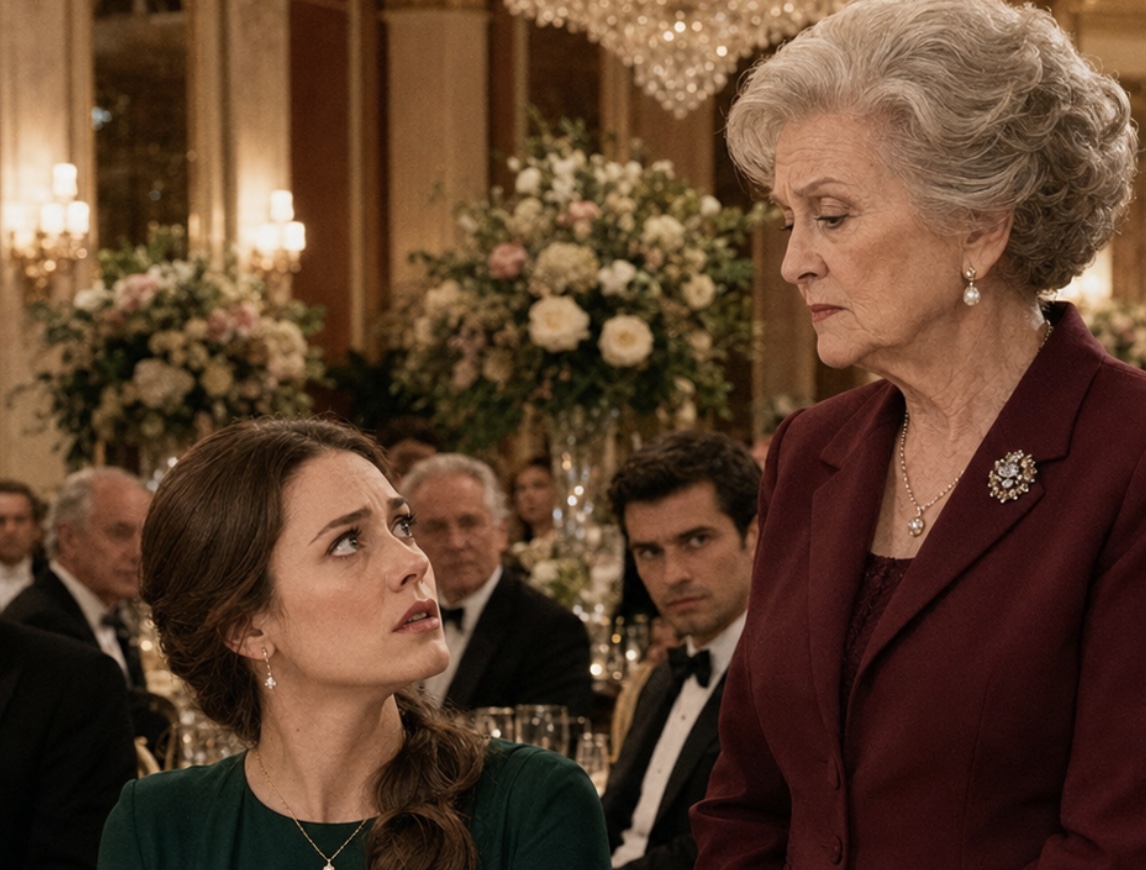
The restaurant was called Venice, and Lyudmila Vasilievna had decided to celebrate her sixtieth birthday in grand style.
There were around forty guests—relatives, friends, and former colleagues. The tables were covered with white cloths and decorated with flowers, while bottles of champagne stood chilling in silver buckets.
I had organized practically everything.
I had called the restaurant managers, paid the deposit, selected the menu, and coordinated the event. Oleg claimed he was overwhelmed at work, while his mother called me five times a day with new instructions.
I said nothing and handled it all.
It was her milestone birthday, after all.
She was my husband’s mother.
I sat at the table wearing a new sea-green dress I had bought especially for the evening. I drank mineral water instead of champagne because I had been feeling nauseated in the mornings for three days.
I suspected I knew why.
There was a pregnancy test in my handbag. I had not used it yet, but something inside me already seemed to know that a new life had begun.
I planned to tell Oleg after the celebration, when we were alone.
I imagined it would be the perfect birthday gift for his mother. She was going to become a grandmother.
A grandson or granddaughter.
I was smiling foolishly at the thought when I heard the sharp ring of a fork against a glass.
Lyudmila Vasilievna rose from her seat at the head of the table.
She looked majestic in a burgundy suit decorated with a large brooch. She swept her shining gaze across the room, and the guests gradually fell silent.
“My dear friends and family,” she began in a confident, well-practiced voice, “I would like to raise a glass to my family. To my son, my daughter, my son-in-law, and, of course, our dear Ira.”
I smiled politely.
“Our Ira is worth her weight in gold,” she continued. “She carries the whole family on her back, even though she has never had much intelligence and barely has a proper education. Still, we tolerate her. She is useful, like a free housekeeper who comes with her own wallet.”
She laughed.
Several guests laughed with her.
Marina laughed louder than anyone, throwing back her head. Anton smirked and raised his glass.
Heat flooded my face. My fingers tightened around my napkin until they became numb.
Oleg was sitting beside me, staring down at his plate.
He said nothing.
He did not even turn to look at me.
His mother continued.
“So keep working, sweetheart. You still have plenty to repay. We have spent enough money on you, and so far we have seen very little return.”
I stood up.
My legs felt weak and unsteady, but somehow I managed to walk in a straight line. I kept my eyes ahead of me as I crossed the dining hall.
Someone called after me—perhaps one of Oleg’s aunts—but I did not turn around.
I pushed open the restroom door, locked myself inside a stall, and pressed my forehead against the cold tile wall.
There was a roaring sound in my ears.
All I could see was my mother-in-law’s satisfied smile, Marina’s laughter, and Oleg sitting silently beside me.
Oleg, who had not defended me.
Oleg, who had not said a single word.
I took out my phone and opened my banking app.
The automatic payment for Lyudmila Vasilievna’s loan was scheduled for the twenty-third of every month.
Twelve thousand four hundred rubles.
I pressed the button marked “Cancel automatic payment.”
Then I opened my card settings and temporarily blocked the card.
I placed the phone back in my bag, fixed my hair, and stepped out of the stall.
After washing my face with cold water, I looked at myself in the mirror.
The woman staring back at me had just made a decision.
I did not return to the banquet hall.
I called a taxi and went home.
Oleg arrived three hours later, drunk and irritated.
“Why did you leave?” he demanded as soon as he entered. “Mom was upset. She was only joking. Don’t you understand jokes anymore?”
I did not answer.
I went to bed and turned my face toward the wall.
I barely slept that night. I listened to the quiet signals of my own body and thought about the notification my mother-in-law would receive from the bank the following morning.
It came early.
I was pouring myself a cup of tea when someone began pounding on the apartment door so violently that the glass panel in the hallway rattled.
I opened it.
Lyudmila Vasilievna stood on the landing, her face blazing with rage. She held her phone high in one hand.
Oleg hovered behind her in wrinkled sweatpants. Apparently, he had let her into the building while she was practically breaking down the entrance door.
“What have you done?” she screamed, pushing past me without waiting for an invitation. “The bank called me! They said the payment failed! You ruined my payment!”
I calmly set my cup on the hallway cabinet and folded my arms.
My heart was pounding, but my voice remained steady.
“Good morning, Lyudmila Vasilievna. Yes, I canceled the automatic payment. I will no longer be paying your loans.”
“What?”
Her eyes widened.
“Have you completely lost your mind? You paid for three years, and now you suddenly want to show some attitude?”
“I paid for three years while you were calling me your daughter. Yesterday, you publicly called me a free housekeeper with a wallet. Well, the housekeeper has resigned, and the wallet is closed.”
Oleg stepped forward and raised his hands in a calming gesture.
“Mom, wait. I’ll talk to her. Ira, let’s not fight. I’ll make the payment from your card. Just let me—”
“The card is blocked, Oleg. I am the only person who has access to my money, and I am not giving either of you a single ruble.”
His mother gasped dramatically and clutched her chest.
Oleg immediately rushed to support her by the elbow.
“Do you see what you’re doing?” he shouted at me. “You’re going to give my mother a heart attack! Ira, either you restore that automatic payment right now and apologize, or…”
“Or what?”
“Or we get divorced,” he blurted out.
Then he froze, as though even he had not expected the words to come out.
Silence filled the hallway.
His mother stopped pretending she was about to faint and narrowed her eyes at me.
I looked at my husband.
At the man I had lived with for five years.
The man whose shirts I washed, whose dinners I cooked, and whom I had planned to tell that very day that we might be expecting a child.
He stood there waiting for me to become frightened.
He expected me to cry, apologize, and surrender.
“Fine,” I said. “Then we’ll get divorced.”
My mother-in-law’s mouth fell open.
Oleg turned pale.
I walked past them and returned to the kitchen, leaving them standing in the hallway.
“You’ll regret this!” Lyudmila Vasilievna shouted after me. “I registered you in this apartment out of the goodness of my heart, and this is how you repay me, you ungrateful rat! Tomorrow the whole family will come here, and we’ll make you understand. Do you think you’re cleverer than everyone else?”
I sat at the kitchen table and wrapped both hands around my cup.
They were trembling so badly that tea spilled over the rim, but I continued drinking in small sips while staring at the wall.
One thought kept repeating in my head.
The pregnancy test was still inside my handbag.
I had never taken it.
Perhaps I should not take it yet.
First, I needed to understand what my life would look like from now on.
The relatives arrived the following day.
I had been expecting them, so I prepared carefully.
I locked my documents in the safe, moved my jewelry into a small box, and hid it on top of a cabinet. Then I downloaded a voice-recording app and set my phone to record the conversation.
I had done that during the night while Oleg snored beside me after spending hours arguing with his mother on the phone.
The doorbell rang at exactly two in the afternoon.
Marina and Anton were standing outside.
Marina, a tall brunette with a sharp chin, marched into the apartment without removing her shoes. Anton followed and slammed the door behind him.
“So, have you finished putting on your little circus?” Marina began immediately. “You have been taking advantage of our mother, you parasite, and now you think you can just run away?”
“I have not taken advantage of anyone,” I replied evenly. “I paid your mother’s loan for three years. Now I have stopped. That is my right.”
“Your right?” Anton scoffed. “You live in our family and in our brother’s apartment. What rights do you think you have? Mom spent the whole night with high blood pressure. She has a bad heart and cannot handle stress. Here is what will happen: you will pay the missed installment, we will forget this nonsense, and everyone will continue as before.”
“I have one condition,” I said. “Lyudmila Vasilievna must apologize for what she said. Publicly. In front of the same people who heard her insult me. Then I will pay the missed installment and consider whether I will continue making future payments.”
Marina laughed directly in my face.
“Do you hear yourself? You expect our mother to crawl on her knees in front of you, some penniless nobody? Who do you think you are? You are nothing. Do you understand? Nothing. Get out of our apartment!”
She marched toward the coat rack, pulled my coat from its hanger, and threw it onto the floor.
Then she opened the hallway closet and began tossing out my dresses, jackets, scarves, and shoes.
Everything landed on the dirty floor they had walked across in their outdoor shoes.
“Pack your things!” she ordered. “Go stay with your parents. Our mother was right about you. You are nothing but a freeloader who started imagining she mattered.”
I stood there watching the performance.
Anton did not intervene. Instead, he walked over to my handbag and kicked it with the toe of his shoe.
The bag overturned.
My keys, hairbrush, makeup compact, and several other belongings scattered across the floor.
At that moment, Oleg stepped out of the bedroom.
I waited for him to speak.
I waited for him to stop his sister, shout at his brother, or defend his wife.
He looked at the mess on the floor, then at me, then at Marina.
“Pack your things, Ira,” he said. “Stay with your family for a while. Mom is right. We cannot continue like this.”
I swallowed the lump in my throat and walked silently into the bedroom.
I pulled out a suitcase and packed only the essentials.
Documents. Underwear. Toiletries. A change of shoes.
My mother’s jewelry box, containing a ring passed down from my grandmother, was hidden on top of the cabinet. I took it down, placed it inside the suitcase, and closed the zipper.
Marina was still hissing something in the hallway, but I no longer listened.
I walked past her, past Anton, and past my husband, who stood with an expressionless face.
Then I left the apartment.
In the stairwell, I stopped the recording and dialed a number.
“Lena, hello. It’s Ira. I need your help. I think I’m ready to take them to court.”
Lena Sokolova was an old university friend and a practicing civil attorney.
We had been close since our second year, although we rarely saw each other anymore because Oleg had never liked my friends.
Two hours later, I was sitting in Lena’s small kitchen, which smelled of cinnamon, telling her the entire story from the beginning.
She listened without interrupting, her fingers moving rapidly across her laptop keyboard.
“Let’s go through this step by step,” she said when I finished. “Whose name is on the loan agreement?”
“Lyudmila Vasilievna’s. I only set up the automatic payments from my card.”
“Did you sign any agreement stating that you were obligated to repay the loan?”
“No. It was only a family arrangement.”
“Excellent. Legally, you were making voluntary payments. You have no obligation to the bank. You can stop at any time, and the bank cannot demand anything from you. Any claims must be made against the borrower, meaning your mother-in-law.”
Lena took a sip of tea.
“Now let’s look at the next issue. You spent three years paying someone else’s debt. That is around one hundred and forty-six thousand rubles per year. Over three years, approximately four hundred and fifty thousand. Is that accurate?”
“Yes, roughly.”
“That may qualify as unjust enrichment. Under Article 1102 of the Civil Code, you can file a claim demanding repayment of everything you paid on her behalf. You can also request interest for her use of your money. Do you still have your bank statements?”
“Yes. I downloaded them last year for tax purposes.”
“Perfect. Next question. Who owns the apartment?”
“Oleg. He inherited it before we married.”
“That makes it his separate property, so we cannot claim ownership of the apartment itself. However, did you renovate it during the marriage?”
“Yes. I paid for a lot of it. I can retrieve my purchase history from the hardware stores. There were several large transactions—the kitchen cabinets, the bathroom tiles, the laminate flooring.”
“Good. Those expenses may be treated as improvements made during the marriage. We can request compensation for your contribution. Your mother-in-law forced you to leave, and Oleg supported her. Did you record that?”
“Yes.”
“Even better. The threats, pressure, and insults all strengthen your position. Now, are you officially registered as residing in Oleg’s apartment?”
“Yes. I have been registered there for five years.”
“They cannot simply remove your registration without your consent. They would need a court order. You left voluntarily, but under psychological pressure, and we can document that. We will file a claim preventing them from obstructing your access to the residence. At the same time, we will file for divorce, division of marital property, and recovery of the money you paid.”
Lena closed her laptop and looked at me over the top of her glasses.
“Ira, are you certain you want to take this all the way? It will become ugly. They will use guilt, family loyalty, and your mother-in-law’s health against you. Oleg will probably try to bring you back once he understands that he has lost the person financing his family.”
“I’m certain,” I said. “You cannot imagine how I felt in that restaurant. Or how I felt today when my husband told me to pack my belongings. I refuse to remain a source of money for people who despise me.”
“Then we begin.”
Lena prepared the paperwork within three days.
She filed a claim to recover four hundred and fifty-three thousand rubles in unjust enrichment, plus interest. She also prepared the divorce petition and a request preventing Oleg from obstructing my access to the apartment.
On Monday, a courier delivered copies of the claims to Oleg and his mother.
That evening, my husband called me.
His voice sounded both angry and confused.
“What are you doing? You filed a lawsuit against my mother? Have you lost your mind?”
“No,” I replied. “I am thinking clearly. Your mother humiliated me in public. Your brother and sister threw my belongings onto the floor, and you stood there watching. Now I want my money returned. That is lawful.”
“Come to your senses, Ira! Come home, pay the debt, and Mom will forgive you. I’ll forgive you too. Everything will go back to normal.”
“What exactly is supposed to return to normal, Oleg? Your mother publicly calling me a servant while I continue paying her loans? No, thank you. I am not interested in that future.”
“You’re destroying our family!”
“Our family was destroyed by your mother’s behavior and your silence.”
I ended the call and blocked his number.
I felt terrible, but I knew I had made the right choice.
Two days later, Lyudmila Vasilievna received the court summons at work.
She worked as a school security attendant. When the courier arrived with the envelope, several of her colleagues witnessed the delivery.
Later, she called Marina and sobbed that she had been humiliated in front of the entire staff, that everyone would gossip about her, and that she could not survive such disgrace.
But the summons was not what frightened her most.
While we waited for the court proceedings, she attempted to destroy my reputation.
A post appeared in the extended family chat and in the public online group for residents of the neighborhood.
I read it while sitting in Lena’s kitchen.
“Everyone, please be careful! My daughter-in-law is a fraud who robbed an elderly woman. She paid my loan for three years and then suddenly stopped, leaving me with penalties. Now she is demanding all the money back through the courts. I thought we were family, but she is a vicious schemer who has been hunting for my property. Do not trust her. She will deceive you too!”
The comments appeared almost immediately.
Distant aunts, acquaintances, and even complete strangers began insulting me.
They called me a rat, a traitor, and a fortune hunter. Someone advised my mother-in-law to hire debt collectors. Another person suggested coming to speak to me “in a language I would understand.”
I shook with anger as I read the messages.
Lena took the phone from my hand and reviewed the post herself.
“Well,” she said, “this is defamation and public humiliation. We can file another claim, but there may be a faster solution. Do you have the recording from the birthday celebration and the recording of your conversation with Marina and Anton?”
“Yes.”
“Create a short compilation containing the most relevant parts and post it in the same groups with a brief explanation.”
“Those were private conversations. Is that legal?”
“You participated in those conversations. You generally do not need the other participants’ permission to record them when no protected state or commercial secrets are involved. Publishing limited excerpts to defend your honor and reputation may be justified. Do not upload the entire conversation. Only share the parts involving threats, insults, and attempts to force you to pay. We will explain that the publication was a direct response to false public accusations.”
That evening, I uploaded two short audio clips to the neighborhood group and the family chat.
The first was from the restaurant.
My mother-in-law’s voice could clearly be heard saying, “Our Ira is worth her weight in gold… a free housekeeper with a wallet.”
Then came the laughter.
The second clip came from the hallway.
Marina’s voice shouted, “Get out of our apartment!”
There was the sound of my belongings hitting the floor.
Then Oleg’s voice:
“Pack your things. Stay with your family for a while.”
The effect was explosive.
The group erupted.
People who had insulted me only an hour earlier suddenly stopped posting. Some deleted their comments. Others began writing things such as, “What kind of family treats someone this way?”
Marina tried to argue, but people bombarded her with questions.
Several neighbors who knew me personally defended me.
An hour later, Oleg called from another number because I had blocked his own.
He sounded completely defeated.
“Why did you do that?” he asked. “Why did you humiliate my mother in front of everyone?”
“She humiliated herself, Oleg. I only allowed people to hear the truth. Have you forgotten what she publicly wrote about me?”
“She was defending herself! You sued her!”
“I sued her to recover my money. She publicly accused me of being a criminal. Do you honestly see no difference?”
He was silent.
Then he spoke more quietly.
“Ira, let’s stop all of this. Mom called the bank. The penalties are growing. They are threatening to transfer the debt to collectors. She is hysterical. I’ll pay from our credit card. Just withdraw the lawsuit and—”
“There is no longer a shared credit card, Oleg. I closed the joint account last week. And I am not withdrawing the lawsuit. It has already been filed.”
“But she’s my mother!”
“And I was your wife. The wife you threw out of her home because she stopped being useful.”
Silence again.
Finally, he said, “What do you want? What do we have to do for you to stop?”
I thought about it.
I pictured my mother-in-law’s triumphant face at the restaurant.
Then I answered.
“I want a public apology. On video. Lyudmila Vasilievna must apologize in the same restaurant and in front of the same people who heard her insult me. If she does that, I will pay the missed installment and consider withdrawing the claim.”
“You’re mocking us,” he whispered.
“No. I am serious. If she values her reputation and her credit history, she can apologize. Otherwise, we will meet in court.”
He ended the call.
An hour later, he called again and said his mother had agreed.
The meeting was arranged for Saturday at the same restaurant, Venice.
The manager remembered me from the birthday celebration and seemed surprised by the request, but she rented us a private room.
I did not go alone.
Lena came with me. She was accompanied by an acquaintance of mine, Police Captain Denis Gromov, who agreed to attend in plain clothes in case anyone attempted to provoke a confrontation.
Approximately fifteen relatives were present.
Most of them had attended the birthday dinner.
My mother-in-law stood in the center of the room, pale and tight-lipped.
Oleg stood beside her, his eyes red as though he had not slept for days.
Marina sat in a corner with her arms folded, staring at me with open hostility.
Anton did not come. Perhaps he sensed that the meeting could end badly.
I stopped several steps away from Lyudmila Vasilievna.
Lena stood behind me and began recording.
Gromov leaned against the wall, arms crossed, pretending to be a bored guest.
“I’m listening, Lyudmila Vasilievna,” I said.
She flinched and looked at me.
Her eyes contained hatred, humiliation, and fear of the approaching court case.
She opened her mouth, closed it, swallowed, and finally spoke while staring at the floor.
“Forgive me, Ira. I… became emotional at the birthday celebration. I was wrong. I’m sorry.”
The room was so quiet that I could hear the clock near the bar ticking.
“Please speak louder,” I said. “And look at me.”
She lifted her head.
Her expression twisted, and her lips began to tremble.
For the first time, she seemed to see me not as a servant but as a person she could no longer control.
She drew a breath.
Then she suddenly screamed.
“Go to hell! You will not get anything from me! You stupid fool! I would rather die than humiliate myself in front of you!”
Marina leaped to her feet.
She rushed toward me, swinging her handbag, and tried to strike me.
I stepped back, but Gromov was already beside her.
He caught her wrist and spoke calmly.
“Madam, I strongly advise you to stop. Captain Gromov, police. Your actions may constitute disorderly conduct and assault.”
Marina froze with her mouth open.
My mother-in-law turned white and clutched her chest—this time, apparently, for real.
The relatives began shouting and murmuring.
Lena stepped forward.
“This meeting was recorded,” she announced loudly. “The refusal to enter into a settlement has been documented. My client will proceed with the lawsuit. I am also authorized to inform you that she has filed a police report concerning attempted extortion. Forcing a person to conduct financial transactions by threatening eviction and damage to her property may carry criminal consequences. Everyone present should be prepared to give a statement.”
The room erupted into chaos.
Some people shouted. Others grabbed Marina by the shoulders and pulled her back.
Lyudmila Vasilievna became pale as a sheet and collapsed into a chair.
Oleg caught her and yelled, “Call an ambulance! Something is wrong with Mom!”
Someone ran to make the call.
Gromov contacted officers to document the incident.
I stood in the middle of the chaos and looked at the woman who had seemed like an unquestionable authority only a week earlier.
Now she was simply an aging woman gasping for air while frightened relatives rushed around her.
The ambulance arrived ten minutes later.
A young paramedic in a blue uniform checked her blood pressure and listened to her heart.
“Hypertensive crisis,” he said. “Not a heart attack, but her condition is serious. Her blood pressure is two hundred over one hundred and twenty. She needs to go to the hospital.”
As the medical team placed her on a stretcher, she suddenly grabbed Oleg’s sleeve and hissed in a loud whisper.
Everyone nearby heard her.
“Do not pay her. Sell the apartment. I need money for the debt, and she should get nothing. Do you hear me? Sell it and pay the bank. Let that woman die for all I care.”
Oleg froze.
I watched his face.
For the first time, he seemed to understand that his mother was prepared to leave him without a home to save herself from her own debt.
Fear, disbelief, and confusion passed across his expression.
For one second, I almost felt sorry for him.
Only for one second.
The ambulance left with Lyudmila Vasilievna and took her to the cardiology department.
Gromov escorted Marina outside and formally warned her against contacting or approaching me again.
Oleg stood on the restaurant steps and stared at me.
Then he spoke quietly.
“You killed my mother.”
“No,” I replied. “Her greed did this. Your silence helped. So did the belief that I would tolerate everything forever.”
The court hearing took place two months later.
By then, I had rented a small studio apartment on the other side of the city. The divorce had been finalized, and I had returned to my maiden name.
Lena and I prepared everything.
We submitted bank statements confirming that I had paid four hundred and fifty-three thousand rubles toward my mother-in-law’s debt. We also provided the recordings, screenshots of her defamatory post, and witness statements.
The hearing concerning unjust enrichment was relatively brief.
The judge, an older woman with tired eyes, examined the statements and listened to both sides.
Then she addressed my mother-in-law directly.
“Do you acknowledge that the claimant made payments under your loan agreement for three years?”
“I acknowledge it,” Lyudmila Vasilievna said through clenched teeth. “But those payments were gifts. She decided to make them herself. I never asked her.”
The judge turned to another page in the case file.
“Then please explain why, in the audio recording admitted into evidence, you threaten to remove the claimant from the apartment if she stops paying. That does not sound like a voluntary gift.”
My mother-in-law’s attorney, a thin man wearing a wrinkled jacket, attempted to object.
The judge interrupted him.
“The court finds evidence of an attempt to compel the claimant to perform financial transactions. The argument that the money was a gift is rejected. The defendant must return the full amount of unjust enrichment, totaling four hundred and fifty-three thousand rubles. In addition, the defendant must pay eighteen thousand rubles in interest for the use of another person’s funds, as well as the claimant’s legal expenses.”
My mother-in-law cried out and gripped the edge of her chair.
Oleg sat in the courtroom and said nothing.
He had something to lose as well.
A week later, another hearing took place.
The bank had sued Lyudmila Vasilievna for the overdue debt.
The outcome was predictable.
The court ordered the borrower to repay the full balance, including penalties.
Her bank account was frozen, and fifty percent of her pension was ordered to be withheld.
Bailiffs arrived to inventory her possessions.
She attempted to hide several appliances at a neighbor’s home, but someone reported her. The bailiffs returned with witnesses.
They listed her television, microwave, and even her beloved coffee machine for seizure.
When Marina realized that her mother faced financial ruin, she stopped answering her calls.
Anton announced that he had a mortgage and could not help.
The relatives who had spoken so loudly about family loyalty disappeared like smoke.
Oleg sold his motorcycle and an old country house he had inherited from his grandfather.
It was still not enough.
A month after the court decision, he asked to meet me.
We sat in a café near my new apartment.
For a long time, he said nothing and stirred sugar into his coffee.
Finally, he looked up.
“Ira, I don’t know what to do. Mom is hysterical every day. The bailiffs took almost everything. The bank is demanding the remaining balance. I sold everything I could, but it still isn’t enough. She wants me to sell the apartment.”
“The apartment where you live?” I asked.
“Yes. She says I have a duty to help her. That I owe her because she is my mother.”
I remained silent and waited for him to continue.
“You know,” he said, rubbing his face with both hands, “I only understand now that she has always been like this. She always demanded things. She always pressured everyone. And I always stayed silent. I also allowed her to pressure you. I’m sorry.”
I looked at him and remembered the moment he stood in the hallway and told me to pack my belongings.
I remembered him lowering his eyes while his mother called me a housekeeper.
For five years, he had transferred responsibility for his entire family onto me.
“I forgive you, Oleg,” I said. “But nothing can be restored.”
He nodded and lowered his head.
We sat there for a little longer before I stood to leave.
As I walked away, he spoke again.
“You know, Mom still cannot believe you did all this. She says you were always so accommodating. She does not understand what changed.”
I stopped at the door and looked back.
“What changed?”
“You stopped being convenient.”
“Exactly,” I said. “That is precisely what happened.”
I stepped outside.
The sunlight was so bright that I put on my sunglasses.
Inside my handbag was a letter from the bank confirming that the money recovered through enforcement proceedings had been transferred into my account.
Four hundred and seventy-one thousand rubles.
My money.
The money I had spent for three years on a woman who considered me worthless.
There was something else in my handbag too.
A small ultrasound image from the examination I had attended the previous week.
Eight weeks pregnant.
A new life.
A life I intended to protect and raise on my own, without living according to someone else’s demands, debts, or opinions.
That evening, I opened the old neighborhood group and saw that my mother-in-law’s post had been deleted.
In the family chat, which I had never officially left, my final message containing the audio recordings was still visible.
Beneath it were dozens of supportive reactions from the same people who had insulted me only days earlier.
I pressed “Leave group” and deleted the application.
My phone chimed with one final message.
It was from Oleg.
“I filed for my mother’s bankruptcy. I cannot do this anymore. I’m sorry for everything.”
I did not reply.
Instead, I opened my banking application and transferred a small amount into a savings account.
For the future.
For my own life.
A life without other people’s loans, other people’s insults, or other people’s cowardly silence.
Six months later, when the legal battles were finally behind me, I published a short article on my blog.
I gave it the same title as the story I had lived:
“My Mother-in-Law Humiliated Me at Her Birthday Party, So I Stopped Paying Her Loans.”
At the end, I wrote:
“Do not be afraid to break toxic bonds. The most expensive debt is the debt created by someone else’s entitlement. The most valuable investment is the one you make in your own dignity.”
The comments began appearing almost immediately.
Hundreds of women wrote that my story was also their story.
They had tolerated, paid, obeyed, and remained silent.
Now they understood that silence was not always a virtue.
Sometimes, silence meant participating in your own humiliation.
I closed my laptop and placed a hand on my rounded stomach.
My baby moved beneath my palm.
My son.
I would raise him to become someone who knew how to say no.
Someone who would never remain silent while the person he loved was being humiliated.