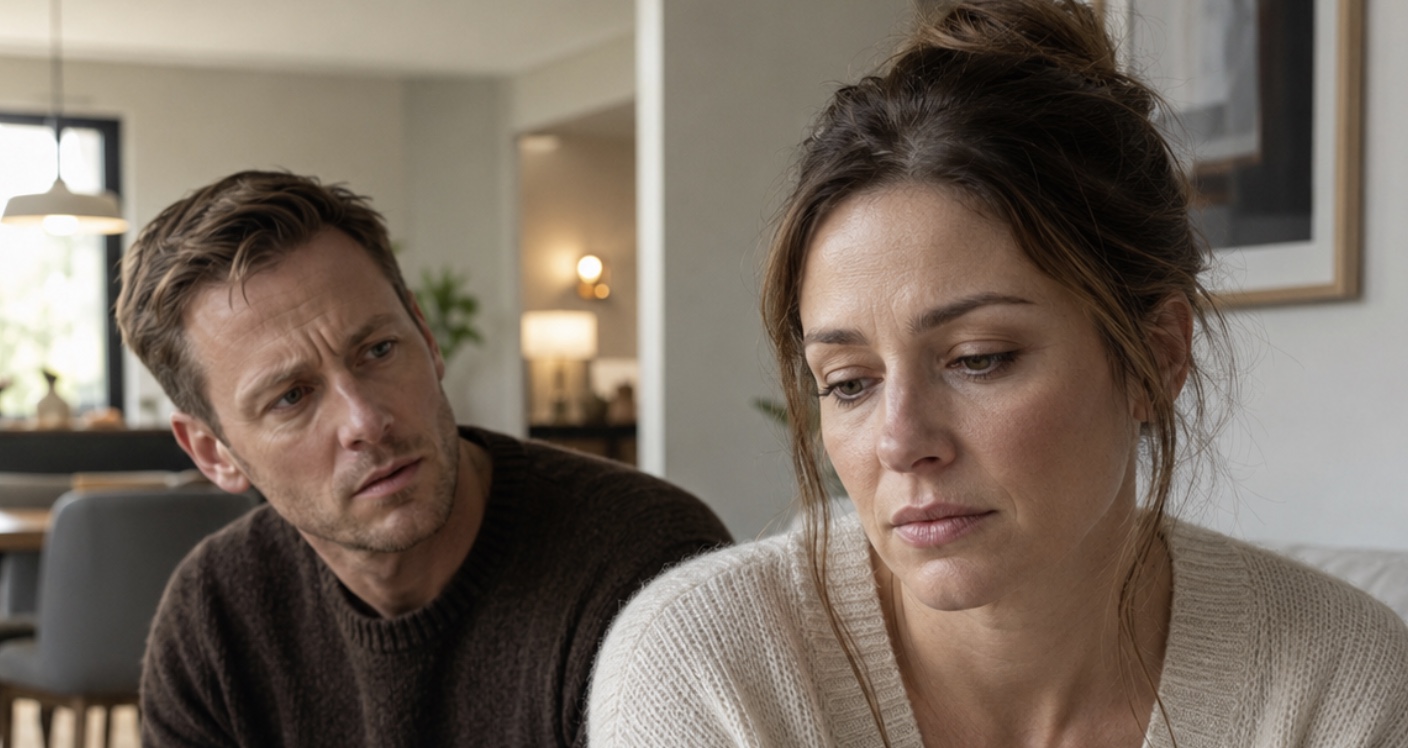
“Artyom… I can’t get up. I can’t move at all. My legs feel like they don’t belong to me, as though they’ve gone completely numb.”
The phone nearly slipped from Artyom’s hand. He sat bolt upright in bed, the last traces of sleep vanishing instantly.
“Where are the children?”
“They’re asleep. I put them to bed before it started…” Roman broke off, and Artyom heard a muffled, strangled sob on the other end of the line. “I don’t want to frighten them. Vera wakes up at the slightest sound.”
“I’m coming,” Artyom said, already pulling on his jeans with the phone wedged between his ear and shoulder. “Can you hold on for an hour?”
“I can,” Roman replied quietly, though the old determination Artyom had known since childhood was still there in his voice. “I’m sorry for waking you in the middle of the night.”
Karina shifted sleepily beneath the blanket and muttered something unintelligible. Artyom leaned toward his wife and whispered briefly:
“Roman is very ill. I’m going to him.”
The drive to Beryozovka took less than an hour. Artyom drove faster than he ever had in his life. He could not stop seeing his friend’s face as it had looked three weeks earlier—thin and exhausted, with hollow cheeks. Even then, Roman had complained of weakness, but he had brushed it aside and kept promising that he would finally see a doctor.
The house on Rechnaya Street greeted him with dark, lifeless windows. Artyom quietly unlocked the door with his own key. They had exchanged spare keys three years earlier, when Roman had broken his leg and had been unable even to go to the shop by himself.
A small night-light glowed dimly in the hallway, spilling a weak yellowish light across the wooden floor.
“I’m in the bedroom,” Roman called hoarsely.
He was lying fully dressed on top of the bedspread, wearing old sweatpants and a stretched-out sweater. His face was as pale as flour, and his hair clung damply to his forehead.
“I’ve already called an ambulance,” he said.
Artyom noticed the phone clutched tightly in his hand.
“They’re on their way.”
Artyom sat on the edge of the bed and took his friend’s cold, damp hand between his own.
“What did the doctors tell you last time?”
“That I needed tests. That there could be dozens of possible causes.”
Roman tried to smile, but his expression turned into a weak grimace.
“But you never had the tests done,” Artyom said.
It was not a question.
Roman managed a faint smile.
“There was never enough time. First Vera had tonsillitis, then Timur injured his knee…”
He paused, gathering what little strength he had left.
“Do you remember what we promised each other after our final day at school? That we would always be there for one another, no matter what happened?”
Artyom only nodded. He could not force himself to speak.
They had been friends since the first grade. They had shared the same desk, skipped physical education together, and dreamed of escaping Beryozovka one day.
Artyom had escaped. He had moved to Moscow, finished university, and stayed there to work as a sound engineer at a recording studio.
Roman had returned to the village after graduating from teacher-training college. He became a teacher at the very school where they had once sat together, reluctantly working through lessons.
He had remained there alone after his wife packed her things and left him for another man.
They both fell silent, listening to the uneasy nighttime sounds of the house.
Vera appeared in the hallway, barefoot and wearing pajamas covered in giraffes. Her serious eyes looked far too mature for a girl her age.
“Is Dad sick?” she asked in a voice that did not sound childish at all.
“Your father needs help from doctors,” Artyom answered, looking directly into her eyes. “An ambulance will be here soon.”
“Who will stay with us if they take him away?”
The question hung heavily in the air.
Outside, tires rustled against the road, cutting through the silence as a vehicle approached.
“I’ll stay with you,” Artyom said.
He was surprised by how naturally the words came out, as though they had always lived somewhere deep inside him, waiting for this moment.
The ambulance crew was quick and efficient. Two medical workers examined Roman, fired a series of short questions at him, and injected something into his vein.
“He needs to be admitted,” the doctor declared firmly as he coiled the tube of his stethoscope. “Neurology. He needs a full examination. This is serious, and there can be no more delay.”
“What about the children?” Roman asked almost inaudibly.
The doctor looked at Artyom.
“Are you a relative?”
“No. I’m his friend,” Artyom replied.
“I see.”
The doctor wrote something on the medical form.
“They’ll tell you at the hospital what documents may be required. His treatment could take a long time.”
Roman suddenly gripped Artyom’s wrist.
“Artyom, I’m begging you, don’t let anyone take them away! Don’t abandon them, whatever happens to me! Social services will separate them and send them to different families. Promise me!”
“Stop frightening yourself,” Artyom said firmly, covering Roman’s hand with his own. “I’m staying with the children. I promise. Don’t torture yourself with this.”
While the paramedics prepared the stretcher, Artyom leaned close to his friend’s ear.
“Don’t worry about anything. I’ll take care of everything, however long it takes.”
“You’re ruining your entire life for us,” Roman whispered, tears shining in his eyes.
“Don’t be ridiculous,” Artyom said dismissively. “The studio has been offering to let me work from home for ages.”
It was a lie.
Neither he nor his wife had ever considered moving away from Moscow, but at that moment, it seemed like a trivial detail.
As the stretcher was carried into the hallway, Timur appeared in the doorway of the children’s room. He wore an oversized T-shirt that hung almost to his knees, and his hair was tousled from sleep.
“Dad?”
His little voice sounded thin and fragile.
“Everything is all right, buddy,” Roman said, forcing himself to sound cheerful. “Dad needs to see some doctors. Uncle Artyom will stay with you.”
“For long?”
“Until Dad gets better. But he’ll call you every day. Right, Roman?” Artyom said quickly.
“Every day,” Roman confirmed.
Artyom could see how much effort it took for him not to break down.
When the ambulance disappeared into the darkness before dawn, Timur’s small hand slipped naturally into Artyom’s.
The boy said nothing. He only squeezed Artyom’s fingers more and more tightly.
Vera stood beside them, straight-backed and composed, as though an invisible burden had already been placed on her narrow shoulders.
“Dad will get better,” she said.
It was not a question.
“He will,” Artyom promised.
The three of them stood on the porch, staring at the empty road.
Ahead of them lay a long, endless day and a future none of them could imagine.
Morning brought a call from the hospital. Roman was being transferred to the regional medical center for a detailed examination.
Artyom wrote everything down in a squared notebook he found on top of the refrigerator. His list of responsibilities grew with every passing minute, filling with tasks he had never known existed.
Vera sat at the table, silently finishing her oatmeal. Timur pushed his spoon around his bowl.
The children received the news about their father with such quiet, obedient resignation that it frightened Artyom more than tears or screaming would have.
By noon, Karina arrived.
She looked tired and irritated, dressed in an expensive coat that seemed strangely out of place among the simple walls of the village house. Her gaze moved around the room and stopped on the children’s schoolbags by the door.
“So what exactly do you intend to do?” she asked when they were alone in the kitchen.
“I don’t know yet,” Artyom admitted, stirring tea that had already gone cold. “But I can’t abandon them. Roman is my best friend. You know that better than anyone.”
Karina rubbed the bridge of her nose with slender fingers.
“And what happens if he never comes out of that hospital?”
Artyom froze with the spoon in his hand.
The thought had already crept into his mind during the night, but he had forced it away.
“I’ll deal with that if it happens,” he finally said. “But right now, I’m not leaving them.”
“Have you completely lost your mind?”
She shook her head.
“Why have you taken all of this upon yourself? You already know how I feel. These are somebody else’s children, and I never agreed to support them. We had plans, and you’ve thrown all of them away.”
“I’m not asking you for anything,” Artyom said, finally looking up at her. “You don’t want to help? Then go back. I’m not stopping you.”
Her lips twisted bitterly.
“Fine. Do whatever you want. Goodbye, Mother Teresa of Beryozovka.”
“I will not abandon the children,” he said quietly as she walked away.
The door slammed so hard that a framed photograph fell from the wall.
Artyom picked it up.
The picture had been taken five years earlier. He and Roman were standing on a wooden pier by the lake, laughing with their arms around each other’s shoulders and fishing rods in their hands.
The days began to blur together.
Artyom drove the children to school and kindergarten, learned to cook soup from recipes he found online, and worked through math problems with Vera.
Every evening, he called the hospital, but the doctors gave him very little information.
“His condition remains serious but stable.”
“We are continuing treatment.”
“We need more time.”
Two weeks later, the phone rang again.
The doctor’s voice was calm and formal.
“I’m very sorry. We did everything we could. The illness progressed too quickly, and his heart stopped unexpectedly.”
Artyom sank onto a stool, gripping the phone so tightly that his fingers turned white.
Roman was gone.
After the call, he sat in the kitchen for a long time, unable to move.
How was he supposed to tell the children?
What would happen to them now?
What would happen to him?
Fragments of thoughts swarmed through his head, but none stayed long enough for him to grasp.
Vera came out of her room and studied his face carefully.
“Uncle Artyom, has something happened?”
He tried to smile, but his lips would not obey him.
“Come here,” he said, opening his arms. “We need to talk. Please call Timur.”
When the children sat beside him, Artyom took their small hands in his.
“I have terrible news,” he began, struggling to choose the right words. “Your father was very, very ill. The doctors couldn’t save him. He…”
“He died?” Vera asked directly.
Her voice trembled only on the final word.
Artyom nodded, unable to say it aloud.
Timur did not cry. He simply froze, squeezing Artyom’s hand with all his strength.
Vera straightened her back, as though once again accepting something heavy and invisible onto her shoulders.
“What happens now?” she asked. “Will they take us away?”
“No,” Artyom said firmly. “You’re staying with me. I made a promise to your father, and I will keep it.”
A cold, persistent drizzle fell on the day of the funeral.
Raindrops tapped against umbrellas and trickled beneath collars in icy streams.
Artyom stood beside the fresh grave, holding both children by the hand.
Vera did not cry. She stared straight ahead, gripping his fingers tighter and tighter.
Timur sobbed softly with his face pressed against Artyom’s side.
Some neighbors brought flowers. Others awkwardly shook Artyom’s hand and murmured words of comfort.
He barely heard them.
All he could see was Roman’s living, laughing face—the way he had looked even during the darkest times.
Three days passed after the funeral.
The house seemed to have gone deaf, sinking into a thick, oppressive silence.
Artyom brewed tea and sliced a pie that the neighbors had brought.
Vera had gone to her room. Timur sat at the table with both hands wrapped around his mug, as though trying to warm himself.
“What happens now, Uncle Artyom?” he asked in a barely audible voice.
“We’ll live together,” Artyom replied, sitting beside him. “Just as we have been.”
The doorbell rang.
A stern-looking, middle-aged man in a gray suit stood on the porch with a folder tucked beneath his arm.
“Gordeyev, child-protection services,” he introduced himself as he stepped inside. “My condolences for your loss.”
They sat in the living room.
Timur clung to Artyom and flatly refused to leave.
“We need to discuss the children’s future,” the inspector began, spreading documents across the table. “Are there any relatives willing to become their legal guardians?”
“Roman’s brother lives in Germany,” Artyom replied. “We’re trying to contact him.”
“Until he makes a decision, the children will need temporary placement. There is an emergency shelter…”
“No,” Artyom interrupted sharply. “They are staying with me. I will apply for temporary guardianship and then permanent guardianship.”
Gordeyev looked carefully at Artyom and then at the little boy pressed against him.
“Do you understand how complicated this will be? You are not a relative. The process is lengthy. We will need references, an inspection of your living conditions, proof of income, and medical certificates.”
“I understand,” Artyom said. “I’m prepared to undergo any checks you require. But the children are not going to a shelter. I promised their father.”
Something in his voice apparently convinced the inspector.
“All right,” Gordeyev said with a sigh. “Here is the list of documents. I expect you at the department tomorrow with your application.”
When the door closed behind him, Timur finally loosened his grip.
“You really won’t give us away?”
“Never,” Artyom promised.
That evening, a thunderstorm broke over Beryozovka.
Lightning flashed, and the house plunged into darkness.
Vera peered out of her room, and Timur cried out in fear.
“Don’t be frightened. The electricity has simply gone out,” Artyom reassured them as he searched a drawer for candles.
A knock came from outside.
Artyom opened the door slightly and saw a woman standing on the porch. She held a flashlight and wore a wet jacket thrown over her shoulders.
“Has your electricity gone out too?” she asked, turning the beam away from his face. “I’m Marina. I live on the other side of your fence. I can check the electrical panel if you’d like. I know a little about this sort of thing.”
She spoke with slight embarrassment, shifting a small toolbox from one hand to the other.
Artyom hesitated for only a second.
“I would be very grateful.”
Marina quickly found the problem. The old wiring had failed after a power surge.
She replaced the fuses, tested the main lines, and the lights came back on.
The children sighed with relief.
“You should also repair the gutter,” Marina said, wringing water from a strand of hair. “I noticed water running down the wall at the corner of the house. Before you know it, you’ll have mold. I could come by tomorrow and take a look.”
“I don’t want to burden you,” Artyom began.
“It wouldn’t be a burden.”
She smiled gently.
“We’re neighbors. Besides, I knew Roman well. I’ve lived here for many years. He was a good man. A kind and decent man.”
Marina hesitated.
“I’m sorry. I didn’t mean to reopen the wound. I was simply remembering him. Anyway, I’d be glad to help.”
“Thank you,” Artyom said sincerely. “I honestly don’t know what I would do without help like this. Would you like some tea? I’ve already made a pot.”
Marina seemed to weigh the offer before nodding.
“I’d be happy to, provided I’m not intruding.”
They talked a little over tea poured into large ceramic mugs.
Artyom discovered that Marina was a widow. Her husband had died of a heart attack three years earlier.
She had once worked as an interior designer in the regional capital. After her husband’s death, she returned to her home village and began taking private renovation jobs.
As Artyom soon realized, she could repair almost anything.
“You’re a remarkable man,” she said quietly as she finished her tea. “Taking responsibility for those children is not something everyone would do.”
“It isn’t heroic,” Artyom replied with a shrug. “It’s simply the right thing to do.”
Marina nodded as though he had confirmed something she had already suspected.
From that evening onward, Marina began visiting regularly.
At first, she always came for a practical reason. She repaired Vera’s broken scooter, fixed a leaking section of the roof, and adjusted the unreliable water heater.
Later, she began dropping by simply to drink tea and ask how everyone was doing.
The children quickly became accustomed to her presence.
Timur was especially drawn to her calm confidence, her skillful hands, and the patient way she explained how every little mechanism worked.
A month later, Karina called.
“How are you?” she asked after an awkward pause. “Haven’t you come to your senses yet?”
“What do you mean?”
Artyom held the phone between his shoulder and ear while rolling dough for a pie.
“I mean this whole situation with the children. Aren’t you tired of playing babysitter? You could come back to Moscow and return to a normal life.”
“We’re doing well, Karina,” Artyom replied calmly. “We’re managing.”
“We,” she repeated bitterly. “You replaced our life so easily with somebody else’s children.”
Artyom set the rolling pin aside and wiped his hands on a towel.
“They are not somebody else’s children. They stopped being strangers a long time ago.”
“Aren’t you afraid of ending up alone?” she demanded. “They’ll grow up and leave. Have you thought about yourself even once?”
Artyom looked through the window.
In the yard, Marina was helping Timur build a birdhouse. Vera sat on a bench nearby, swinging her legs and passing them nails.
“No,” he said honestly. “I’m not afraid. And I’m not alone.”
Karina was silent for a moment.
Then she said with undisguised resentment:
“I understand. Well, good luck with your new… family.”
She ended the call.
Artyom stood by the window for a long time, looking at the dark screen of his phone.
In the past, a conversation like that would have shaken him and filled him with doubts.
Now he felt only relief, as though the door to his former life had finally closed.
Karina had always spoken about “their life,” but Artyom now understood that she would have abandoned him the moment a truly serious hardship appeared.
It was better that she had left now rather than later, when things might have become unbearable.
The months passed steadily.
The children gradually adjusted to their new life.
Vera improved at school, and her teacher even praised her progress in Russian.
Timur stopped avoiding the other children at kindergarten and began drawing more often, using bright colors instead of gray.
Artyom found remote work, mixing sound for audiobooks and podcasts.
In the evenings, the four of them often gathered together: Artyom, the children, and Marina, who now visited almost every day.
One Friday, the phone rang.
A male voice with a slight accent introduced himself.
“Artyom? This is Gleb, Roman’s brother. Do you remember me? We met at Roman’s wedding. You were his best man.”
Artyom remembered him—a tall, slightly distant man who had kept away from most of the celebration.
“Of course I remember you, Gleb. How are you?”
“I’m flying in from Germany tomorrow. We need to discuss the children.”
The following day, a taxi stopped by the gate.
A well-groomed man stepped out carrying an expensive suitcase.
Artyom immediately noticed how much he resembled Roman. They had the same facial features and the same shape of eyebrows, but Gleb’s gaze was different—more cautious and withdrawn.
“Artyom.”
Gleb offered his hand with a faint smile.
“It’s been many years. I’m sorry we have to meet again under circumstances like these.”
He looked over the house.
“Roman always said you were the most reliable person he had ever known. Now I see that he wasn’t exaggerating.”
The children did not accept their uncle immediately.
Vera remained distant, while Timur hid behind Artyom’s back.
Gleb tried to win their trust. He brought expensive toys, told them stories about Germany, and showed them photographs.
“They don’t remember me at all,” he admitted quietly to Artyom. “I was here four years ago, but they were tiny then. After that, I kept finding excuses not to visit. Work, responsibilities… And now it’s too late.”
That evening, after the children had gone to bed, the two men sat in the kitchen.
Artyom brewed mint tea and brought out a jar of pinecone jam, which he had recently learned to make.
“I can’t take them,” Gleb said, holding the mug between both hands. “I have my own life and my work. Everything there would be unfamiliar to them—the language, the school, the country.”
He took a breath.
“To be honest, I flew here with doubts. I thought perhaps the children would be better with me because I’m their blood relative. But I can see that they are happy with you.”
“I’ve already applied for guardianship,” Artyom said. “But the process is slow.”
“I’ll help,” Gleb replied with a nod. “I’ll provide a written statement confirming that, as their closest relative, I support your application. I’ll also provide financial support. Roman would have wanted that.”
Later that evening, after the children had fallen asleep and Gleb had gone to the guest room, Artyom and Marina sat together on the veranda.
The air smelled of autumn—damp leaves, smoke from distant fires, and ripe apples.
Stars filled the sky above Beryozovka, and a cool breeze drifted in from the lake.
“I’ve been thinking about something,” Marina said suddenly, breaking the comfortable silence. “I’ve wanted to suggest it for a long time, but I never had the courage.”
“What is it?”
Artyom wrapped the blanket more tightly around himself.
Marina hesitated, gathering her courage.
“My grandmother’s house is standing empty in the center of the village. It’s a large two-story house. There used to be a shop on the ground floor, and all the equipment is still there.”
She looked down at her hands.
“My husband and I dreamed of opening a pastry shop there. We never had enough money or enough courage. But now, with your help, perhaps it could finally happen.”
Artyom looked at her in surprise.
“A pastry shop? Here in Beryozovka?”
“Yes. I know how to bake. My grandmother taught me, and she had her own special recipes.”
Marina smiled at the memory.
“There’s nothing like it anywhere nearby. People have to travel to the district center just to buy a decent cake. But if we do everything honestly and with care, people might even come here from the surrounding towns.”
“And what would you need me for?” Artyom asked, although his heart was already beating faster with anticipation.
“We need someone who understands sound, voices, and presentation,” Marina said with a smile. “You could record promotional videos and voiceovers and design the sign. You’re a professional.”
She hesitated and turned her mug between her hands.
“And there’s something else. I see the way you care for the children. The way you’ve built a real home out of ruins. The way you refuse to retreat when things become difficult. You’re exactly the kind of person they need. And not only them…”
She did not finish the sentence, but Artyom understood.
Something had been growing between them for a long time—something quiet, undemanding, and dependable.
It was like the warmth of a stove on a freezing day.
“I’ll think about it,” he said with a smile.
But the decision was already taking shape in his heart.
Six months later, the Home Pastry Shop opened its doors.
A sign showing a little house and a round teapot swung gently in the wind. Timur had drawn the original design.
The smell of vanilla and fresh pastries drifted along the street, attracting their first customers.
Artyom welcomed visitors while Marina worked her magic beside the oven.
Vera handed out flyers with an important expression, explaining to passersby that their cakes were “completely real and made without any chemicals.”
Even Timur helped. He placed small bouquets of wildflowers on the tables and wrote the day’s specials on a chalkboard.
“I’ve never tasted pastries like these in my life,” said Vera’s teacher, Nina Sergeyevna, their first customer. “And the atmosphere here is so special. It feels as though I’ve stepped into someone’s home.”
The residents of Beryozovka quickly grew fond of the pastry shop.
They came not only for sweets but also to talk, ask for advice, and exchange local news.
To his own surprise, Artyom realized that he had become attached to the village he had once considered hopelessly remote.
There was something genuine here—in the people, in their concerns, and in the unhurried rhythm of their days.
The guardianship process was completed faster than he had expected.
When the commission saw the warm, comfortable home, the thriving pastry shop, and the happy children, they raised no unnecessary obstacles.
Gleb kept his promise.
He flew in twice a year, provided financial support, and brought gifts.
He even developed a close relationship with the children, especially Timur, who shared his uncle’s love of mechanisms and machinery.
On the day Artyom signed the final documents, he returned home with a deep sense of fulfillment.
Behind him were months of visiting government offices, collecting endless certificates, attending meetings, and passing inspections.
Now everything was official.
He had become Vera and Timur’s legal guardian.
A great deal had changed over those two years.
The pastry shop he and Marina had opened became known far beyond Beryozovka. People came from nearby towns to order their cakes.
The children grew stronger and more confident. They learned how to whip cream and decorate éclairs.
A month earlier, Marina had proposed to Artyom.
She had done it simply, over dinner, when they were alone.
Yes, she had been the one to propose first, because Artyom had been too shy and hesitant, and Marina had grown tired of waiting.
Artyom placed the folder containing the guardianship documents on the shelf and sank tiredly onto the sofa.
The house smelled of fresh sponge cake and cinnamon.
“Have you forgotten?” Marina called, peeking out of the kitchen. “Today marks exactly two years since we decided to open the pastry shop. Do you remember sitting on the veranda while I told you about my grandmother’s house? You said you would think about it, but your eyes were already shining.”
A cake decorated with a sugar teapot—the pastry shop’s signature symbol—stood in the center of the table.
Four cups had been placed beside it.
“Vera! Timur!” Marina called. “We’re celebrating!”
The children came running, their eyes bright with excitement.
“Is that the one with apples and cinnamon?” Vera asked, immediately taking her place at the table. “I thought you only made those by special order.”
“Family occasions are different,” Marina said with a wink.
“What are we celebrating?” Timur asked, studying the caramel teapot.
“Two years since we decided to open the pastry shop,” Artyom replied as he poured the tea. “And the official completion of the guardianship process. Now we’re a real family according to every document.”
“We were already a family,” Vera said with a shrug.
But Artyom noticed her quickly brush something away from her eyelashes.
They ate cake while the children eagerly shared their news.
They talked about the new music teacher, Vera’s victory in an essay competition, and an upcoming exhibition where Timur’s crafts would be displayed.
When the cake was finished, Marina stood.
“And now off you go to finish your homework before it gets dark. And don’t forget to brush your teeth!”
The children ran upstairs, loudly arguing about who would use the bathroom first.
Marina waited until their footsteps faded.
Then she took a bottle of sparkling wine from behind her back and poured it into two glasses.
“To us,” she said, raising hers. “To a new life.”
They touched glasses and looked into each other’s eyes.
At moments like that, Artyom felt especially aware of how completely his life had changed.
He had gone from being a city sound engineer to a village pastry maker and the father of two children.
He regretted nothing.
“Do you think Roman would approve of everything we’ve done?” Marina asked.
Artyom thought for a moment.
“He would say we sleep too little and work too much. Then he would complain that the cream was too runny.”
Artyom smiled.
“After that, he would eat three slices and ask for another.”
That evening, while putting the children to bed, Artyom told them a funny story from his childhood with Roman.
He described how they had created a homemade circus in the yard and made all the neighborhood children pay for admission with pinecones.
Vera smiled faintly.
Timur laughed loudly and freely, sounding exactly like his father once had.
Later that night, when the children were asleep, Artyom stepped onto the veranda.
Marina was already there, leaning back and gazing at the stars.
Without speaking, she lifted the edge of the blanket, inviting him to sit beside her.
He settled down and rested against her warm shoulder.
The stars seemed especially bright that night, as though someone had scattered glittering crumbs across black velvet.
“You know,” Artyom said quietly, resting his head on her shoulder, “I used to think life was everything you planned in advance. A career, an apartment, trips to the sea.”
He looked toward the darkened windows.
“Now I understand that life is what happens when you realize you simply cannot choose to do anything else.”
Marina took his hand and intertwined her fingers with his.
“And how do you like this life? No plans and endless surprises?”
Artyom looked at the house where the children were sleeping, at the dark windows of the neighboring homes, and at the endless starry sky stretching above Beryozovka.
Life had taken a sudden, dramatic turn.
What had once seemed like the end of everything had become the beginning of something new.
Something bright.
Something genuine.
“This life…” he said with a smile. “It’s real. Finally, it’s real.”