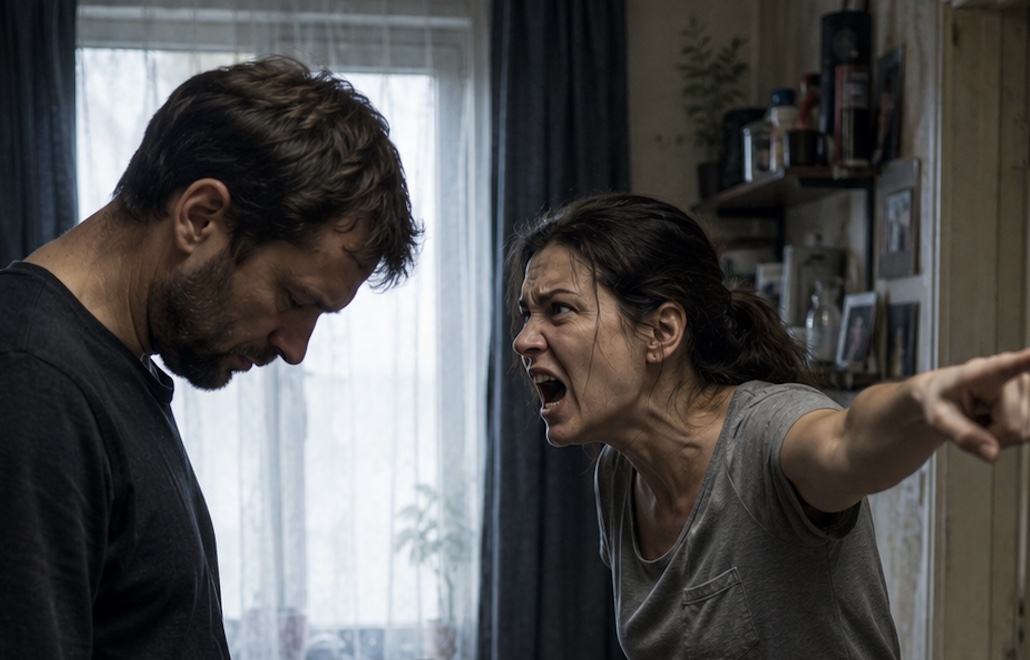
“Did you keep the receipt? I told you to buy the milk only if it had the yellow discount tag. There’s a fifteen-ruble difference, and we still have four days to survive before payday,” Veronika said without turning around, continuing to stir the plain buckwheat in the pot. It was already starting to burn against the thin bottom.
Matvey sat hunched over his math textbook, trying to write his numbers neatly, though his elbow kept bumping into the sugar bowl. The kitchen in their one-room apartment was so tiny that even two people felt cramped there. Three people had almost no air to breathe. The wallpaper above the table had long ago peeled away from the dampness, but there was no money for repairs — not now, and not even in the distant future.
“Oh, Veronika, will you stop obsessing over every kopek?” Anton walked into the kitchen glowing like a polished samovar, bringing with him the smell of the street and a completely inappropriate festive excitement. “We’re celebrating today! I bought a cake. Prague cake. A real one, from the bakery.”
He loudly dropped the plastic cake box, tied with a golden ribbon, right on top of his son’s textbook. Matvey flinched, looked up at his father in fear, but said nothing. He simply moved his notebook to the very edge of the table, as he was used to doing.
Veronika slowly turned around, wiping her wet hands on a faded towel. Her eyes slid over the gold ribbon, then over the price tag Anton had forgotten to remove in his burst of joy, and finally stopped on her husband’s shining face.
“Seven hundred rubles?” Her voice was quiet and dry, like sandpaper. “Anton, you bought a cake for seven hundred rubles? Matvey’s sneakers are falling apart. We glue the soles back on every week because they keep coming loose. I’m still wearing the jacket I had before maternity leave. Are you out of your mind?”
“Come on, we only live once!” he waved it off, taking off his jacket. The coat rack in the hallway was stuffed with their old winter coats, so he carelessly threw it over the back of the only free chair. “There’s a reason, you understand? A huge reason! Today I feel like a real man. A man capable of doing something meaningful.”
The fabric of the jacket was slippery, and it slowly slid down. With a dull slap, it landed on the floor. From the inside pocket, a thick, bulky envelope with the logo of a well-known bank fell out. The elastic band snapped, and its contents scattered across the dirty linoleum like a fan: glossy brochures for a residential complex called Forest Fairy Tale, a five-page payment schedule, and a thick stitched contract.
Veronika frowned. She knew that bank too well — they were already paying their mortgage there for this suffocating little hole, giving away half her salary every month. She bent down to pick up the papers before Anton, who had suddenly stopped smiling and lunged forward.
“Don’t touch that!” he barked.
But it was too late.
Veronika was already holding the top sheet in her hands. The letters seemed to jump before her eyes, but the meaning reached her mind quickly and mercilessly, like a whip cracking across her face.
“Mortgage loan agreement… Borrower: Anton Viktorovich… Loan amount: six million rubles… Property: two-room apartment, 54 square meters… Owner: Ekaterina Antonovna…”
Silence settled over the kitchen, broken only by the humming of the old refrigerator. Matvey stopped writing, sensing the air becoming heavy. Veronika looked at the next sheet.
A consumer loan.
Another two million.
The interest rate was brutal.
“You bought an apartment?” Veronika raised her eyes to her husband. There was no question in them anymore — only cold, terrifying realization. “For Katya? For your daughter who didn’t even wish you happy birthday last year?”
Anton straightened, adjusted his tie, and decided that the best defense was attack. His face took on the expression of offended virtue.
“Yes. I bought it. She turned eighteen a week ago. It’s my duty as a father. A girl should start adult life in her own place, not wander around rented rooms like we did when we were young. Am I a father or not? I had to give her a proper start.”
Veronika carefully placed the papers on the table, right on top of the Prague cake. Her hands did not tremble.
“Six million in mortgage debt, Anton. And two million in a consumer loan for the down payment. Where did the money come from? The paperwork? The insurance?”
“I saved,” he muttered, looking away toward the window. “I put aside bonuses, took extra jobs, saved on lunches.”
“You saved…” Veronika nodded slowly, as if confirming something to herself. “So when I walked around last winter in torn boots and treated bronchitis with raspberry tea because medicine was too expensive — you were saving. When Matvey needed a dentist and we went to the free clinic, where they almost twisted his jaw and put in a cement filling because there was ‘no money’ for a private dentist — you were saving. When we ate plain discount pasta for half a year — you were saving for a down payment for your daughter from your first marriage.”
“Don’t you dare count my money!” Anton flared up, red patches spreading across his face. “I earn it, so I decide what to do with it! Katya is my flesh and blood! She deserves a decent life! And we… we’ll manage. We have a roof over our heads. Nobody’s throwing us out.”
“A roof?” she repeated, gesturing at the shabby walls. “This ‘roof’ is also mortgaged. And we pay for it from my salary because yours supposedly goes toward food and utilities. But now I’m looking at this payment schedule. Monthly payment — sixty thousand. That’s more than your salary, Anton. What are we supposed to live on? How are you planning to feed your son, who is sitting half a meter away from you wearing a jacket handed down from the neighbor’s child?”
“I’ll find extra work! I’ll drive taxis at night!” he shouted, slamming his fist against the doorframe. “Why are you going on and on? You should be proud that your husband is a responsible man, not some drunk lying under a fence! I did something big! I secured a child’s future!”
Veronika stepped closer to him. Now she no longer saw her husband in front of her. She saw a stranger. A dangerous man who had stolen their family’s future for the sake of a beautiful gesture in front of his ex-wife.
“We live in a mortgaged one-room apartment, and you secretly bought your older daughter an apartment for her eighteenth birthday, taking the loan in your own name! You dumped millions of debt onto our family budget for that spoiled little princess, while our son sleeps in the same room with us! You betrayed us for your fantasy of being a ‘good daddy’! Get out!”
Anton froze. He had expected a scandal. Nagging. Tears. But not this icy rage.
“What?” he asked, confused. “Where am I supposed to go? This is my home too!”
“No, Anton. Your home is now on Lesnaya Street, building 4, apartment 28. I remembered the address from the contract. Go there. To your beloved daughter. Let her feed you Prague cake while you pay for her walls made of air.”
She grabbed his jacket from the floor and threw it in his face. The heavy folder of documents struck him in the chest.
“Get out of my life,” she whispered, and it was more frightening than any scream. “And I don’t want to see a trace of you here in five minutes.”
Anton slowly picked up his jacket, shook invisible dust from it, and looked at his wife with the condescending superiority of someone convinced that others were simply not mature enough to understand him. He did not believe she was really throwing him out. In his mind, it was a mutiny on the ship, a woman’s tantrum caused by exhaustion and lack of money.
“You’re speaking out of emotion right now, Veronika,” he said in a soft, persuasive tone that made her jaw tighten. “You measure everything in money, receipts, discounts. But some things are higher than that. Blood matters. Katya is my first daughter. Do you even understand how her eyes lit up when I gave her the keys? She threw herself around my neck and cried from happiness! She said, ‘Dad, you’re the best. You’re a real magician!’ Moments like that are worth living for. And here you are talking about some shoes…”
Veronika listened to him, and it felt as though she were watching a cheap television drama about rich, successful people — except the set around them looked like a horror film about poverty.
“She cried from happiness,” Veronika repeated slowly, looking straight between his eyes. “And our son, Anton, cried yesterday evening because he was ashamed to go to school in pants that are three centimeters too short. They laugh at him. But you don’t care about Matvey’s tears, because they don’t make you feel great. He just needs food and clothes. He is an expense. Katya is your pedestal.”
“Don’t exaggerate!” Anton grimaced as if from a toothache. “Matvey is a boy. It’s useful for him to understand the value of money. He’ll grow up and understand. We’re a family, Veronika! We’re supposed to support each other, not drag each other down. Fine, we’ll have to tighten our belts. A year or two. Maybe five. I’m not refusing responsibility! We’ll save more strictly. We’ll cancel the internet, switch to a cheaper phone plan, you can start doing your own manicures…”
“I haven’t had my nails done in a salon for two years,” she interrupted quietly, almost in a whisper. “I cut Matvey’s hair myself with clippers I borrowed from the neighbor. We only eat meat on holidays, Anton. Where else are we supposed to tighten the belt? Around our necks?”
She walked to the kitchen table, gathered the apartment documents he had so carelessly spilled, and shoved them into his hands along with the payment schedule.
“You talk about nobility? About being a man? A man first provides for the people he has brought into this cramped hole, and only then starts throwing millions around as gifts for adult daughters. You didn’t just steal money from us. You stole our peace. You stole Matvey’s childhood without poverty. You put everything in your own name so little Katya wouldn’t have to strain herself by paying even a single kopek.”
Anton pressed the papers to his chest, his face darkening with anger. He was tired of justifying himself. After all, he had done something grand. He was a hero. And this woman was trying to drag him through the mud.
“Yes, I put it in my name! Because she has no credit history! Because she’s a student! Who would give her a mortgage? I’m her father! I had to do it! And if you’re so petty, so cold-hearted that you can’t be happy for a girl, then I feel sorry for you. You’ve turned into a market woman shaking over every ruble. Where is the Veronika I fell in love with? Where is the lightness? Where is the support?”
“That Veronika died when she realized her husband was an egotist with delusions of grandeur,” she said sharply. “You say Katya was happy? Does she know what that gift cost? Did you tell her that her half-brother sleeps on a folding chair with a broken leg, propped up by books, because daddy was saving for the down payment? Did you tell her that her stepmother wears autumn boots in winter?”
“Why should she know that?” Anton was genuinely surprised. “Those are our internal matters. There’s no need to burden a child with adult problems. For her, this should be a celebration. A pure, bright celebration.”
At that moment, Matvey, who had been sitting quietly like a mouse, suddenly sniffled loudly. Anton glanced at him, then immediately looked away. The sight of his son in a faded T-shirt irritated him more than anything now — the boy was a living reproach, the very stain on Anton’s shining image as a generous father.
“A celebration, then,” Veronika said.
She went into the hallway and opened the wardrobe. A sports bag flew down from the top shelf.
“Pack your things. Right now.”
“Are you serious?” Anton smirked, but uncertainty crept into the sound. “Where am I supposed to go at this time of night? Stop this circus. Tomorrow you’ll calm down, and we’ll talk normally. I’ll get paid next week and buy your Matvey sneakers. Then maybe you’ll finally shut up.”
Veronika began throwing his clothes out of the wardrobe. Shirts, jeans, sweaters fell to the floor in a shapeless pile. She worked silently, methodically, without hysterical sobbing, and that frightened Anton more than anything.
“I will not calm down, Anton. Don’t you understand? This isn’t about sneakers. This is about the fact that you sold us. You sold us for Katya’s smile and your ex-wife’s gratitude. You decided to be good over there at our expense over here. So go there. Go to that apartment. You bought it, didn’t you? You’re the owner. Live there. On the floor, on a doormat, like a loyal dog who brought home the prize.”
Anton stared at the pile of clothes on the floor. Anger finally overcame confusion. Fine, then. So be it. He wouldn’t disappear. He had somewhere to go. He had a daughter who adored him, and an ex-wife with whom things had recently become wonderfully warm — of course they had, after a gift like that. They would accept him. They would understand. There, he would be appreciated.
“Fine,” he snapped, bending down and shoving clothes into the bag without caring if they wrinkled. “I’ll leave. But remember this, Veronika: there will be no way back. When you crawl to me begging for forgiveness, when you realize that without a man you’re nothing, I’ll still think about whether I should return or not. You’re destroying this family with your own hands because of greed.”
He zipped the bag with such force that it sounded like tearing fabric.
“The keys,” Veronika said, holding out her palm.
“What?”
“The keys to this apartment. Leave them. This mortgage is in my name, in case you forgot. The only things here that belong to you are debts and dirty socks.”
Anton threw the keys onto the small cabinet with force. The metal clattered and bounced on the surface.
“Choke on this dump,” he spat, pulling on his jacket. “I’m going to a new life. A spacious apartment in an elite building. And you two can stay here, breaking your backs and counting kopeks for milk. Enjoy your poverty!”
He grabbed the bag, the folder of documents, and left without even looking at his son.
The lock clicked.
Veronika stood in the middle of the hallway, listening to his footsteps disappear down the stairs. She did not cry. Inside her there was only emptiness, ringing and cold. But in that emptiness, for the first time in many years, a feeling of relief began to grow. One huge, hungry mouth, forever demanding admiration and resources, had finally left their lives.
Meanwhile, Anton was already dialing a taxi as he hurried down the stairs. In his head, he imagined the scene: he would arrive at Katya’s, tell them what a monster his wife was, and they would surround him with care, warmth, and dinner. He deserved it. He was no longer just a father. He was an investor in their well-being.
“Boss, stop by the entrance with the barrier. Yes, the tall building with the lighting,” Anton ordered the taxi driver, feeling the pleasant warmth of ownership spreading in his chest.
He paid and deliberately did not take the change. Then he stepped into the cool evening air. The sports bag pulled heavily at his shoulder, but to him that weight did not feel like the burden of exile. It felt like the weight of his importance.
He lifted his head. The windows on the sixth floor glowed with warm, inviting light. There, in the new apartment of the Comfort residential complex, his real life was beginning. A life where he was valued. Where his daughter looked at him with adoration, and his ex-wife Lena bit her elbows in regret, realizing what a generous man she had once lost.
Anton entered the intercom code confidently, like the owner.
Beep-beep.
The door opened, letting him into a clean entrance hall that smelled of fresh plaster and expensive cleaning products. In the elevator, one wall was entirely covered by a mirror. Anton smoothed his hair, adjusted the collar of his jacket, and winked at his reflection.
“Well, Veronika, sit there with your buckwheat. Daddy is going to a celebration.”
When he stepped out on the floor, he immediately heard music. Not loud, not pounding, but stylish lounge music seeping through a solid security door. Anton smiled. Katya had probably invited friends to celebrate the housewarming. That was fine. Father would not be in the way. Father would enter like a king.
He pressed the doorbell.
Behind the door came laughter, the clicking of heels on laminate flooring, and after a couple of seconds, the lock clicked softly.
“Oh, is it delivery? I thought we already…” The door opened.
Lena stood on the threshold.
His ex-wife looked as if she had stepped off a magazine cover: styled hair, a light dress, a glass of wine in her slender hand. Behind her, deep in the hallway, garland lights flickered and guests’ silhouettes moved. When she saw Anton with his bag and folder under his arm, she froze. Her smile slowly slid off her face, replaced by an expression of disgusted confusion.
“Anton?” She did not even step aside, blocking the entrance with her body. “What are you doing here at ten in the evening? We weren’t expecting anyone.”
“Hi, Lena,” Anton tried to put on his most charming smile, but it came out crooked. He stepped forward, intending to squeeze into the apartment, but Lena did not move even a millimeter. “I decided to surprise you. Congratulate you in person, so to speak. Check how our daughter has settled in.”
He placed his bag on the floor, making it clear he had come for a long stay.
“A surprise?” Lena raised an eyebrow, and metal rang in her voice. “Anton, you gave her the keys yesterday. The deal is done. Katya is having a party for her own people today. To put it mildly, you don’t fit the format of a youth gathering. And in general, you should call before visiting.”
Katya looked out from the room. In a short sparkling dress, with an iPhone in her hand, she looked completely happy and endlessly far away from her father’s problems. When she saw him, she frowned as if she had spotted a cockroach on the kitchen table.
“Dad?” she said in a spoiled tone. “What are you doing? I told you — no parents today. My friends are here. Nikita is here. Why did you come?”
Anton felt his confidence begin to crack. Where were the hugs? Where was, “Daddy, come in, sit at the head of the table”?
“Katyusha, here’s the thing…” He lowered his voice, trying to make it sound tragic. “I left Veronika. Or rather, she threw a tantrum over the apartment. She kicked me out. Can you imagine? I told her, ‘This is for my daughter, this is sacred,’ and she threw my things into the hallway. So I came to you. Temporarily. Until everything settles down.”
He expected outrage against the evil stepmother. He expected Lena to throw up her hands and Katya to rush to comfort him.
Instead, a heavy, sticky pause fell between them.
Mother and daughter exchanged glances. There was no sympathy in that look. Only the cold calculation of people whose plans had suddenly been interrupted by an inconvenient obstacle.
“What do you mean, ‘to us’?” Lena asked slowly, sipping her wine. “Anton, I think you’re confused. This is Katya’s apartment. You gave it to her. A gift means you handed it over and forgot about it. There is no room for you here. There isn’t even an extra sofa. We planned the living room as a relaxation area, not a shelter for runaway husbands.”
“Lena, what are you talking about?” Anton stared at her, his face reddening. “I bought this apartment! I’m paying for it! Look, I have the payment schedule right here! I took the loan in my name so Katya could have a start in life! I have the right to live here if I have nowhere else to go!”
He shook the folder of documents in front of their faces as if it were a pass into paradise.
“Dad, don’t start, okay?” Katya rolled her eyes, and the gesture cut painfully into his pride. “You bought it — great, thanks. But that wasn’t the deal. My personal life is starting here. Nikita is staying over tonight. Where are you planning to sleep? On the mat in the hallway? That’s just cringe, honestly. Go to a hotel.”
“A hotel?” Anton choked on air. “I don’t have money for a hotel! I poured everything into the down payment! I paid for your renovation, for this damn furniture! I came to you with my heart open. I sacrificed my family for this, and you’re telling me it’s ‘cringe’?”
He tried to push past Lena with his shoulder, but his ex-wife turned out to be surprisingly strong. She pressed her palm against his chest, stopping him. She smelled of expensive Chanel perfume, and suddenly that scent seemed to Anton like the smell of betrayal.
“Stop right there,” Lena said, her voice turning icy. “Don’t you dare put your hands on anyone. Your sacrifices, Anton, were your personal choice. Nobody forced you, and nobody begged you to buy this apartment. You wanted to play oligarch. You played. Well done. Now don’t dump responsibility on the child. Katya is not guilty because you failed to sort things out with your current wife. That is your problem.”
“My problem?” he shouted, no longer holding back. The music inside the apartment went quiet, and one of the guests peeked into the hallway. “Have you both lost your minds? I’m paying the mortgage! I’m the owner by the documents… I mean, the payer! I’m coming in now, and you won’t stop me! This is my home!”
“Your home is where you’re registered,” Lena cut him off sharply. “And here, the owner is Ekaterina Antonovna. You arranged it that way yourself so Veronika wouldn’t make any claims during a divorce, remember? You bragged about how clever you were. Well, your cleverness worked. The apartment belongs to Katya. And she doesn’t want to live with her father. She has that right.”
Anton stood there, breathing heavily. The bag by his feet felt like a stone. He looked at the daughter for whom he had betrayed Matvey, for whom he had chained himself to twenty years of debt. Katya stood with her arms crossed over her chest and looked at him with bored irritation. Not a drop of gratitude. Not a shadow of love. Only annoyance that the old wallet had suddenly started talking and demanding attention.
“Katya,” he said hoarsely. “Daughter. I did this for you… I’m your father. I have nowhere to go. It’s night.”
Katya shifted from one foot to the other, adjusting the strap of her dress.
“Dad, call a taxi and go to your mom. Or to a friend. Seriously, don’t ruin the evening. The guys are waiting. We ordered sushi, the courier will arrive soon, and here you are… with a suitcase. It’s just ridiculous.”
She turned to her mother.
“Mom, deal with him, please. I need to get back to the guests.”
And she simply turned around and walked back into the room, swaying her hips. Laughter behind the door resumed almost immediately. For her, the incident was over. Dad was a function. The function had completed its task and malfunctioned. The function had to be deleted.
Anton was left alone with Lena, who looked at him the way a doctor looks at a hopeless patient — without pity, but with professional cynicism.
“You heard her?” she asked quietly. “Leave, Anton. Don’t disgrace yourself in front of the neighbors. You are nobody here. Just a wallet with legs that suddenly imagined itself a person.”
“I’ll stop paying,” he breathed, feeling the ground vanish beneath him. “I won’t pay the bank! They’ll take the apartment!”
Lena laughed. Short and sharp.
“You won’t. You’re a coward, Antosha. You’ll be afraid to ruin your credit history and be seen as a failure. You’ll keep paying and grinding your teeth, because otherwise you’ll have to admit you’re a fool. And you’re too proud for that.”
She grabbed the door handle.
“Get out of here. And take your bag. It ruins the interior.”
“Are you deaf? I said get out before I call security,” Lena lowered her voice to a hissing whisper, and there was more threat in it than in any scream. “The apartment is a gift. You are not needed here. We have our own life. And I will slam this door in your face with a clear conscience.”
Anton pressed his shoulder against the doorframe, preventing the heavy metal door from closing. Panic and rage churned together in his eyes. He, a man who had just sacrificed the well-being of one family for another, had suddenly become trash they were trying to sweep over the threshold.
“What gift, Lena?!” he roared, his voice echoing through the sterile, clean hallway. “This is a mortgage! For twenty years! I can stop paying tomorrow! I can revoke the gift deed, or whatever it’s called… I’ll drag you through court! You’ll both end up on the street!”
From inside the apartment, from the festive noise and laughter, Katya appeared again. In one hand she held a Philadelphia roll, in the other, a glass. Her face twisted with disgust, as if she had stepped in mud with new shoes.
“Mom, how long is this going to take?” she whined, not even looking at her father. “Nikita is asking what homeless guy is yelling out there. This is so embarrassing. Dad, can you just disappear? You gave me the apartment — thanks, you’re great. But I never agreed to live with you. You snore, you’ll lecture me about life, you’ll whine about saving money. I don’t need that. I want to live alone. Isn’t that what you wanted for me?”
Anton could not breathe. His daughter’s words struck more precisely and more painfully than any argument from his ex-wife.
Homeless guy.
She had called him homeless in the apartment for which he had given everything.
“Katya…” he rasped, reaching his hand toward her. “I did it all for you… I took bread from my own son so you could eat sushi. I have three hundred rubles in my pocket until payday. I have nowhere to sleep!”
“That’s your problem, Anton,” Lena interrupted harshly, pushing him hard in the chest. “You’re a grown man. Rent a bed in a hostel. Borrow from friends. But don’t force your way in here. You fulfilled your function — you provided housing for your child. Your mission is complete. You wanted to be a ‘good daddy,’ didn’t you? Congratulations. On paper, you became one. In real life, you’re just an intrusive ex who doesn’t understand the word no.”
Anton tried to grab the door handle, but Lena quickly kicked his heavy sports bag with her foot. The bag flew toward the elevator and fell on its side. Anton instinctively turned toward his belongings, and at that moment Lena slammed the door shut with force.
The lock clicked.
Once. Twice.
The bolt clanged.
Anton remained standing in front of the blank, dark gray surface of the expensive security door. He hit it with his fist.
Once.
Twice.
“Open up!” he shouted, his voice breaking. “Open the door, you beasts! I pay for these walls! Let me in!”
Behind the door, everything went quiet. The music stopped. Then Katya’s muffled voice came through:
“Mom, turn the music up. Let him yell himself tired and leave.”
And the beat started again, drowning out his pitiful attempts to be heard.
Anton pressed his forehead against the cold metal. Blood pounded in his temples. Slowly, he slid down and squatted on the dirty mat by the threshold. The phone in his jacket pocket vibrated. With trembling hands, he pulled it out.
A notification from the bank lit up on the screen:
“Reminder: loan payment will be withdrawn in three days. Amount: 62,400 rubles. Please ensure sufficient funds in your account.”
He looked at the numbers and wanted to howl.
The laughter behind the door grew louder — perhaps the courier had arrived, or someone had told a funny joke. There was life there. Bright, full, well-fed life. A life he had paid for.
And here, on the stairwell, there was only him, his bag, and his debts.
Suddenly, a saving thought flashed through his mind.
Veronika.
She was kind. She cooled down quickly. She had simply lost her temper. She loved him. They had been together for so many years. She could not abandon him in a situation like this. He just needed to press on her pity. Say he had made a mistake. Say he had been deceived.
He dialed her number.
The rings went on for a long time, endlessly long. Finally, she answered.
“Veronika!” he exhaled, feeling a lump rise in his throat. “Veronika, sweetheart, listen… They kicked me out. Can you imagine? Those beasts… I came to them with my heart open, and they… I have nowhere to go, Nika. I’ll come home now, okay? I understand everything. You were right. We’ll fix this. I’ll transfer the loan, I’ll think of something…”
Silence hung on the line. There was no breathing, no sobbing. Only the background noise of a television — probably cartoons that Matvey was watching.
“Anton,” his wife said, and her voice was completely unfamiliar. Calm, like that of a pathologist. “You will not come here. I changed the locks. The locksmith just left. The things you forgot — your winter boots and tools — I put them out in the hallway. I think the neighbors have already taken them.”
“What do you mean, changed the locks?” Anton froze. “You have no right! This is my apartment too!”
“No, Anton. You made your choice tonight. You chose to be a ‘good daddy’ for Katya. So be one. Matvey and I have our own life now. Poor, difficult, but without a rat in the house.”
“Nika, don’t be stupid!” he shouted into the phone. “I’ll be ruined! I owe six million! If I don’t pay, the bank will come after us!”
“Let them come,” Veronika replied indifferently. “Is the apartment pledged to the bank? Then let them take Katya’s apartment. They won’t touch our one-room flat. It’s our only home, and I’ll prove that you took those loans without my consent, for your personal purposes. I’ve already consulted someone. You’ll be left with nothing, Anton. Absolutely nothing.”
“You won’t do this… You love me…”
“I loved a husband who cared about his family. But I despise the man who stole my son’s childhood for the sake of showing off. Goodbye, philanthropist.”
The short beeps hit his ears harder than a slap.
Anton dropped the phone. It hit the floor, the screen cracked, but it continued glowing. He sat on the mat in front of his daughter’s door — the daughter who had thrown him out — listening to the dead line from the wife who had cursed him.
To his left lay the bag with wrinkled shirts.
To his right lay the folder with a twenty-year payment schedule.
From behind the door came another burst of laughter. Katya was laughing brightly, freely. She had everything: an apartment, youth, friends, and a future paid for in advance.
Anton slowly picked up the folder from the floor, pressed it to his chest, and began to cry.
Angrily.
Helplessly.
Silently.
He had received exactly what he had bought.
Loneliness on credit.