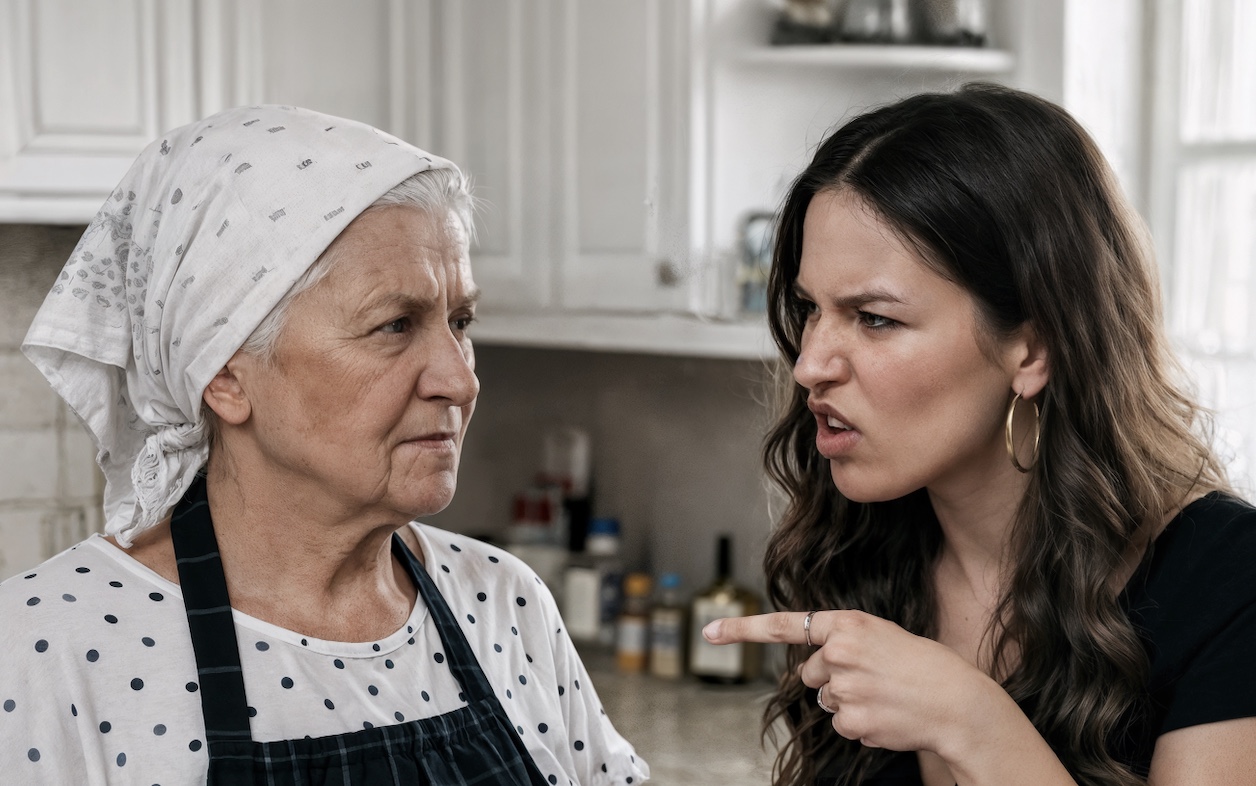
The kitchen was so stifling that the windows had turned white with steam. Hanna Stepanovna wiped the sweat from her forehead with the back of her hand, her skin still burning from the oven heat. The clock showed seven in the evening. She had been on her feet since six that morning.
Tonight her daughter-in-law Alina, twenty-eight years old, was celebrating a promotion. Her friends were coming over to the apartment—well-groomed women with flawless nails, the kind who might not know the price of basic groceries but could easily tell you the cost of a beauty treatment.
Hanna stirred her signature borscht made with pork ribs. Nearby sat homemade roast pork, aspic, and several salads, all cooling on the counter. Alina had requested everything a week earlier, tossing the words out casually:
“Hanna Stepanovna, you’re the homemaker here, so make it delicious like always. The girls are all on diets, but they definitely won’t say no to your meat.”
The woman let out a tired sigh. Just two years earlier, this spacious apartment had belonged to her. After her husband died, she had remained its sole owner. But then one day her son Igor came to her with a request that changed everything.
“Mom, Alina and I need more room. You’re alone in a four-bedroom apartment. Let’s transfer it into my name, fix it up, and live together. You’ll live like a queen—no worries, no chores. Later you can help with the grandkids.”
Hanna believed him. She loved her son too much not to. She signed the deed of gift. The first few months really were peaceful. Then little by little, everything shifted.
First, the family dinners disappeared. Then Alina gently suggested that Hanna move into the smallest room—“we need the bigger one for a dressing room.” Before long, Hanna Stepanovna had quietly become an unpaid cook, cleaner, and laundress.
The kitchen door swung open sharply. Alina appeared in the doorway, wearing a tight dress and smelling of expensive perfume.
“Hanna Stepanovna, where’s the hot dish? The girls are already waiting! And why does it smell like onions in here? I told you to turn on the hood!” she said with obvious irritation.
Hanna carefully picked up the heavy porcelain tureen, a wedding gift from long ago.
“Set it down and then go back to your room. You’re not needed here,” Alina said, adjusting her hair.
“We want to relax and talk. And close your door so the television won’t bother us.”
Hanna froze. The tureen suddenly seemed twice as heavy. She looked toward the hallway. Igor was standing there. He had heard everything. Their eyes met. He looked uncomfortable for a second… then glanced away and walked off.
Something inside her broke. Not the sound of dishes—no. It was the final crack in her last hope.
She gave a calm nod.
“All right, Alina.”
She placed the tureen on the table, wished the guests a pleasant evening, and returned to her room. But she did not turn on the television. And she did not cry.
Instead, she sat at her desk, switched on the lamp, and took out a folder full of documents. It was an old accountant’s habit—keep everything, record everything.
When she had signed the deed two years earlier, a notary she knew had warned her:
“Make sure you include the right to live there for life. And remember—if your rights are violated, the agreement can be challenged. Keep every piece of proof.”
At the time, she had not thought much of it. Still, she had listened.
Now spread out on the table were:
utility bills she had paid herself;
grocery receipts showing the food had been bought with her money;
medical certificates documenting high blood pressure, stress, and hypertensive episodes.
And one more thing—security cameras Igor had installed “for safety.”
Hanna opened the recording. Alina’s voice sounded cold and sharp:
“Put it down and leave. You’re in the way here.”
And there was her son, walking past.
She saved the footage. More than one clip, just to be safe.
That night she packed two suitcases. In the morning, she called a taxi.
At seven o’clock, Alina walked into the kitchen expecting breakfast.
Instead, she found dirty dishes, bottles, and leftovers.
And at the table sat Hanna in a travel suit, perfectly calm.
“What is this supposed to mean?!” Alina shouted. “Why is this place such a mess?!”
Igor rushed in behind her.
“Mom, what is this performance? Alina has to get to work!”
Hanna answered evenly:
“Good morning. You can make your own coffee. Starting today, I no longer work here.”
Alina flushed with anger.
“How dare you?! This is my home! I only put up with you here!”
Hanna opened the folder with quiet composure.
“Your home? Let’s be precise.”
They sat down.
“I gave this apartment away believing I would be treated with respect. Instead, I became the servant. I pay for everything. Here is the proof.”
“You won’t prove anything,” Alina sneered. “The apartment is in Igor’s name!”
“You’re mistaken,” Hanna replied calmly. “The law allows a gift to be revoked if the donor’s rights are violated.”
She pressed play.
Alina’s voice filled the kitchen.
Igor turned pale.
“Mom… were you spying on us?”
“No. You were the ones watching me.”
She closed the folder.
“My lawyer is filing the lawsuit today. The apartment has already been frozen.”
“You wouldn’t dare!” Alina jumped to her feet.
“I already did.”
Hanna picked up her bag.
“Mom, wait…” Igor tried to stop her. “Let’s talk…”
She looked at him with quiet clarity.
“You saw everything and said nothing. I don’t need a son like that.”
And she left.
The court case lasted four months.
The evidence was undeniable.
The deed of gift was revoked.
The apartment was returned to Hanna.
A week later, Igor stood at her door holding a bouquet.
“Mom… forgive me… can I come home?”
She answered without raising her voice:
“You don’t have a home here anymore.”
She had already sold the apartment. The money was safely in her own account.
“I’m leaving. I’m going to live for myself now.”
She ended the conversation with the same calmness with which she had once set down that porcelain tureen.
Now the borscht simmering on the stove was made for no one but her.
And for the first time in years, it was not cooking under orders—but by her own choice.