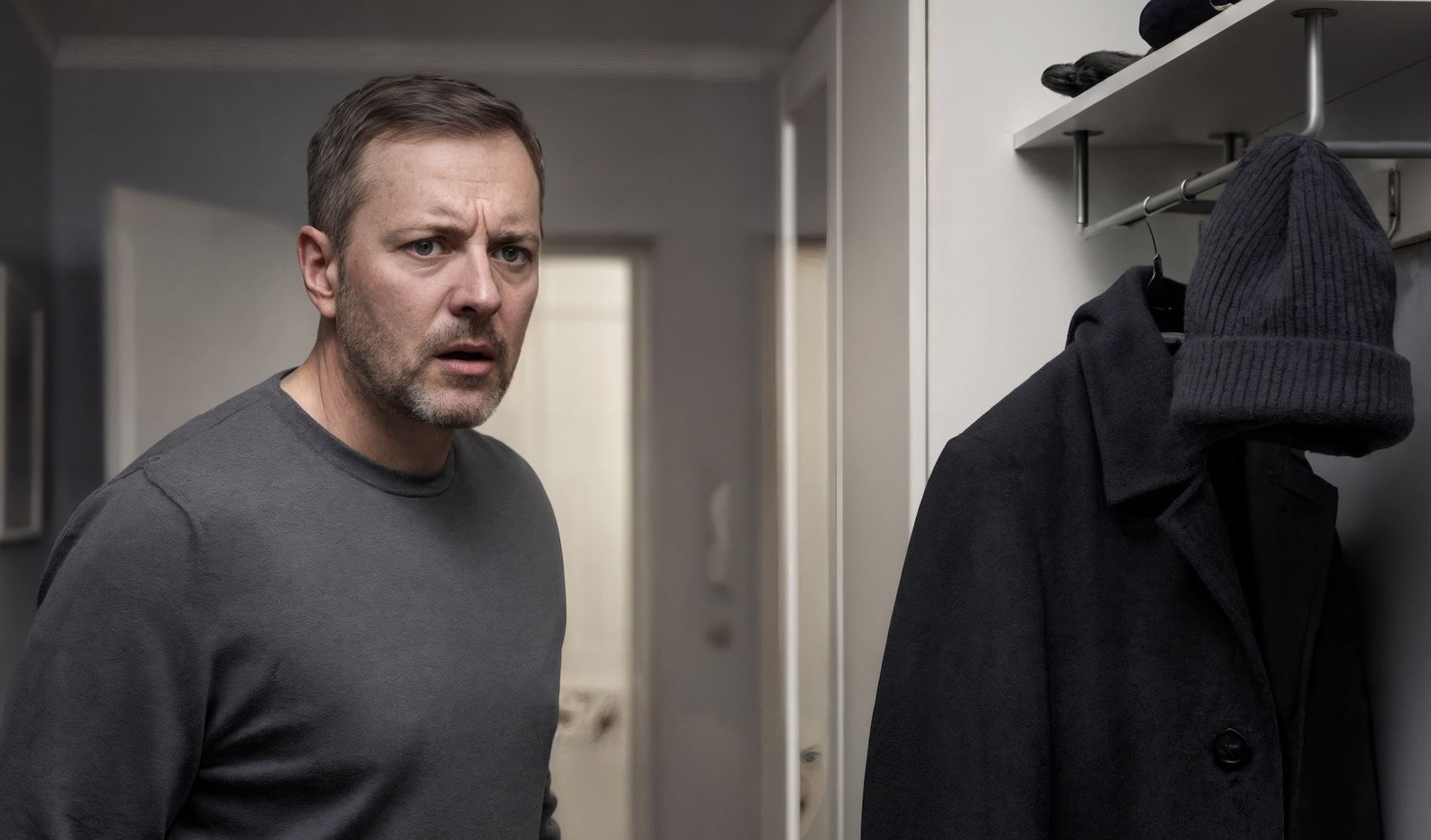
“What are you doing?!” Andrey burst into the entryway so violently he nearly tore the door off its hinges.
Marina didn’t even flinch. She stood by the mirror, adjusting her earrings—the same pearl ones he had given her for their tenth wedding anniversary. Three years earlier. Six months before he had walked out and slammed the door behind him.
“Whose stuff is this?” he snapped, jabbing a finger at the dark-blue cashmere coat hanging on the rack.
The coat was on his hook. In his place.
“Hello, Andrey,” Marina said at last, turning toward him. “You should have called first.”
He had left in style. Dramatically. With a speech about how “you never understand me” and “I need some air.” Back then, Marina had silently watched him toss his things into a suitcase. She hadn’t cried. She hadn’t begged. She had simply leaned against the doorframe and waited for him to finish his performance.
He never did.
Was six months a long time or a short one? Long enough to realize that Alina—the one who was “just a coworker”—didn’t smell the same. Didn’t laugh the same. And her borscht tasted like cafeteria sludge, nothing like Marina’s, with prunes and that secret spoonful of adjika.
Andrey came back on a Sunday. He had chosen the moment carefully—he knew his wife would be home. He bought her favorite tulips. Rehearsed his speech in the car.
“I was a fool. Forgive me. Let’s start over.”
He opened the door with his own key. Grandly. Wearing the smile of a man certain of his victory.
And then he froze.
A man’s hat—a gray knitted one—was sitting on the shelf. Right beside his old baseball cap, the one Marina had never thrown away for some reason. And the coat… the coat was expensive. Clearly not some cheap off-the-rack thing. It carried the scent of unfamiliar cologne—woody, sharp, masculine.
“Who’s here?” His voice betrayed him with a tremor.
“A guest,” Marina said with a shrug. “You were the one who told me I needed to get out, remember? So I did.”
“Got out?!”
He grabbed the coat, hurled it to the floor, and stomped like a spoiled child.
“Where is he? I’ll—”
“You’ll what?” Marina lifted an eyebrow. “Hit him? Challenge him to a duel? Andrey, you’re forty-three years old. Stop making a spectacle of yourself.”
She bent down, picked up the coat, brushed it off carefully, and hung it back up.
On his hook.
The kitchen light was on. The air smelled of coffee and cinnamon—Marina always baked with cinnamon. Andrey walked down the hallway like a man on his way to the scaffold. His heart was pounding somewhere in his throat.
A man was sitting at the table. Gray-haired, thin, around sixty. He wore a plaid shirt and house slippers. Marina’s guest slippers—the ones she always kept for visitors.
“Meet him,” Marina said, walking past Andrey and sitting across from the stranger. “This is Viktor Sergeyevich. My father.”
Andrey stopped in the doorway.
“What father? You don’t have—”
“I didn’t,” she said, taking a sip of coffee from his favorite mug, the one that read Best Husband. “For twenty-eight years, I didn’t. Now I do.”
Viktor Sergeyevich looked at Andrey without the slightest warmth. Calmly. Appraisingly. The way someone might look at a cockroach before deciding whether to crush it or let it crawl away.
“So this is what you’re like,” he said at last. “The great romantic hero.”
“I didn’t—”
“You left my daughter for some random woman. For six months you never called. Never once asked whether she was alive. And now you show up with flowers,” he said, nodding toward the tulips Andrey was still clutching in his hand. “And you think that’s enough?”
“Dad,” Marina said, resting her hand on his. “We’ll handle this ourselves.”
“Dad? What kind of father is he to you?!” Andrey threw the bouquet onto the table. The tulips scattered, one of them falling straight into a cup of coffee. “You told me he left when you were three! Twenty-eight years without a word, and now he suddenly appears?!”
“Exactly,” Viktor Sergeyevich said calmly, fishing the tulip out of the coffee. “I was a terrible father. But do you know what makes me different from you?”
“What?”
“I didn’t come back because I got bored of the new woman. I came back because I’m dying.”
Silence.
Only the refrigerator hummed—the old one from their first rented apartment. Marina had wanted to replace it. Andrey had kept putting it off.
“Pancreatic cancer,” Viktor Sergeyevich said in the same tone someone might use to comment on the weather. “Three months. Maybe five. I spent two years looking for Marina. I wanted to make it in time… to ask for forgiveness.”
Marina turned toward the window. Her shoulders trembled.
“And she forgave you?” Andrey let out a hoarse laugh. “Twenty-eight years—and just like that, she forgave you?”
“No,” Marina said, turning back. Her eyes were dry and sharp. “I didn’t forgive him. But I gave him a chance. Because sometimes people deserve a chance. Do you understand?”
She was looking straight at her husband. Looking at him so steadily that he took a step back.
“You got a chance too, Andrey. Six months ago. When I called you at three in the morning because my mother had a stroke. Do you remember what you told me?”
He remembered.
“Don’t drag me into your problems. We’re not a family anymore.”
“I was angry, I—”
“She died a week later. In the hospital. I was holding her hand. Alone.”
Viktor Sergeyevich got to his feet. Slowly, heavily, steadying himself on the table. Then he walked right up to Andrey.
“I’m not going to hit you,” he said quietly. “I’m too old and too sick. But I’ll tell you something, son. I wasted my entire life. Chased money, career, women. And then I woke up in a hospital room and realized I had nothing. Absolutely nothing. Except a daughter I had abandoned.”
He took the coat from the rack. Pulled on the hat.
“Marina is kind. Too kind. She let me cross her threshold. But you…” He gave Andrey a long look. “You didn’t earn even that.”
The door slammed shut.
They were alone.
Marina gathered the scattered tulips. Her hands were steady.
“Why didn’t you tell me?” he asked. “About your mother, about…”
“What for?” She set the flowers in the sink. “You made yourself very clear. We’re not a family anymore.”
“I lost my temper! I want to fix this!”
At last Marina looked at him. For a long time. Carefully. As if he were a stranger.
“You know, Andryusha… six months ago, I would have given anything to hear those words. But now…”
She slipped off her wedding ring. Set it on the table beside the soggy tulip.
“Now I have nothing left to say to you. Leave your keys on the cabinet.”
Andrey stepped out onto the landing. The stairwell smelled of dampness and cats. Viktor Sergeyevich was standing by the window, looking out into the yard.
“So? She threw you out?” he asked without turning around.
“That’s none of your business.”
“That’s true. It isn’t.”
The old man started coughing—a harsh, tearing cough. He pulled out a handkerchief and wiped his lips. Bright red stains were left on the white cloth.
“Want one last piece of advice?”
“No.”
“I’m giving it anyway. Don’t come back. Don’t call. Don’t write. Let her finally live in peace.”
Andrey walked past him in silence. At the building’s exit, he stopped.
“And you? Why did you come back if you’re dying anyway?”
Viktor Sergeyevich smiled. Crookedly. Painfully.
“So she would remember that even the most lost people can still change. At least in the end.”
The front door banged shut.
The tulips were still lying in the sink—unwanted, already beginning to wilt.
Marina stood by the window and watched as her husband got into the car.
Her ex-husband.
She tested the word silently in her mind.
Bitter. But bearable.
The ring was still on the kitchen table. She would pick it up tomorrow. Take it to a pawnshop. Buy her father a warm blanket—he was always cold.
Three months. Maybe five.
Long enough to learn how to forgive.