My mother-in-law, Inna Timurovna, has a special gift: she can take someone else’s job and somehow treat it like her own private asset.
When Anton and I were newly married, she genuinely believed his work in mobile communications had nothing to do with towers, billing systems, or network maintenance. In her mind, his real job was to magically arrange free unlimited calls for her and make sure her internet “never ran out.”
Now that I’ve become the senior nurse in a surgical department, the direction of her opportunism has shifted. She suddenly decided I was some kind of cross between the Minister of Health and a miracle worker, capable of everything from “getting hold of a hard-to-find pill” to “slipping a nice person into a private room with a park view.”
“Olya,” my mother-in-law said on the phone in a tone so demanding it sounded like she was chasing down a pizza delivery that was three hours late, “Lyudochka—you know, the niece of the third cousin of the matchmaker’s sister—has a migraine. She needs to lie down in the hospital.”
“Inna Timurovna, good evening,” I said. “If she needs to lie down, she can do that on a sofa. We’re in surgery. We operate on people, stitch them up, and save lives. Migraines are for a neurologist, an outpatient clinic, and a scheduled visit.”
“Don’t get clever with me!” she snapped. “What, is it so hard? Let someone take a look at her, give her an IV, some vitamins. You’re the boss there, aren’t you? Just tell the doctors to admit her.”
“I’m not the boss,” I replied. “I’m the senior nurse. I’m responsible for order, sterility, and shift schedules. I do not kick doors open and hand out hospital beds to healthy people who are simply tired of being at home.”
Silence fell on the line.
Inna Timurovna, a former supply manager at a kindergarten, had long lived by the belief that state-owned butter in the porridge and butter in her handbag were basically the same thing. The concept of “you can’t” made no sense to her. In her world, “you can’t” only meant “you haven’t asked the right way yet.”
Anton, my husband, was sitting next to me peeling a tangerine. The moment he heard his mother’s tone, he quietly held out his hand, took my phone, and put it on speaker.
“Hi, Mom. We’ve already discussed this,” he said. “Olya is not a public service desk. If Lyudochka wants to be admitted, she can call an ambulance. If the doctors decide she needs hospitalization, they’ll bring her in. If not, then no.”
“Antosha!” the phone shrieked. “You’re completely whipped! Your wife matters more to you than your own mother! I’m not asking for myself—someone is suffering!”
“If someone is suffering, they call emergency services, not their daughter-in-law at ten o’clock at night,” Anton said flatly, and ended the call.
Then he looked at me and said with total calm, “Next time just tell her the service isn’t free and you’ll send the invoice.”
But Inna Timurovna was an old-school woman. She believed persistence wears down stone, and shamelessness opens any door.
Things started snowballing fast. First came the little favors:
“Olenka, the neighbor’s grandson twisted his ankle—have your surgeon see him without the wait, they’re already on their way.”
I stopped them before they even got near the ward and sent them to the proper urgent care clinic. Then came the offended accusations:
“You’ve gotten too full of yourself!”
The grand finale happened at Uncle Misha’s anniversary party. Uncle Misha, my mother-in-law’s brother, was a character in every sense—a retired crane operator, built like a mountain, with hands like excavator buckets and a voice that made the glass in the china cabinet vibrate. Anton and I came hoping to congratulate him, sit quietly for a while, and leave.
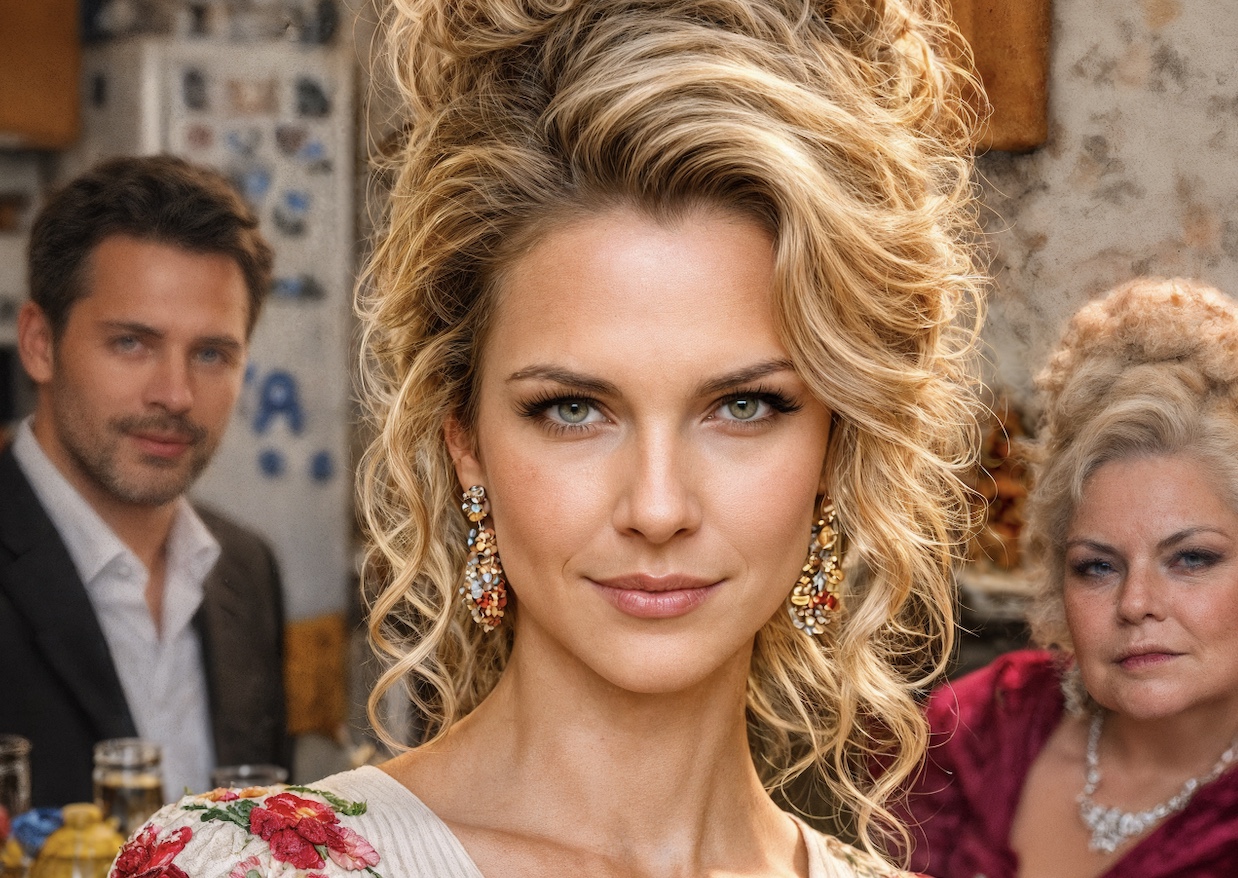
At the table sat the entire extended clan. Inna Timurovna kept shooting me glances heavy with reproach. Beside her sat the famous Lyudochka herself—a woman of uncertain age with a permanently tragic face, allegedly crippled by migraines, while enthusiastically helping herself to herring salad and cognac.
“And here comes our healthcare system,” my mother-in-law announced loudly the moment we walked in. “Cold-hearted and merciless.”
“Good evening to you too, Mom,” Anton said, kissed her on the cheek as if she hadn’t said a thing, and seated me next to Uncle Misha.
He winked at me.
“So, Olyushka, she’s on your case again? Don’t take it to heart. Inka doesn’t have brain folds, she’s got supply invoices from 1985 rattling around in there. She thinks if you stand by the pot, the ladle must belong to you too.”
“Something like that, Uncle Misha,” I said with a smile.
Halfway through dinner, once the mood had loosened and the alcohol had begun doing its work, Inna Timurovna decided it was time to strike.
She tapped her fork against her glass to get everyone’s attention.
“Here we are, all celebrating,” she began in a syrupy voice, “while Lyudochka, by the way, has her examination tomorrow. I arranged everything. Olya, you didn’t forget, did you? Tomorrow at eight in the morning Lyuda is expected by Professor Preobrazhensky… well, whatever his name is, your department head.”
I froze with a sandwich in my hand. Lyudochka smugly adjusted her hair.
“Inna Timurovna,” I said, my voice calm but clear enough to cut through the clatter of dishes, “what exactly did you arrange? And with whom?”
“What do you mean, what?” she said, flinging up her hands. “I told everyone my daughter-in-law had taken care of it. Lyudochka will come, you’ll meet her, settle her into one of those VIP rooms—the paid one, obviously, but free for family—and then the doctor will examine her. MRI, ultrasounds, a full workup. We need to know why her head hurts, don’t we?”
The whole table went silent. Everyone was looking at me.
It was the perfect trap: if I refused in front of everyone, I’d look cruel; if I agreed, I’d be committing professional misconduct.
I carefully put my sandwich back onto the plate and addressed the entire table.
“You know, people often confuse kindness with weakness, and professional ethics with being difficult. They think ‘connections’ are some magical master key that overrides rules, policies, and common sense. But the truth is, the system functions only when everyone does their own job. If a senior nurse starts telling surgeons whom to operate on and whom to ‘just squeeze in,’ the next thing you know we’ll be treating appendicitis with plantain leaves.”
Then I looked directly at my mother-in-law.
“Inna Timurovna, are you seriously telling everyone here that I promised to commit a corrupt act? Admit someone without medical grounds, without referral, and place her in a paid room at the hospital’s expense?”
“Oh, stop with those scary words,” she waved me off. “Corruption… this is helping family!”
“That,” Anton cut in, not even pausing his chewing, “is a criminal offense. Mom, are you out of your mind? Do you want Olya fired?”
“Who would fire her?” my mother-in-law shot back. “She knows everyone there!”
“And precisely because I know everyone there and respect them,” I said evenly, “I’m not going to do it.”
Then I turned to Lyuda.
“Tomorrow at eight in the morning, you’re welcome to go to the paid services desk. The rates are posted at the entrance. One day in a private room is five thousand rubles. A consultation with the department head is three thousand. An MRI is by appointment—there’s a two-week wait—and it costs seven thousand. I can give you the registration number.”
Lyudochka choked on her cognac.
“Five thousand?” she rasped. “Inna said it would be free…”
“Inna Timurovna misled you,” I said with a smile, though my eyes stayed cold. “She took wishful thinking and presented it as fact. I do not own the hospital. I am an employee. And I do not steal services from the state to hand them out to relatives.”
My mother-in-law went crimson.
“You… you’re humiliating me in front of everyone! I already promised them!”
“Then you shouldn’t promise things that don’t belong to you,” thundered Uncle Misha. He slammed his palm onto the table so hard the salad bowl jumped. “That’s your problem, Inka—you’ve been like this your whole life. First you wrote off government boots, now you’ve decided to privatize a hospital? The girl’s right,” he said, nodding toward me. “Don’t bend. Respect isn’t about stealing for your own people. It’s about making sure your own people don’t have to be ashamed of you.”
Inna Timurovna tried to launch into a full theatrical breakdown. She clutched at her chest and began breathing rapidly.
“Oh, my heart… Olya, do something!”
“Of course,” I said, taking out my phone. “I’m calling an ambulance. A cardiac team. I know the address. They’ll come, do an ECG, and if necessary, admit you. To a shared ward in the on-call hospital at the far end of the city.”
“No need for an ambulance!” my mother-in-law said, instantly recovering as soon as she realized the performance had failed. “You’re all so cruel. I’ll leave.”
Of course, she didn’t leave. Where else was she going to get fed that well?
But for the rest of the evening, she sat in sulky silence, offended at the entire world. Lyudochka, realizing there would be no freebies, immediately lost interest in us and turned her full attention to discussing pickle recipes.
On the drive home, Anton took my hand.
“I’m sorry for that circus,” he said. “Tomorrow I’m blocking her number for a couple of weeks. Let her think about her behavior.”
“No need to block her,” I replied. “I’ve simply moved our relationship onto a pay-as-you-go basis.”
And you know what was the most surprising part? After that, no one in the family ever again asked me to “admit,” “put on a drip,” or “get hold of” anything. Apparently, the moment the option of getting something for free disappears, people’s health improves immediately.
Now Inna Timurovna tells everyone that her daughter-in-law is strict, that “everyone walks the line” around me—but that I’m honest. I suppose she decided that if she couldn’t use me as a family resource, she could at least take pride in my unapproachable integrity as some kind of family asset.
In the end, boundaries are like a fence around a summer cottage: if it’s full of holes, the neighbor’s chickens will peck through your entire harvest. But if it’s tall and solid, people start greeting you with respect—even if it’s from the other side of the gate.