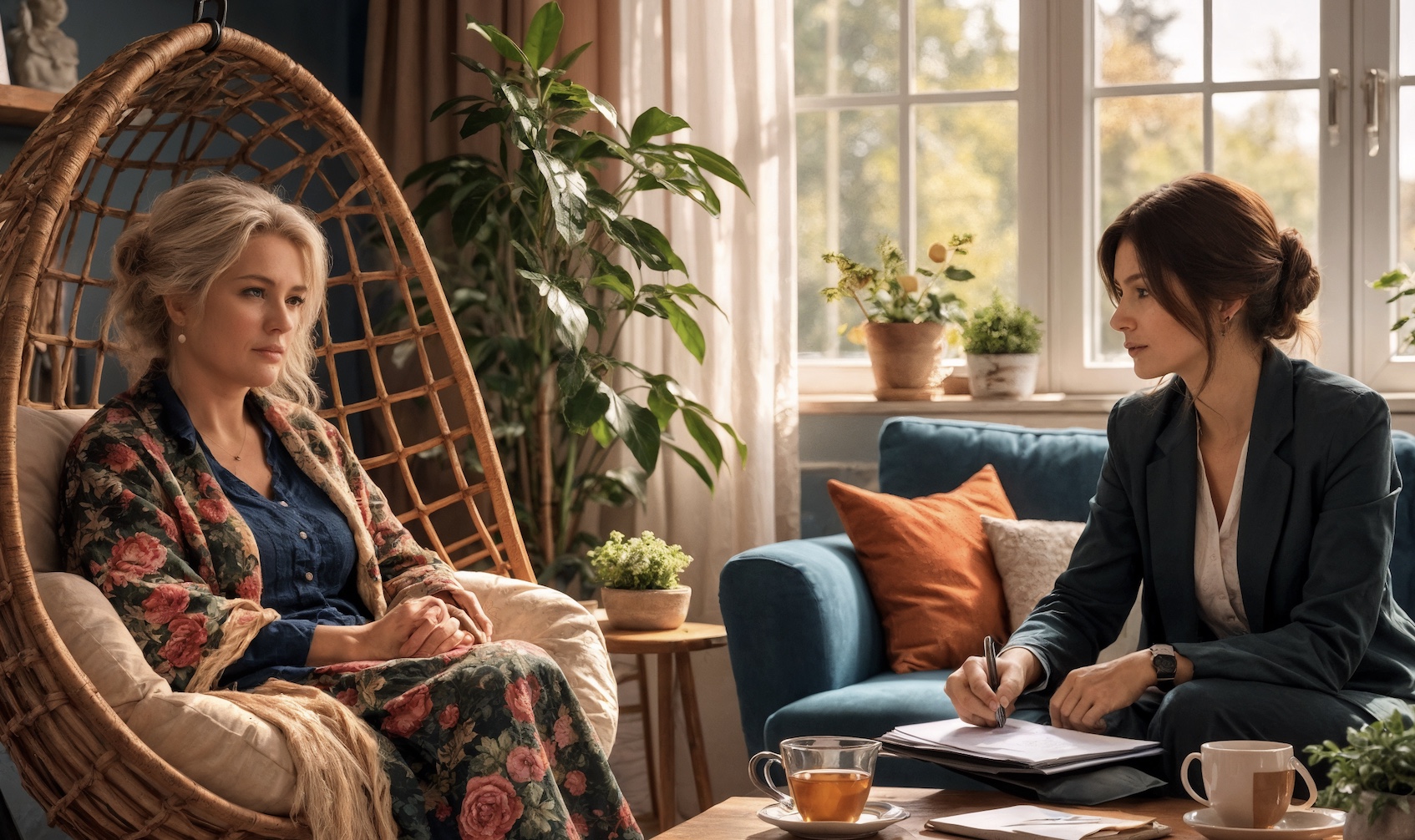
“Are you even listening to yourselves? Buy an apartment? For Sveta?” I set my coffee cup down on the table as slowly as I could, while a cold, deliberate fury began to boil inside me.
My mother-in-law, Antonina Petrovna, did not so much as blink. She was lounging in my hanging cocoon chair, swaying lazily and adjusting her new shawl.
“And what exactly is so shocking about that, Marina?” she said. “Andryusha gets paid in dollars. He’s one of those big important IT people. In one month, the two of you make what ordinary people do not see in three years. You already have two apartments, a brand-new car, and you travel three times a year. What do you need all that money for? Are you planning to pickle it? Meanwhile, poor little Sveta is dragging herself from one rented place to another with a child. Family is supposed to help!”
“Family means everyone contributes,” I cut in sharply. “Sveta is thirty and has worked, altogether, maybe six months as a receptionist at a tanning salon. The rest of the time she has been ‘finding herself’ on your dime. And now you expect my husband, who works twelve-hour days and studies new tech stacks at night, to casually throw down five million for her comfort?”
“Don’t be selfish,” Antonina Petrovna said, pressing her lips together. “Andrey is my son. I raised him. I stayed awake nights for him. If he does not buy his sister a home, then I want nothing more to do with him. Tell him that from me: either Sveta gets an apartment, or he no longer has a mother. That is my ultimatum.”
She stood up, slammed the door for effect, and left behind the heavy scent of her perfume and a deep, echoing silence.
I stood by the window, staring out. The irony of the whole situation was that Andrey, kind soul that he was, really might have given in. He could not handle conflict with his mother to save his life, and he had already started timidly suggesting that maybe we should help after all, because “Sveta could end up with nothing.”
But I knew Sveta. Give her an apartment, and within a month it would be full of dubious boyfriends, unpaid utility bills, and endless complaints that the view was not good enough.
“All right, Antonina Petrovna,” I whispered. “You’ll have your apartment. But it will be done my way.”
Andrey came home from work exhausted, drained to the bone. Another release, more bugs, more meetings with clients in the States.
“Did Mom call?” he asked, leaning against the doorframe.
“She did. She gave you an ultimatum. Either Sveta gets an apartment, or you’re an orphan.”
Andrey let out a long breath and closed his eyes.
“Marina, let’s just buy some little one-bedroom on the outskirts, okay? We have that reserve fund for expanding the office. I’ll make it back with bonuses in six months. I just want her to stop. I can’t listen to these hysterics anymore.”
I walked over and wrapped my arms around him gently.
“Darling, I agree. We’ll buy an apartment. Not even on the outskirts—a decent studio in a new development. But I’ll handle the paperwork. You don’t have time to run around government offices anyway.”
Andrey lit up at once. He had no idea that at that very moment, the great “big-shot IT guy” had just handed the project over to a far more experienced crisis manager: me.
The next morning, I called my mother, Valentina Ivanovna. My mother was a former chief accountant at a factory—a woman with iron logic and absolutely no sentimentality toward freeloaders.
“Mom, I need a favor. We’re buying an apartment, but it has to go in your name. The money is ours, the ownership is yours. My mother-in-law will think it is a gift for Sveta, but legally, Sveta will be nobody there.”
“I approve,” my mother said dryly. “And how exactly are we letting your sister-in-law live there?”
“Under a free-use agreement. Technically rent-free, but with a contract. And weekly inspections.”
Two weeks later, the deal was done. A bright studio with panoramic windows, a fresh renovation, and soft neutral finishes. Antonina Petrovna and Sveta were glowing like polished coins when we handed them the keys at a restaurant.
“Well, Andryusha, you can do the right thing when you want to,” my mother-in-law cooed, sipping prosecco we were paying for. “Now Sveta can finally live like a human being.”
“Oh, Marinochka, thank you!” Sveta threw herself at me for a hug. “I already picked out a sofa. Pink velvet. So gorgeous.”
“Hold on, Sveta,” I said, pulling a thick folder from my bag. “Before you move your things in, there are a few papers you need to sign. Just a formality for tax purposes. You understand—large sums, and Andrey works in IT, so financial monitoring pays special attention.”
Without even glancing at them, Sveta signed the “Agreement for Gratuitous Use with Sublease Provisions.” She did not bother reading the clauses about “maintaining sanitary condition,” “no unauthorized occupants,” and “weekly photo reports to the owner.” To her, it was just paperwork. To me, it was leverage.
A week passed. On Saturday morning I sent her a message:
“Hi. Waiting for the apartment status report. Kitchen, bathroom, main room. Deadline: 12:00.”
Her reply came an hour later, brimming with outrage:
“What do you mean? Marina, are you serious? I’m still asleep! What report? It’s MY apartment!”
I called her immediately.
“Sveta, dear, read the agreement. The apartment belongs to Valentina Ivanovna, my mother. You are living there as a guest as long as you follow the rules. If I don’t have the report by noon, I’ll be there at one with a cleaning crew and the spare keys. My mother is very concerned about her laminate flooring.”
I heard a strangled squeak on the other end. Twenty minutes later, the photos started pouring in. In the background, I could clearly make out a mountain of dirty dishes and the same “pink-sofa gentleman” standing around in nothing but his underwear—very much not an approved resident.
I texted her back.
“Sveta, the extra man needs to leave by tonight. The agreement is clear: occupancy is limited to you and your child. Guests may stay only until 10 p.m.”
That same evening, my mother-in-law appeared at my door in a fury.
“What kind of stunt is this, you monster? Who is this Valentina Ivanovna? Why is the apartment in your mother’s name? We agreed it was supposed to be a gift for Sveta!”
I calmly poured myself some tea.
“Antonina Petrovna, you asked for Andrey to buy Sveta an apartment. He bought one. Is she living there? Yes. Is she paying for it? No. We even cover the utilities. So what exactly is your complaint?”
“But she is not the owner! She is living there like a prisoner! You demand reports, you throw her friends out!”
“She is the owner of her life, just not of that property. Sveta is irresponsible. If we had put it in her name, she would have mortgaged it for a microloan by tomorrow or registered a whole herd of random tenants there. This way, she has a roof over her head as long as she behaves decently. Isn’t that what you wanted? Help for the family?”
My mother-in-law was practically choking on indignation.
“This is… this is fraud! Andrey! Andrey, come here! Look what your wife has done!”
Andrey stepped out of the office, rubbing his temples.
“Mom, Marina did the right thing. It’s our money, our risk. Sveta is living in a level of comfort most people can only dream about. What exactly is the problem? That she is not allowed to throw parties? That is better for your grandson too.”
That was the moment Antonina Petrovna realized her beloved “big-shot IT son” was no longer falling for cheap manipulation. His rear had been firmly protected by my accountant-style ruthlessness.
Sveta lasted three months. Every week she sent her reports, seasoning them with poisonous little remarks.
“Here’s your floor. Still not scratched up enough for you?”
“Here’s the sink. Shining like your lawyer’s bald head.”
I always replied with the same dry tone:
“Received. Please note the buildup in the shower stall.”
Then something unexpectedly human happened. Four months later, Sveta came to see me on her own. No mother. No demands. She looked unusually sober and composed.
“Marina… I, um… found a job. At a bank. Teller work. Hard, of course—on my feet all day, dealing with people—but the salary is official.”
I raised my eyebrows in genuine surprise.
“Congratulations, Sveta. What happened to ‘finding yourself’?”
She waved a hand dismissively.
“Oh, forget that. Mom nags me every day, saying I should ‘earn’ this apartment since you are all so cruel. And I thought… if I start making my own money, maybe you’ll cancel those stupid inspections. I’m thirty years old and living like a college kid under a dorm supervisor.”
For the first time, I smiled at her sincerely.
“You know what, Sveta? Work for six months and pay the bills yourself, and we can revisit the terms. Maybe we’ll even get rid of the reports. We don’t want to torture you. We just don’t want the apartment turned into ruins.”
A year passed. Sveta was still working at the bank. She had even started saving money. The apartment was still in my mother’s name, and I had no intention of changing that for at least another decade. Antonina Petrovna had accepted it, though whenever she gets the chance, she still mutters that her daughter-in-law is “hard as flint—you won’t squeeze an extra penny out of her.”
Andrey is happy. No more ultimatums. No more emotional blackmail. He writes his code in peace, knowing the family finances are protected by a concrete wall of contracts and my absolute unwillingness to bend.
The real irony of the story is that Sveta—the one everyone had written off as hopeless—became a normal, functioning member of society precisely because of that so-called tyranny. It turned out that when you are no longer free to destroy everything around you without consequences, you finally start building something instead.
Not long ago, at a family dinner, Antonina Petrovna started up again:
“Sveta is doing so well now, working and all. Maybe, Andryusha, you could buy her a car? Nothing fancy, something small. It’s inconvenient for her to take the bus…”
I caught my husband’s eye and answered sweetly,
“Of course, Antonina Petrovna. My mother happens to know a car dealer. We can put it in her name too, and let Sveta drive it… with a weekly mileage and engine-condition report.”
Silence fell across the room.
Then Sveta suddenly snorted and winked at me.
“No thanks, Mom. I’m saving up for a loan and buying one myself. It’s… more peaceful that way. No reports.”
That was my little victory. A victory of common sense over shameless dependency. Real humanity is not spoon-feeding a grown infant forever. Real humanity is making them stand on their own feet—even if, sometimes, you have to use legal chains to do it.