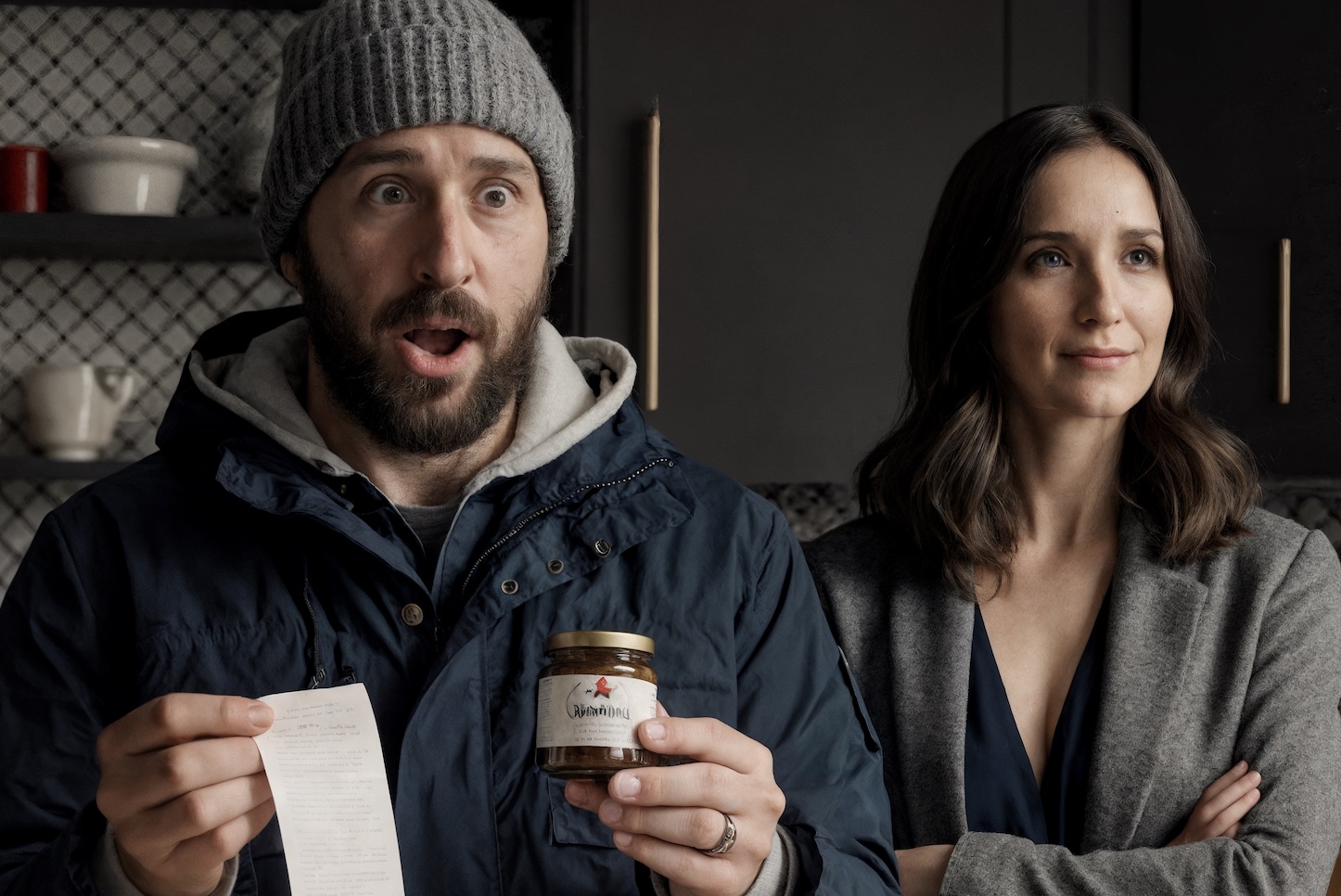
My New Year’s wishes were modest, almost ascetic: silence, my phone turned off, and a box of Philadelphia rolls under a warm blanket. No cooking, no guests, no endless obligations.
The sound of the front door opening tore through that fragile hope the way a firecracker shatters the hush of a library. Then Andrey stumbled into the hallway—my husband, rosy-cheeked, disheveled, and overflowing with almost pathological energy. Snow and enthusiasm seemed to be falling off him in equal measure.
Living large on five thousand
“Lenusya!” he yelled from the doorway, shaking snow off his boots right onto the freshly washed rug. “Celebrate! I’ve figured everything out—we’re saved from boredom!”
I slowly closed my laptop, my heart giving an uneasy little jolt.
“Saved from what boredom, Andrey?”
“How can you even ask?” he said, marching into the kitchen and grabbing an apple off the table. “I was riding up in the elevator and thought—why are we going to sit around like two retirees wasting away? It’s New Year’s! We should do it properly, the Russian way! So anyway, I called everyone.”
“Everyone… who?” My voice dropped to a whisper.
“My parents! My brother Seryoga and Oksanka with their little monsters! Aunt Lyuba and Uncle Vitya! I even invited Lyokha from the third entrance—he’d be all alone otherwise. We’ll have about twelve people!” Andrey was glowing like a polished samovar. “I told them, ‘Come over, my Lena’s table will be overflowing! She’s a miracle worker! We’re throwing a real old-school Soviet New Year feast!’”
Silence fell over the kitchen.
The only sound was the refrigerator humming, as if it, too, were trying to digest the horror of the situation.
I looked at my husband. He was forty-six years old, college-educated, capable of driving a car and even fixing electrical outlets. But when it came to household finances, he seemed permanently stuck in 2007, back when the dollar was thirty rubles.
“Andrey,” I said, trying to keep my breathing steady, “do you understand what twelve people means? It means three days at the stove and a mountain of dishes up to the ceiling. It means Uncle Vitya getting drunk and lecturing everyone on how to live. And most importantly—it means money.”
“Oh, here we go,” he said, rolling his eyes and taking a loud crunchy bite of the apple. “You always make everything so complicated. Lena, what is there to cook? We’ll chop up a giant bowl of Olivier salad—that’s one. Boil potatoes and pour some butter over them—that’s two. Throw a chicken in the oven—that’s three. A few caviar sandwiches, some cold cuts, pickles. That’s it! You’re a homemaker, after all!”
“‘That’s it,’” I repeated. “And the money? Andrey, we only just finished paying off the mortgage. What we have left on the card is all that’s supposed to last until January tenth. To feed twelve people ‘in style,’ the way you love to imagine, we’d need at least twenty to thirty thousand rubles.”
Andrey nearly choked on his apple.
“Are you insane? Thirty thousand? Have you even seen the prices?”
“I have. I’m the one who goes grocery shopping every three days. The last time you were in a store was when you were buying beer on sale.”
“Oh, stop making things up,” he said with a dismissive wave. “Mayonnaise costs next to nothing, potatoes cost next to nothing. Sausage… what, maybe three hundred rubles. We set aside five thousand and it’ll be more than enough. We’ll even have some left! You just don’t know how to save. My mother puts together amazing holiday tables on her pension!”
That was below the belt—comparing me to his mother, Nina Petrovna, who, in Andrey’s imagination, apparently survived on divine grace and could conjure aspic out of thin air. I knew the truth: Nina Petrovna starts setting money aside for the New Year’s table in September. But there was no point explaining that to Andrey.
Inside me, a cold, methodical rage rose up—the rage of a chief accountant.
“All right,” I said in an icy tone.
“See?” he said, brightening immediately. “You can be reasonable when you want to!”
“But there’s one condition.”
I stood up, walked over to the dresser, and took out some cash.
“I’ll cook. I’ll make your giant bowl of Olivier salad, roast the chicken, and even wash the dishes. But you’re doing the shopping yourself.”
He snorted and snatched the money from my hand.
“Easy. Write me a list. I’ll prove you wrong.”
Caviar, meat, and fantasies
I took out a sheet of paper and wrote carefully, leaving him no room for confusion.
“Red caviar,” I said, dictating while looking him in the eye. “Three jars. Twelve guests, one sandwich each plus some for decoration. And not imitation, Andrey—real caviar. Aunt Lyuba can spot fake from a mile away.”
“Three jars,” he scribbled in broad strokes. “Got it.”
“Meat: three kilos of pork neck. For the main course and for roasted pork.”
“Three kilos.”
“Red fish: trout or salmon, about five hundred grams, for slicing.”
“Fish.”
“Alcohol.” I paused. “Three bottles of champagne, minimum. Two bottles of vodka—Uncle Vitya only drinks the hard stuff. Two bottles of red wine. Three liters of juice. Sparkling mineral water.”
Andrey began to frown as the page filled up quickly.
“Vegetables: potatoes, five kilos. Carrots, beets, onions. Fruit: tangerines, three kilos—there’ll be kids. And a pineapple, since you wanted it ‘fancy.’”
“Russian cheese—and not processed fake cheese. Dry-cured sausage, ham, mayonnaise, a big tub. Butter, eighty-two percent fat. Bread, baguette, chocolates for tea, napkins.”
When I finished, the list looked substantial.
“That all?” he asked, stuffing the paper into his jeans pocket. “I’ll still have enough change left over to buy fireworks.”
“Good luck, darling. The store is waiting for you.”
Parking-lot reality
Andrey drove off.
I stayed home, didn’t bother preheating the oven, poured myself some tea, and opened a book. I knew I had at least three hours.
Meanwhile, Andrey was pulling into the hypermarket parking lot.
The first minor battle happened before he even got inside. The whole city, it seemed, had decided to shop at that exact moment. People were fighting over parking spaces like gladiators. Andrey circled for twenty minutes, cursing under his breath, until he finally squeezed into a gap between a Lexus and a snowbank.
His mood was already slipping, though his fighting spirit was still alive. He grabbed a shopping cart—which, naturally, had one broken wheel that jammed and dragged left—and pushed into the store.
Cucumbers priced like airplane parts
The produce section came first.
Andrey confidently rolled his cart toward the cucumbers. The list said: Fresh cucumbers, 1 kg. He walked up, looked at the price tag—
and blinked.
The cardboard sign said: 450 rubles per kilo.
“What are you people, out of your minds?” he said out loud to the cucumbers. “What are they, imported from Mars? They were forty rubles in summer!”
An elderly woman picking through onions beside him sighed.
“Well, that was summer, dear. Now it’s winter. Buy them at four hundred while you can—tomorrow they’ll be five.”
Andrey swallowed hard. Four hundred fifty rubles for water in a green skin?
He picked up two cucumbers and weighed them. One hundred eighty rubles.
He put them back and moved on to the tangerines.
Moroccan tangerines—290 rubles.
He needed three kilos. That was… almost nine hundred?
Inside his head, the first alarm bell rang.
All right, he thought. Fine. Vegetables don’t matter, we’ll save money there. The important thing is meat and caviar.
He grabbed the cheapest tangerines on sale—the bruised, sour ones with seeds—along with a couple kilos of potatoes, and headed onward.
Pork neck or bones?
The meat section greeted him with the smell of fresh cuts and price tags that made a man want to cry.
Pork neck.
Beautiful, marbled, perfect for roasting—780 rubles per kilo.
Andrey pulled out his phone and opened the calculator.
780 times 3…
2,340 rubles.
He looked at his five thousand. Nearly half the budget gone on meat alone? And what about caviar? Alcohol?
He called over the butcher.
“Hey, chief, got anything cheaper? Still pork, but… you know. More budget-friendly?”
The butcher, a heavyset man in a blood-stained apron, looked at him with pity.
“Shoulder, five hundred. Tough, though—you’ll suffer trying to roast it. Bone stew meat, two hundred.”
“Stew meat won’t work, we’ve got guests…” Andrey muttered. “All right, fine. Weigh me… a kilo and a half of the neck.”
It’ll do, he decided. We’ll cut it smaller, mix it with potatoes, they’ll fill up.
Minus 1,200 rubles.
That left 3,800.
The caviar tragedy
Grocery aisle. Canned goods.
Andrey walked toward the caviar shelf like a man approaching the scaffold. By now he understood that it was not going to be “just like Mom’s,” but hope dies last.
He found the green tins.
Bright yellow sale tag: Special offer! 899 rubles.
Andrey froze.
“Nine hundred?!” he blurted out. “For what? There’s only 140 grams in there!”
He looked at the list again.
Three jars.
Three times nine hundred equaled 2,700 rubles.
If he bought the caviar, he’d have about a thousand left for everything else.
Alcohol. Cheese. Sausage. Mayonnaise.
A cold sweat ran down his back.
He started hunting for alternatives.
“Structured caviar”—200 rubles.
“Imitation caviar”—90 rubles.
He picked up the imitation jar and read the ingredients: fish broth, gelling agent, coloring.
Then he pictured Aunt Lyuba’s face if she tasted it.
He put it back.
Instead, he took one jar of real caviar.
We’ll spread it thin, he thought in panic. Tiny sandwiches. Canapés. Right! That’s fashionable.
A call to Mom and the myth of cheap holiday feasts
Standing in the alcohol aisle, realizing he could afford either one decent bottle of wine or three bottles of some miserable fermented swill, Andrey finally gave up.
He called his mother—Nina Petrovna, keeper of all secrets of the abundant holiday table.
“Hi, Mom,” he said, his voice trembling. “I need some advice. I’m shopping… Where do you buy caviar? How much does it cost?”
“Oh, Andryusha,” she chirped. “I bought mine back in October, through an acquaintance—Lyudochka from the fish plant. Five thousand a kilo. Why?”
“Five thousand…” he repeated faintly. “Mom… how much do you actually spend on the holiday table? Roughly?”
“Well, who counts, son?” she said, sounding surprised. “I saved my pension, your father added some money… probably around twenty-five thousand. But that’s for all of you, for the children! Nothing’s too much for family.”
Andrey slowly lowered the phone.
Twenty-five.
He had five. And expectations as grand as his mother’s.
For the first time in his life, he realized that all those years he hadn’t just been eating salads—he had been eating his parents’ savings without ever thinking about what they cost.
A student survival kit
After that, everything blurred together.
Andrey started putting items back.
The meat? Too expensive.
Take chicken instead—it’s on sale.
Red fish? Forget it. Herring is good enough for everyone.
Dry-cured sausage? Twelve hundred for one stick? Absolutely not. He grabbed boiled sausage on a “two for one” deal.
He put the tangerines back and took three apples.
Instead of a pineapple, he picked up a can of peaches.
As for alcohol… he grabbed two bottles of cheap Soviet champagne for 250 rubles each—the kind where the cork shoots out like a missile and the heartburn lasts until Christmas—and one bottle of the cheapest vodka available.
At the register, the receipt came to 4,980 rubles.
He had stayed within budget.
But what was in the bags wasn’t food.
It was a survival kit for a college dorm.
The hero returns and meets reality
Andrey came home three hours later.
His hat was crooked, his jacket unzipped, and his eyes carried the sorrow of an entire people.
Without a word, he set the bag on the table. It was half-empty.
I was sitting in the kitchen. The oven was still cold.
“Well?” I asked calmly. “Did you buy fireworks with the change?”
Andrey collapsed into a chair without even taking off his coat.
“Lena…” he rasped. “This is brutal.”
I looked into the bag.
Chicken, herring, cheap sausage, mayonnaise—lots of it, apparently bought in a fit of despair—eggs, bread, and one single jar of caviar hidden at the bottom like contraband.
“This… is for twelve people?” I asked. “Your rich-style feast?”
“Lena, don’t start,” he said, covering his face with his hands. “I’m an idiot, I admit it. I thought you were wasteful, but it turns out… it’s just the prices. They’ve gone insane. A cucumber is four hundred rubles! Did you know that?”
“I did,” I said with a nod. “I told you.”
“So what do we do now?” He looked up at me with the eyes of a beaten dog. “The guests are coming tomorrow. Aunt Lyuba…”
“She’ll laugh us out of the house over this sausage.”
“They’re not coming,” I said.
“What do you mean?”
“Call them. Right now.”
The lie that saved the holiday—and the rolls
“What am I supposed to say?” he asked, taking out his phone with trembling hands.
“Tell them we’re sick. Rotavirus. Highly contagious. Coming out both ends. No guests. Quarantine.”
Andrey started making calls.
He listened to his mother gasping, Aunt Lyuba lamenting, Uncle Vitya advising him to drink vodka with pepper. He lied with real passion, because his fear of humiliation was stronger than his conscience.
When he hung up after the last call, silence returned to the apartment.
“That’s it,” he exhaled. “Cancelled.”
“Excellent,” I said, getting to my feet. “Now for part two of the plan.”
I walked to the refrigerator and opened it.
There, on the bottom shelf, tucked behind a pot of soup, was a bag.
I took it out.
Inside were:
good red fish—trout, 300 grams,
a wedge of Parmesan,
a bottle of excellent Italian prosecco,
shrimp,
and avocado.
“Where did that come from?” Andrey stared at me wide-eyed.
“I bought it yesterday with my bonus. Because I knew exactly how your shopping trip would end.”
“Lenka…” He nearly burst into tears. “You’re a saint.”
“No. I’m an accountant.”
We spent the evening of December 31st alone.
On the table there was shrimp and avocado salad—without mayonnaise—delicious fish sandwiches, and good wine.
We sat there in our pajamas with the string lights glowing, and everything was quiet, peaceful, and delicious. Andrey chewed his sandwich looking like the happiest man alive.
“You know,” he said thoughtfully, “this is actually better. Nobody’s shouting, nobody’s lecturing us about life, and there are only two plates to wash.”
“And the budget is still intact,” I added. “By the way, you’ll be eating that chicken and herring all through January.”
“Fair enough,” he said, nodding. “I earned that.”
Since that day, the subject of big holiday feasts has been permanently closed in our family. Now Andrey only goes shopping with my list in hand, and the funniest part is that every single time he calls me from the egg shelf:
“Lena! A hundred forty rubles! Can you believe this? Highway robbery!”
“Buy them, darling, buy them,” I tell him.
Reality is a brutal teacher, but a very effective one. One hour in a pre-holiday supermarket with a limited budget cures domestic romanticism better than years of lectures ever could.
And yes, ladies—always keep a secret stash of good wine. Just in case your husband suddenly decides to save money.