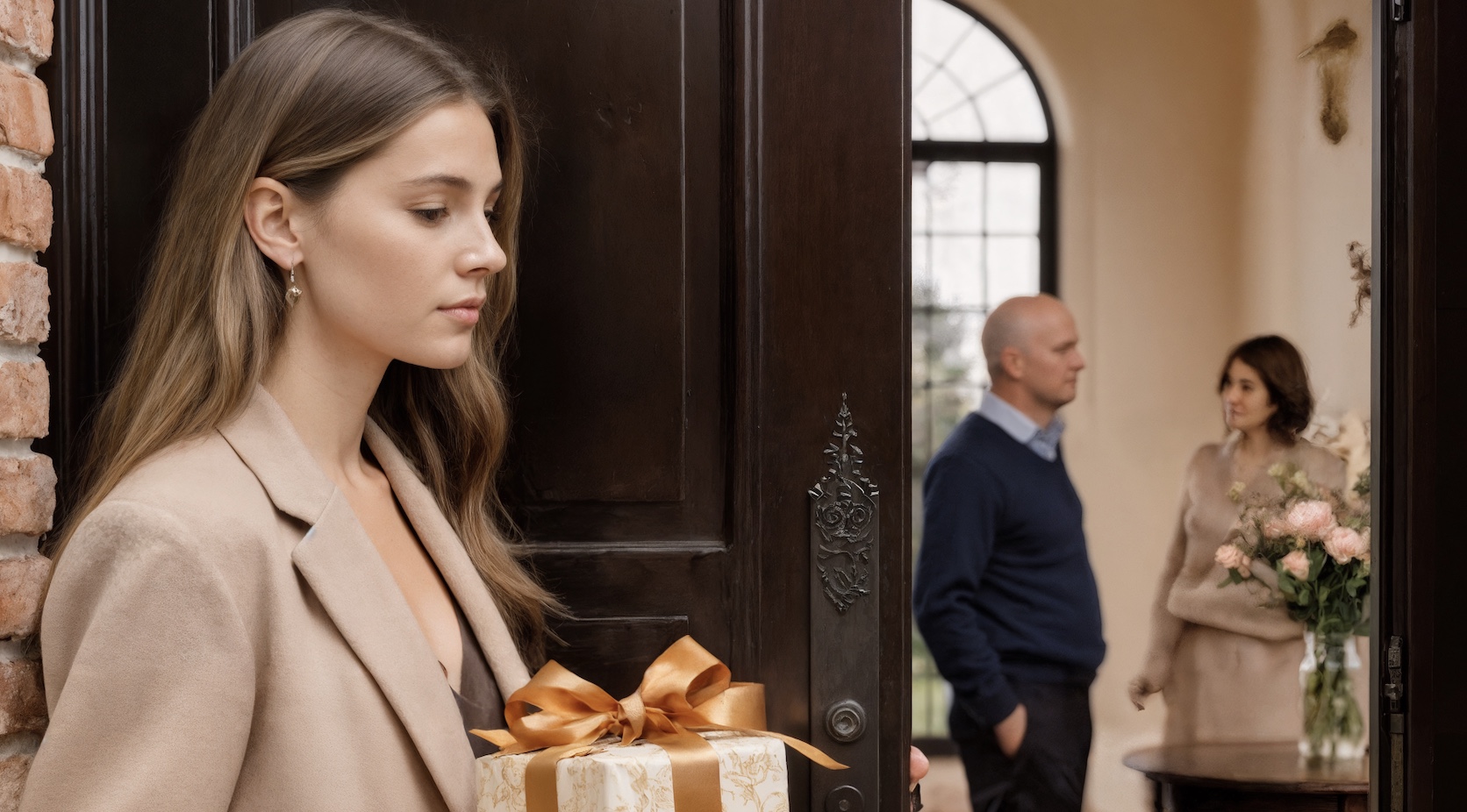
Lena was riding a minibus with a neatly ribbon-tied box of cakes balanced on her knees. A homemade cherry charlotte and a honey cake—everything her mother-in-law, Valentina Pavlovna, adored. Her sons and her husband, of course, always forgot dates like that; none of them were big on details. But Lena, with her background in teaching, had always believed in order—especially when it came to keeping peace with her husband’s family.
She checked the date on her phone and smiled: May 1. Valentina Pavlovna’s birthday was tomorrow, but Lena thought, Better to come early—help out, tidy up, put flowers in a vase, and we’ll cook together. She often remembered how she used to visit her grandmother in the village. The warmth the old woman had greeted her with, Lena tried to bring to her mother-in-law too. She wanted Valentina Pavlovna to feel needed, loved, not forgotten as the years went by.
The driver dropped her off by the old house. The gate stood slightly open. Lena knocked, and when no one answered, she stepped inside carefully. From the kitchen came a man’s voice—low, muffled, faintly irritated:
“Mom, why are you still defending her? She’s the one who ruined everything!”
Lena stopped cold.
It was her husband’s voice—Yegor.
Her heart clenched as if someone had grabbed it from the inside. Yegor? He’d told her he was away on a business trip to Voronezh. Three days. Yet here he was.
Quietly, she walked deeper into the garden and paused beneath the open kitchen window.
“Yegor, don’t boil over,” Valentina Pavlovna said, tiredly. “Lena is a good woman. I’ll never say anything bad about her to you. Every family has its own hardships. You loved her once… and you probably still do.”
“Mom, stop. We’re divorced. That’s it. I don’t want to discuss it. I’m living with Irina now, and things are good. Don’t start.”
Silence.
Lena stood as if an icy wave had washed over her. Divorced?
Had he filed for divorce in secret? Without her agreement? Without so much as a conversation?
She didn’t even notice the box slipping from her hands until it hit the ground with a dull slap. The lid popped open, and cherry filling spilled across the path.
Lena sank onto the wooden bench by the house and covered her face with her hands.
A breeze passed through. The garden was in bloom—her grandmother’s daffodils, lilacs. The air smelled of spring and… betrayal.
—
Valentina Pavlovna found her about five minutes later. She stepped outside, saw the flattened box, and Lena sitting there like a battered little bird.
“Lenochka…” she lowered herself beside her. “You heard everything, didn’t you?”
Lena stayed silent.
“Forgive me… I didn’t know he would come. I truly thought you’d arrive tomorrow.”
“He said… we’re divorced,” Lena whispered. “And I… I didn’t even know things had gotten that bad.”
“You had it hard, yes… But I always believed you would make it through.”
“So he found someone else,” Lena said. “And here I am—with pies… with flowers… with ‘dear Mom’…”
Her mother-in-law squeezed her hand. Quietly. For a long time.
Then she murmured:
“You’re not to blame. He… he’s lost. Men often leave not for another woman, but away from themselves—from their fears, their mistakes. You’re a good person. Don’t ever let yourself think otherwise.”
—
That day they didn’t bare their souls completely. They simply sat side by side. Valentina Pavlovna brought tea, and they drank it in the garden. Lena didn’t cry. The tears had turned to stone somewhere inside.
The next day, Lena still wished her mother-in-law a happy birthday—no longer as a daughter-in-law, but as someone truly close. They hugged, and in that moment Lena felt strong for the first time. Not abandoned. Not broken. But someone who could survive even this.
—
Two months passed. Lena rented a small apartment in the city and found work at a children’s center, teaching music to kids with special needs. She lived quietly. She blamed no one.
One evening Valentina Pavlovna called.
“Lenochka, could I come stay with you for a bit? I need to go to the hospital here—some tests. Would you mind?”
“Of course, Mom. Come.”
That was how Lena gained a mother in her life—not a mother-in-law, but a real one. And with Yegor, she no longer spoke.
Once he tried to message her. It was short: “I’m sorry. I was wrong.”
Lena simply deleted it. Not out of anger—out of peace.
Life moved on. Without the sharp ache. But with respect—for herself, for her love, for what she had lived through, and for the woman who had once, in a blooming garden, simply taken her hand.
Three years went by.
—
Lena no longer remembered that day as a tragedy. More like a starting line. That was where her second life began—quiet, grown-up, filled with meanings she hadn’t seen before.
She was no longer afraid of being alone. She was living—truly living.
Every morning she rose in her bright little kitchen, put the kettle on, and smiled. On the wall hung a child’s craft gift from one of her students: a sun, a blue sky, flowers, and a shaky handwritten note—“Lena Viktorovna, you are the kindest.”
She didn’t marry again. Not because she didn’t want to, but because she stopped searching for someone who “should.” She learned to be her own support.
And Valentina Pavlovna became family in the deepest sense. When walking grew difficult for her, Lena brought her to live with her. A small bedroom with a vase of daisies. Grandma’s armchair. A blanket embroidered with flowers. And a cat that was forever warming itself on the windowsill.
“You know, Lenochka,” Valentina Pavlovna said softly one day, “you were like a daughter to me. Even better. My son forgot, but you… you stayed. Thank you.”
Lena didn’t answer. She only held her hand a little tighter.
—
When Valentina Pavlovna passed away—quietly, in her sleep, as if she dissolved into the dawn—Lena sat beside her for a long time. She cried, softly, without hysteria, the way people grieve the dearest ones.
Then she went out into the garden, planted a lilac bush, and wrote in her notebook: “Mom. Spring. Thank you.”
—
A year later, someone knocked at her door. On the threshold stood a man—thin, slightly gray at the temples, with a lost look in his eyes.
“Hello… I’m Yegor’s brother. My name is Pavel. You probably don’t remember me…”
“I remember,” Lena nodded.
“Mom talked about you. Until the very end. You… were everything to her.”
“She was everything to me too,” Lena said, meeting his gaze. “Come in.”
He didn’t sit right away—shifted awkwardly from foot to foot.
“I know your story with my brother wasn’t easy… but I came to say only one thing. Thank you. You were her comfort. And her example. She said that if she’d ever had a daughter, she would have wanted her to be like you.”
Lena smiled through tears—warmly, gratefully.
“Thank you for coming. The lilacs are blooming. Would you like to see?”
They went out into the garden. The lilac really was lush and full—just like it had been that day, three years earlier.
Pavel broke off a small sprig and handed it to Lena carefully.
“Life goes on, doesn’t it?”
“Yes,” she answered. “Only now—with love. Without conditions. Without fear. Just… as it is.”
—
That evening she sat down at the piano. The children were gone, and the apartment was quiet. Her fingers found familiar notes on their own—a simple, bright melody, the one Valentina Pavlovna had once asked her to play.
Lena played, and tears rolled down her cheeks again. But not from pain—only from the light that had lived inside her all along. From the love that remained.
And from the feeling that she had done everything right.