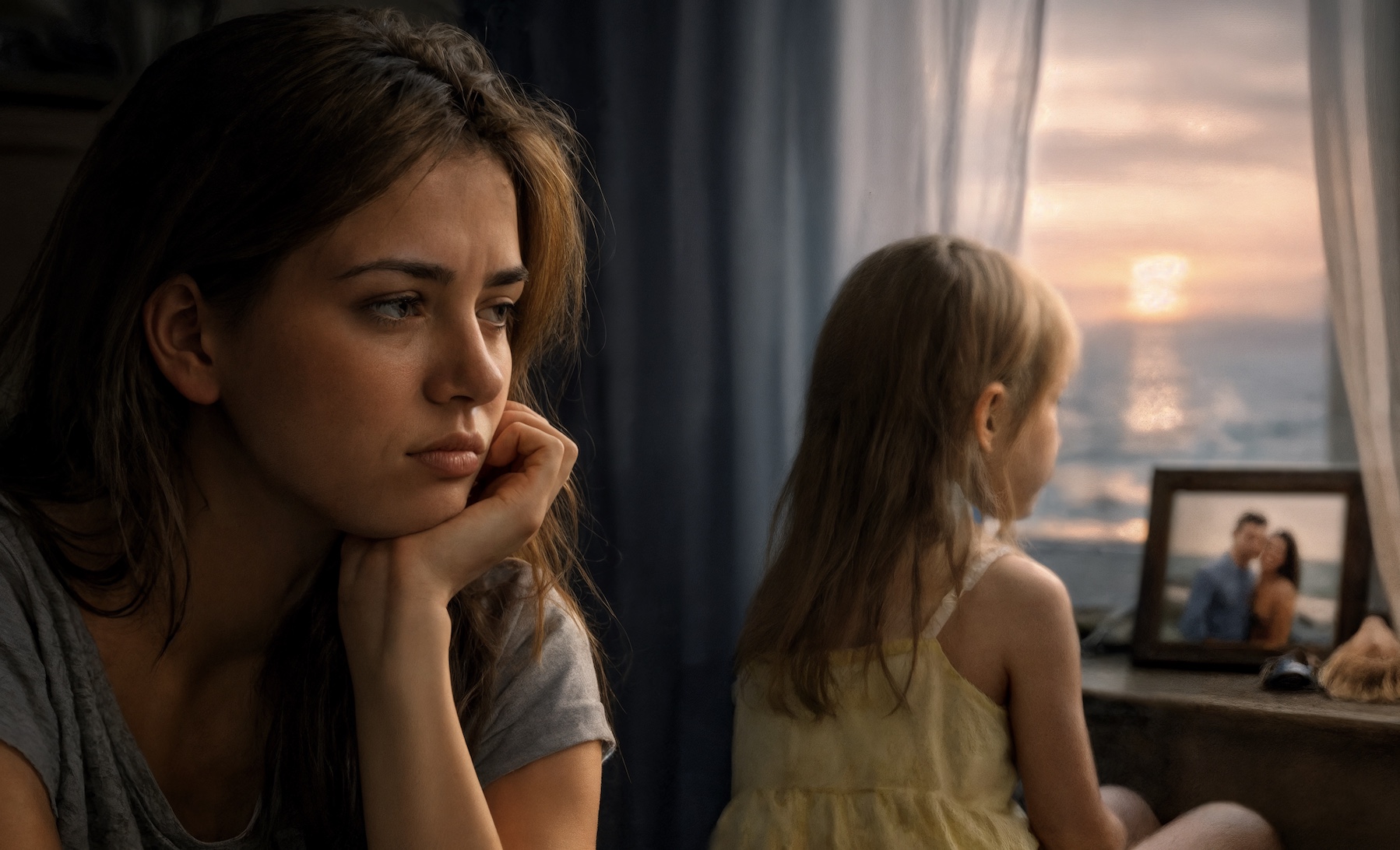
Andrew checked the children’s first-aid kit for the third time, even though he knew perfectly well I could handle things without his instructions. My brother always turned into a broody hen whenever it came to Sonya.
“Measure her temperature only with this thermometer,” he said, showing me the electronic one. “She won’t let anyone use the regular one under her arm.”
“Got it,” I nodded, watching my seven-year-old niece silently pack her pencils and markers into a box. Her movements were precise—almost grown-up.
She was unbelievably composed for her age.
“Andrey, how long are you going to fuss?” my sister-in-law stood by the window in her coat, deliberately checking her watch. “The plane won’t wait for us. Lena understood everything a hundred times already.”
My brother shot his wife an irritated look.
That trip to Sochi had been entirely her idea. For a month she’d been drilling into his head that she was suffocating within four walls, that she needed a break, and that someone else could watch the child for a couple of days.
Andrey resisted until the very end.
“Sonya doesn’t like having lots of people in the house,” he continued instructing me. “And if anything happens—call right away. We’ll fly back the same day.”
“Nothing’s going to happen,” I crouched in front of my niece. “We’re friends, right?”
Sonya lifted her gray eyes to me and nodded. She’d been born with a speech disorder and hadn’t made a sound in seven years. Doctors only shrugged and offered different theories, but nothing changed. The girl understood everything, obeyed, learned to read and count—yet stayed silent.
Andrey took it like a personal tragedy: he dragged her to specialists, studied medical literature, searched for new methods.
Svetlana treated it more simply… it is what it is. Sometimes it even seemed to me that she was irritated with her husband for his “sentimentality.”
“Alright, let’s go already,” Svetlana snapped, grabbing her bag. “Sonya, behave. Don’t whine and don’t make your aunt angry! Do you understand me?”
The girl didn’t even look at her mother. She walked up to her father and hugged his legs tightly.
“Daddy will be back soon, bunny,” Andrey stroked her head. “Be a good girl.”
He kissed Sonya on the crown of her head, waved to me, and left after his wife.
I walked them to the car and helped load the suitcases.
Andrey kept glancing up at the apartment windows the whole time, where a tiny figure in a yellow dress stood.
“Maybe we shouldn’t leave her,” he doubted at the last moment.
“Don’t be ridiculous,” Svetlana cut him off, smiling with satisfaction.
The car disappeared around the corner.
I went back upstairs. Sonya was still by the window. She watched the car go, then turned to me. Complete calm sat in her eyes.
“So,” I said, “it’s just you and me now. What should we do?”
Sonya thought for a second and pointed toward the kitchen. Apparently, it was close to dinner time.
We went to cook. At that moment, I had no idea that in a few minutes something would happen that would turn everything I believed about this family upside down.
I was taking chicken and vegetables out of the fridge for a salad when I heard the front door slam. Svetlana had come back for sunglasses she’d forgotten. She hurried into the bedroom, rummaged through her purse on the dresser, and exclaimed happily:
“Found them! We’re leaving—and we’re not coming back! Finally we’ll get out of this house of invalids!”
I sighed and kept slicing tomatoes, thinking about how hard my brother’s life must be.
In recent years Svetlana had become too rigid, too intolerant. Of course, the situation with their daughter was exhausting, but still… she used to be softer.
“Sonya, want some salad?” I asked, turning around.
My niece sat at the table drawing in her sketchbook. At my question she looked up and nodded.
“And how do you like your chicken more—fried or baked?”
Sonya thought, then stood and came over to the stove. She pointed at the frying pan.
“Fried, then. Excellent choice!”
I turned on the gas and heated the oil. Outside, dusk was thickening. The apartment felt cozy and quiet. Sonya returned to her drawing.
“You know,” I said, stirring the chicken in the pan, “we’ve hardly ever been alone together before. There were always your parents around.”
My niece lifted her eyes from the paper and studied me closely. There was something assessing in her gaze—as if she were deciding whether she could trust me.
“Will you show me what you’re drawing?”
Sonya hesitated, then slid the sketchbook toward me. On the page was a house—not a child’s little triangle-roofed cottage, but a realistic building. Two stories, an attic, surrounded by a garden. The details were far too careful for a seven-year-old.
“Beautiful,” I said sincerely. “Is that your house?”
Sonya shook her head and turned the page. There was another house—smaller, with a porch and a swing set in the yard.
“And this one?”
She pointed first to herself, then to me. Then to the drawing.
“Our house—you and me?” I guessed.
Sonya nodded and smiled. I hadn’t seen such an open smile from her in a long time.
The chicken hissed in the pan, reminding me of itself. I flipped the pieces and thought about how little I actually knew my niece. I mostly saw her at family gatherings—lots of people, noise, chaos. But now, alone with me, she seemed different… more open, more trusting.
“Sonya… have you ever tried talking to someone?” I asked carefully.
She froze, pencil in hand, stared at me for a long moment, and then… shrugged.
“I understand,” I nodded. “Maybe it’s even easier that way. Adults say a lot of stupid things.”
Sonya giggled and went back to drawing.
We ate dinner under the light of a desk lamp. She ate very neatly, sometimes looking up at me and smiling. When we finished, she washed her own plate and wiped the table.
“What a helper you are,” I said, genuinely impressed.
Sonya nodded proudly, came close, stood beside me, and leaned her shoulder against my side.
We stood in silence for five minutes. And suddenly I felt something warm spread through my chest.
But the most surprising part was still ahead.
After dinner we moved to the living room. Sonya curled up on the couch with her sketchbook, I turned on soft music and picked up a book. Outside, the evening lights of Moscow drifted past; inside, everything was calm and quiet.
“Sonya, in half an hour we’ll start getting ready for bed,” I warned her, knowing she was used to a routine.
She nodded without looking up from her drawing. I watched her out of the corner of my eye. Such a serious child. Sometimes it felt like she understood far more than she ever showed adults.
A message came from Andrey:
“Landed fine. How are things? Is Sonya behaving?”
I typed back quickly:
“All great. Had dinner, drawing. Sonya’s an angel.”
Almost immediately another text arrived:
“If anything happens, call right away. Anytime.”
I smiled and put my phone away. Poor brother—he probably worried the whole flight.
“Sonya, your dad says hi,” I told her. “Your parents landed safely.”
She lifted her eyes from the sketchbook. I instantly noticed something strange in them—wariness.
“Everything okay?”
Sonya stayed silent, then carefully walked up to me and held out her drawing.
This time she’d drawn a family: a man, a woman, and a girl. But something was off. The man and the girl stood close together, holding hands. And the woman… was set apart, as if she didn’t belong with them.
“Is this your family?” I asked.
Sonya nodded, then pointed at the woman. After that she shook her head and turned away.
I understood she was trying to tell me something—about her relationship with her mother, perhaps. Svetlana really was cold with her daughter: not openly cruel, but indifferent. As if the child were a burden.
“You know,” I said softly, “sometimes adults don’t even understand what they feel. Mom loves you, she just… loves in her own way.”
Sonya gave me a skeptical look, sighed, and went back to drawing.
We sat like that for another half hour—me reading, her drawing—while the lights in the neighboring buildings went dark one by one. Then I noticed she was starting to yawn.
“Time for bed, sunshine.”
She closed her sketchbook obediently and went to the bathroom to brush her teeth. I followed, helped her into pajamas, combed her hair. Sonya was strikingly independent: she did everything herself, only occasionally asking for help with gestures.
“What story should we read?” I asked when she climbed into bed.
Sonya pointed at the bookshelf.
I brought several fairy-tale books, and she chose Thumbelina. We sat together on the bed; I read out loud while she listened, studying the pictures.
“And Thumbelina flew away to warm lands, where the sun always shines…” I read the ending.
Sonya sighed and closed her eyes. I thought she’d fallen asleep—but then she opened them and looked at me.
“What is it, sweetheart? Something wrong?”
Sonya hesitated, then wrapped her arms around my neck—tight, for real. And she whispered something indistinct into my ear.
I froze. Had I imagined it…?
“What did you say?” I asked quietly.
She pulled back and looked straight into my eyes, as if weighing whether she could trust me with a secret.
And then something unbelievable happened.
She took my hand and whispered—very softly:
“Auntie… I can talk.”
My breath caught. Her voice was quiet and raspy, but completely normal. A regular child’s voice.
“Sonya…” I managed. “How… why have you been silent all this time?”
She glanced toward the door, as if checking whether someone was listening. Then she looked back at me with gray eyes full of such adult pain that my heart clenched.
“I’m scared,” she whispered.
“Scared of what, honey?”
She paused, choosing her words. She spoke slowly, carefully, like each word cost effort.
“Mom doesn’t love me. She always says I’m a mistake. That it would’ve been better if I’d never been born.”
Cold ran down my spine.
“Sonya, what are you saying?”
“When Dad isn’t home, Mom says I’m a punishment. That my life ruined hers,” her voice trembled. “She says I’m not Dad’s daughter. And if he finds out, he’ll leave me.”
It felt like the floor dropped out from under me. I stared at this small fragile girl and couldn’t believe what I was hearing.
“And you decided to stay silent because…?”
“So Mom wouldn’t throw me away,” Sonya whispered. “I thought if I stayed quiet—if I was invisible—she’d love me. And I also thought that if I started talking, Dad would understand I’m not his daughter and he’d leave us.”
Tears burned behind my eyes. I imagined what this child had lived through. Seven years of fear. Seven years of carrying such a terrible secret alone.
“Sweetheart…” I hugged her, and she began to cry against my shoulder. Soundlessly, the way she’d learned to cry over the years.
“Mom said if I told Dad the truth, he’d hate me,” she sobbed. “But I love him so, so much. He’s kind. He never yells at me.”
I stroked her hair and felt fury ignite inside me.
How could someone do that to a child? How could anyone convince a seven-year-old she was unwanted, unnecessary? How could a child be forced to pay for an adult’s sins like that?
“Listen to me carefully,” I said, pulling back and looking into her eyes. “Your dad Andrey loves you more than anything in the world. And it doesn’t matter who your biological father is. A dad is the one who raises you, takes care of you, worries about you.”
“But what if he finds out and doesn’t want to be my dad?”
“Doesn’t want to?” I said. “Sonya, did you see how he didn’t want to leave today? How he worried even leaving you with me? That’s what real love looks like.”
She wiped her tears, thinking.
“But Mom said…”
“Mom lied,” I said firmly. “And you know what? I think it’s time to tell Dad the whole truth. That you can talk—and what Mom has been putting into your head.”
Sonya shook her head, frightened.
“Don’t be scared. I’ll be right here. We’ll explain everything together.”
And that was the moment I understood: these four days would become a turning point for our family. The justice this little girl had waited for was finally going to come.
On Sunday evening I waited for my brother with my heart in my throat.
Sonya sat next to me on the couch, nervously tugging at the hem of her dress.
Over those days we talked a lot. She told me how hard it was to keep silent, how badly she wanted to tell her dad “I love you,” how terrifying it was to hear her mother say she was “someone else’s.”
“Auntie… what if he still doesn’t want me?” Sonya asked for what felt like the hundredth time.
“He will, sunshine. He absolutely will.”
A key turned in the lock. Sonya tensed instinctively.
“We’re home!” Andrey’s voice rang out. “Sonya, Daddy’s back!”
She jumped up and ran to him. He scooped her into his arms, spun her around, and covered her with kisses.
“I missed you so much! How are you, bunny? Did Aunt Lena treat you well?”
Svetlana walked past demonstratively without even greeting her daughter, dropped her bag, and headed to the bedroom to change.
“Andrey, we need to talk,” I said seriously.
“Did something happen?” my brother went alert instantly. “Was Sonya sick?”
“No. But something important happened. Very important.”
He set his daughter down and looked at me closely.
“Sonya, show Daddy what you can do,” I said gently.
She took a deep breath, looked up at her father, and said quietly:
“Daddy… I love you.”
Andrey went still. For several seconds he stared at her in silence, then dropped to his knees in front of her.
“Sonya… you… you’re talking? You can talk?”
“I always could,” she whispered. “But I was scared.”
“Scared of what, bunny?”
Sonya glanced toward the bedroom, where her mother was changing, then looked back at her dad.
“Mom said if you found out I’m not your daughter, you’d leave me. And I don’t want you to go.”
Andrey’s face turned white. He slowly stood up and lifted Sonya into his arms.
“Who told you you’re not my daughter?”
“Mom. She said I’m a mistake, that it’d be better if I’d never been born. That because of me she has to live tense every day. That I’m not a child—I’m punishment.”
I saw rage flare in my brother’s eyes. He carefully set Sonya down and walked toward the bedroom. I followed.
“Svetlana,” Andrey’s voice was quiet—and terrifying. “Come out here. Now.”
Svetlana appeared in the doorway, still not understanding what was happening.
“What’s with that tone? We just got back…”
“I don’t care where you got back from,” Andrey snapped. “I care about this: it turns out Sonya can talk. Our daughter isn’t mute. She stayed silent all these years because of you! Who told her she’s a punishment? Who convinced her I’d leave if I learned the truth? Who? Do you realize what kind of monster you are? You disgust me!”
Svetlana’s face shifted. She understood her secret had been exposed.
“Andrey, I can explain…”
“Explain how you could tell a seven-year-old she’s a mistake! Explain how you could force your own child to stay silent for seven years!”
“Because she really is a mistake! She’s not your daughter—she’s the result of a random affair!” Svetlana screamed. “I was already pregnant when I married you! And I was ready to do anything so you wouldn’t find out!”
“And so you decided to torture the child?” he stepped closer. “So you filled her head with the idea she was unwanted?”
Sonya stood next to me, shaking all over. I took her hand.
“Daddy,” she whispered.
Andrey turned and saw her frightened eyes. His expression softened instantly. He went to her and knelt.
“My bunny, listen to me. It doesn’t matter who your biological parents are. What matters is who loves you. I’m your dad. Forever. Do you understand?”
“Even if I’m not your daughter?”
“You are my daughter. The most loved daughter in the world.”
Sonya threw her arms around his neck and began to cry loudly. They hugged for a long time in the middle of the living room.
A month later Andrey filed for divorce. He was granted custody of Sonya. Now that she had started speaking and told the truth about what was happening at home, the court was on his side.
Svetlana didn’t fight for parental rights. Deep down, she clearly felt relief.
Now they live in a new apartment. Sonya goes to a speech therapist and chats nonstop, as if making up for seven years of forced silence.
And last week my niece showed me a new drawing… a man and a girl walking along a path, holding hands. The sun was shining above them.
“That’s me and Daddy going into a new life,” she explained. “And we love each other very much.”
I smiled.
Sometimes justice doesn’t come right away. Sometimes you have to wait seven years. But when it finally comes, it truly changes everything for the better.