The doorbell rang sharply, like a gunshot. Natasha jerked, nearly spilling coffee over the paperwork spread across the table. She glanced at the clock—8:30 p.m. Who on earth would show up at this hour?
Through the peephole she saw a familiar—but completely unexpected—figure. Her mother stood in the corridor, hunched, clutching a scuffed old bag to her chest. Natasha went still. They hadn’t seen each other in almost six months—since her mother’s last call to announce that Katya, the younger sister, had been promoted.
“Mom?” Natasha opened the door, surprise written all over her face.
“Natushka…” Her mother’s voice wavered. She looked worn down; deep shadows sat under her eyes. “May I come in?”
Without answering, Natasha stepped aside. Her mother entered the cramped studio apartment, looking around as if she were seeing it for the first time—even though she’d been here twice in three years, both times in passing. Katya’s place, on the other hand, she visited far more often.
“Sit,” Natasha nodded toward the couch, moving a stack of accounting documents out of the way. “Want some tea?”
“No, thank you.” Her mother perched on the edge of the couch without taking off her coat. “I won’t stay long.”
An uncomfortable silence settled between them. Natasha sat opposite, arms folded tight, and waited. Her mother hadn’t traveled this far for no reason—especially not without warning, not without calling first.
“Natalia… I need your help,” her mother finally said, exhaling hard. Natasha noticed how her hands trembled. “I need surgery. Urgently. The doctors say I can’t wait.”
“What happened?” Natasha straightened; tension gave way to fear.
“A tumor.” Her mother swallowed. “Benign, but it’s growing. If it isn’t removed now, it could… cause complications. Serious ones.”
“Oh God, Mom…” Natasha reached toward her, but her mother pulled away.
“It can be done for free through the program, but the wait is three months. The doctor said that’s too long.” She lowered her eyes. “I need one hundred and fifty thousand. I’ve saved the rest.”
Natasha leaned back, and numbers instantly began marching through her head. One hundred and fifty thousand.
She had two hundred and twenty thousand in her account—four years of skimping, four years of saying no to everything but the bare essentials. That money was her escape hatch. Her hope. A down payment for her own apartment. She’d already found a small one on the outskirts and arranged to meet the realtor next week.
“Why did you come to me?” The question escaped before she could swallow it.
Her mother flinched and looked up.
“What do you mean?”
“You know Katya’s doing well,” Natasha said tightly. “She earns three times what I do. She has a new place—a three-bedroom in the city center. It would be easier for her to help you than for me.”
Her mother turned to the window. Outside, a fine October rain slid down the glass, smearing the city lights into dull, watery stains.
“I went to Katya,” she said softly. “The day before yesterday.”
A chill spread through Natasha’s chest.
“And what did she say?”
“She said she couldn’t.” Her mother’s words sounded scraped raw. “She said she has mortgage payments. The renovation isn’t finished. She still has to buy furniture. She said she hadn’t planned for expenses like this.”
The room seemed to thicken. Natasha stood, walked to the window, and stared into the wet darkness. In the reflection she could see her mother’s bent figure—and her own face, pale, lips pressed into a thin line.
“So Katya, with her three-bedroom apartment and prestigious job, can’t lend money for her own mother’s surgery,” Natasha said slowly, emphasizing every word. “But me—living in a rented studio on the edge of town, working as an accountant in an office where salaries get delayed every other month—I’m the one who’s supposed to help. Is that right?”
“Natalia, please…”
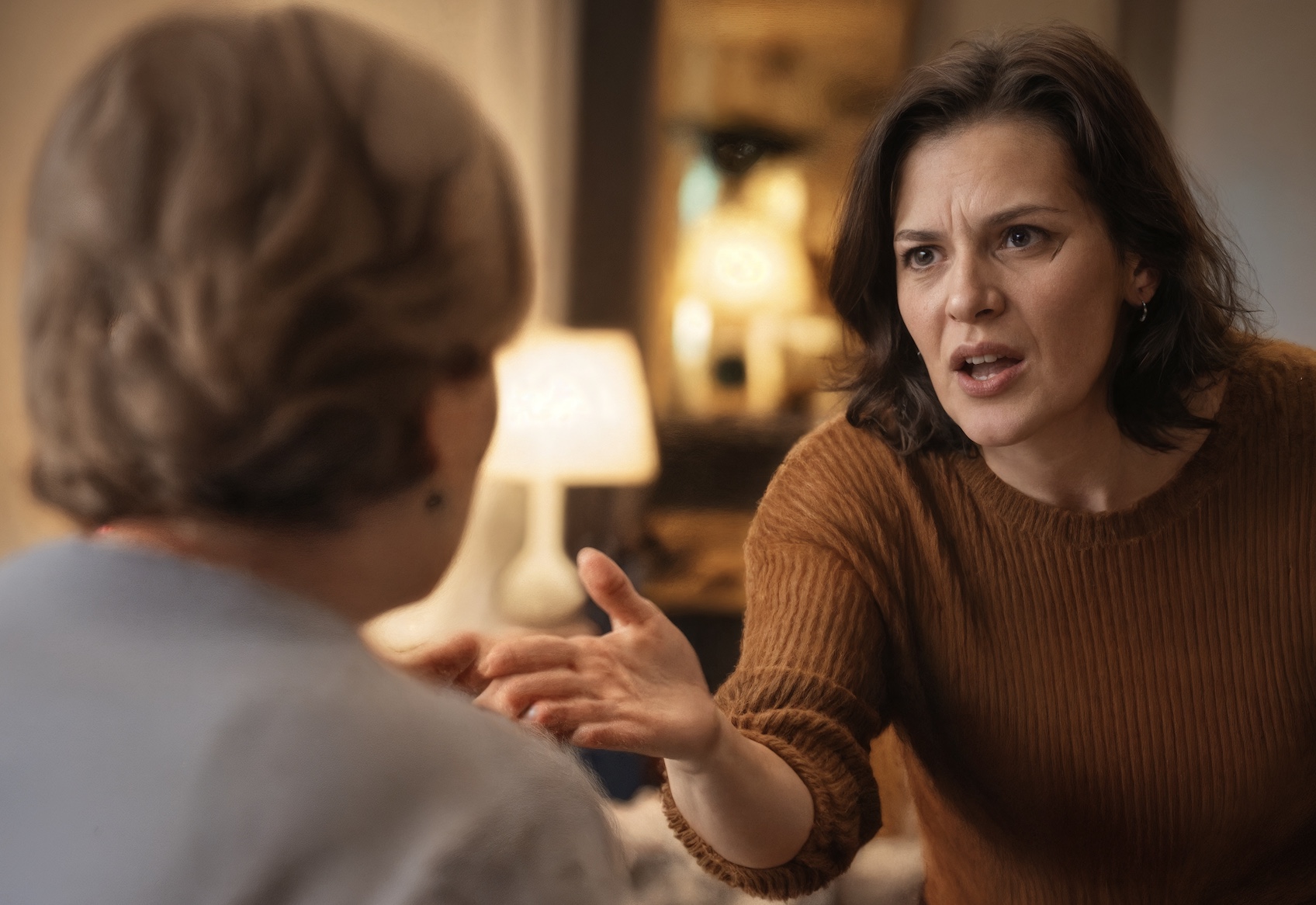
“No, Mom. Wait.” Natasha turned, and years of quiet resentment surged up all at once, flooding everything, demanding to be spoken. “Let’s remember something. Who was always your favorite? Who got all the opportunities, all the attention, all the money? Who did you work two shifts for—so you could pay for tutors and prep courses?”
“That’s not true,” her mother shook her head, but her voice didn’t sound certain.
“It is true!” Tears burned in Natasha’s throat, but she forced her voice to stay even. “I got C’s not because I was dumber than Katya. I did because I had to work from sixteen. Because when I asked for help with math you said, ‘Later—I need to do homework with Katya.’ When I dreamed of university, you told me, ‘Natash, be realistic. Not everyone is meant for studying. You’ll go to technical college, get a profession.’”
“I did what I thought was right,” her mother said, standing up; her voice steadied. “Katya was more capable—she had potential. I couldn’t waste it.”
“And me?” Natasha shot back. “I didn’t have potential?”
“You had different gifts. Katya was always an A-student—ambitious, driven. And you… you were different. More practical. I thought you’d find your own path.”
“My path,” Natasha let out a bitter laugh. “You know what I remember most from childhood? How you woke Katya an hour early every morning so she’d have time to eat and get ready. And me—you shook awake at the last second: ‘Get up, you’ll be late.’ How Katya got new dresses for the first day of school and I got old ones altered. How you hosted a table for twenty people at her graduation—and at mine you said there was no money.”
“Natalia, that was long ago. You grew up, you found work, you got on your feet.”
“Yes, I got on my feet!” Natasha’s voice broke into a shout. “I got on my feet because I had no choice! Because nobody was going to help me! Do you know how many times I asked you to loan me money for the first and last month’s rent when I was moving out of the dorm? Three times! And every time you told me you could barely make ends meet. And then a month later I’d find out you bought Katya a laptop for fifty thousand!”
Her mother stared at the floor in silence. Her shoulders slumped even more.
“I understand you’re hurt,” she said at last. “But this is about my health now. Maybe… my life.”
“And that’s why you came to me,” Natasha said, voice shaking. “To the one who was never the priority. The backup plan.”
“What do you want me to say?” Her mother raised her head and Natasha saw tears in her eyes. “Yes, I came because Katya refused! Yes, maybe I wasn’t the best mother to you! But I did what I could! I raised you alone—without your father—I worked until I could barely stand!”
“What do you want from me?!” Natasha shouted, and her own voice sounded foreign, hysterical. “Go to the one you poured all your money into!”
The words dropped between them like stones—heavy, final. Her mother froze as if she’d been struck. Outside, the rain intensified, beating against the windowsill.
Natasha wrapped her arms around herself, trembling. She’d said it. Finally said what had been building for years. And yet there was no relief—only emptiness.
“Alright,” her mother whispered, picking up her bag and moving toward the door. “I’m sorry I bothered you.”
Her hand touched the doorknob, and in that moment Natasha noticed how her mother leaned against the doorframe. Noticed gray hair she’d never really seen before. Noticed how her mother shut her eyes for a second, gathering strength.
“Mom, wait.”
Her mother stopped without turning around.
Natasha covered her face with her hands. Her mind was a mess of thoughts, emotions, memories. She remembered being sick as a child and her mother staying up three nights, changing compresses. She remembered her first job—her mother showing up with homemade pies and telling her she was proud. She remembered their last phone call, when her mother asked, “How are you? Do you need anything?” and Natasha answered coldly, “I’m fine. Don’t worry.”
She thought of Katya—beautiful, successful Katya—who called once a month, sent birthday money, and rarely asked about their mother at all. Katya who’d said a year ago, “Mom, how long are you going to complain? If you’d worked properly, you’d have everything.”
And Natasha—even hurt, even distant—had always remembered her mother. She called, even if rarely. She visited, even if briefly. She hadn’t snapped that thin thread completely.
“I have money,” Natasha made herself say. “Two hundred and twenty thousand. I’ve been saving for an apartment.”
Her mother turned around. Tears streamed down her face.
“Natalia, I can’t take that from you. That’s your dream.”
“You can,” Natasha said, walking to the dresser and pulling out the envelope where she kept her savings. “It isn’t a dream. It’s just an apartment. I’ll save again. Later. But you need treatment now.”
“But why?” her mother looked at her as if she couldn’t understand. “After everything I did to you… after neglecting you?”
Natasha went quiet, staring at the envelope in her hands. Why? Even she couldn’t fully answer. Because it was the right thing to do? Because it was her mother, no matter what? Or because she refused to become Katya—someone for whom comfort mattered more than a loved one’s life?
“Because I’m not Katya,” Natasha said finally. “And I don’t want to be her. Maybe you really did love her more. Maybe I was always second to you. But that doesn’t mean I have to become the same kind of person. I won’t turn you away when you need help—even if you turned me away.”
Her mother covered her face and sobbed—not the restrained crying Natasha remembered, but deep, uncontrollable sobs. Natasha stepped forward and hugged her awkwardly. They stood in the narrow entryway of the rented apartment—two women separated by years of hurt and misunderstanding, yet still bound by something stronger.
“Forgive me,” her mother whispered through tears. “Forgive me, Natushka. I was a bad mother to you. I thought I was doing the right thing. I thought Katya would succeed and it would justify all my effort. I didn’t see how I was betraying you—how I was hurting you.”
“Mom, stop,” Natasha felt tears fill her own eyes. “That’s the past.”
“No—it’s not just the past.” Her mother pulled back and took Natasha’s hands. “I see it now. I see who you’ve become—strong, independent, kind. You achieved everything on your own, without me. And Katya… Katya got used to receiving everything and giving nothing back. And that’s my fault. I raised her that way.”
Natasha stayed silent. She had waited her whole life to hear those words. But now that her mother finally said them, they didn’t bring triumph. Only sadness—sadness for how many years had been lost, how much pain had piled up that never had to exist.
“I won’t take all your money,” her mother wiped her cheeks. “Only the one hundred and fifty thousand I planned for. You’ll still have seventy left. At least that’s something.”
“Mom, take whatever you need.”
“No.” Her mother shook her head. “You need a safety cushion. You give too much. It’s time you learned to keep something for yourself, too.”
They sat on the couch and Natasha switched on the kettle. Her mother finally took off her coat. The room felt warmer, more lived-in. Outside, the rain still fell, but it no longer seemed as cold.
“Tell me about the apartment you wanted,” her mother asked, accepting a cup of tea.
So Natasha told her—about the tiny one-bedroom on the seventh floor of a concrete panel building, about the balcony overlooking a park, about how she’d pictured her life there, how she’d imagined furnishing it. Her mother listened, nodded, and sometimes smiled through tears.
“You’ll buy it,” she said. “Or something even better. I believe in you. I always did—I just didn’t know how to show it.”
“I know,” Natasha said, placing her hand over her mother’s. And it was true. Somewhere deep down, she’d always known her mother loved them both—just differently. Wrongly, maybe. Unfairly. But she loved them.
Her mother left the next day with the money. Natasha called the realtor and canceled the viewing. The words were hard to say: “I’m sorry, circumstances changed. I need to postpone the purchase.”
That evening Katya called. Her voice sounded tense, guilty.
“Mom told me she went to see you.”
“Yes.”
“And… you helped her?”
“Yes.”
A pause. Natasha heard Katya exhale.
“I couldn’t. I really do have a lot of expenses. And besides—she’s always managed on her own. I thought…”
“Katya, don’t explain it to me,” Natasha said, rubbing the bridge of her nose, exhausted. “Explain it to yourself.”
“I’ll send you half the amount,” Katya hurried on. “Next week, when I get paid.”
“No.”
“Natalia—”
“I said no.” Natasha’s tone was flat. “That was my choice. You made yours.”
She ended the call before Katya could respond. Natasha knew the money would never come. Knew there would always be another reason, another “urgent” purchase. But it didn’t matter anymore.
She walked to the window and looked at the city lights. Somewhere out there was that apartment—her almost-dream. Someone else would live there now. Make plans. Buy furniture. Paint the walls. And she would remain here, in her rented studio, maybe for another year or two.
Yet Natasha didn’t feel bitterness. Something else sat in its place—relief, perhaps. Or simply the quiet certainty that she’d done the right thing. Not the profitable choice. Not the choice that would satisfy childhood grievances. But the choice she could live with—one that let her look at herself in the mirror without shame.
The surgery went well. Her mother called from the hospital; her voice sounded weak, but lighter with relief. Natasha visited with fruit and books. They talked about everything and nothing—weather, roommates on the ward, Natasha’s work. They didn’t talk about money, about Katya, about the past.
But something had changed. Her mother looked at Natasha differently—warmer, with a respect that hadn’t been there before. And Natasha felt something bloom inside her that resembled forgiveness—not complete, but enough to keep moving.
Six months later, when her mother had recovered and returned to normal life, Natasha received a bonus at work. Small, but unexpected. That same day she saw a listing: the very apartment she’d wanted was back on the market. The price had dropped; the owners needed to sell quickly.
“Mom,” Natasha called that evening. “Remember that apartment? It’s for sale again.”
“And what are you going to do?”
“Buy it,” Natasha smiled. “I’m almost there for the down payment.”
“Almost?”
“I’m short thirty thousand.”
Her mother was quiet for a moment.
“I’ll pay you back,” she said. “I haven’t forgotten. I’ve saved some money.”
“Mom, it wasn’t a debt,” Natasha replied softly. “I’m not waiting for you to repay me.”
“But I want to,” her mother insisted. “Please. Let me do this for you.”
And Natasha agreed—not because she desperately needed the money, but because she understood: her mother needed this. She needed to mend at least one small piece of the past. To prove—to Natasha and to herself—that she could also invest, help, care.
Natasha bought the apartment at the end of autumn. Small, cozy, with a view of the park. Her mother was the first to arrive for the housewarming, bringing a pie and flowers. Katya sent a message with congratulations and a promise to visit “sometime later.”
They sat on the balcony wrapped in blankets, drinking tea and watching the last leaves fall in the park. Her mother took Natasha’s hand.
“Thank you,” she said quietly. “For everything.”
“No need, Mom.”
“For being better than me,” her mother whispered. “Better than I deserved.”
Natasha shook her head.
“I just stayed myself,” she said. “That’s all I could do.”
And it was the truth. She hadn’t become a hero or performed some grand feat. She’d simply chosen to remain human when it would have been easier to harden. To keep kindness when life had given her every reason to let it die. And it turned out that was enough—not to rewrite the past, but to build a future she could actually live in.
The rain outside turned into the first snow. The city settled under a white blanket, and in the streetlights the snowflakes spun like tiny stars. Natasha closed her eyes, feeling the warmth of her mother’s hand in hers—and for the first time in many years, she truly felt at home.