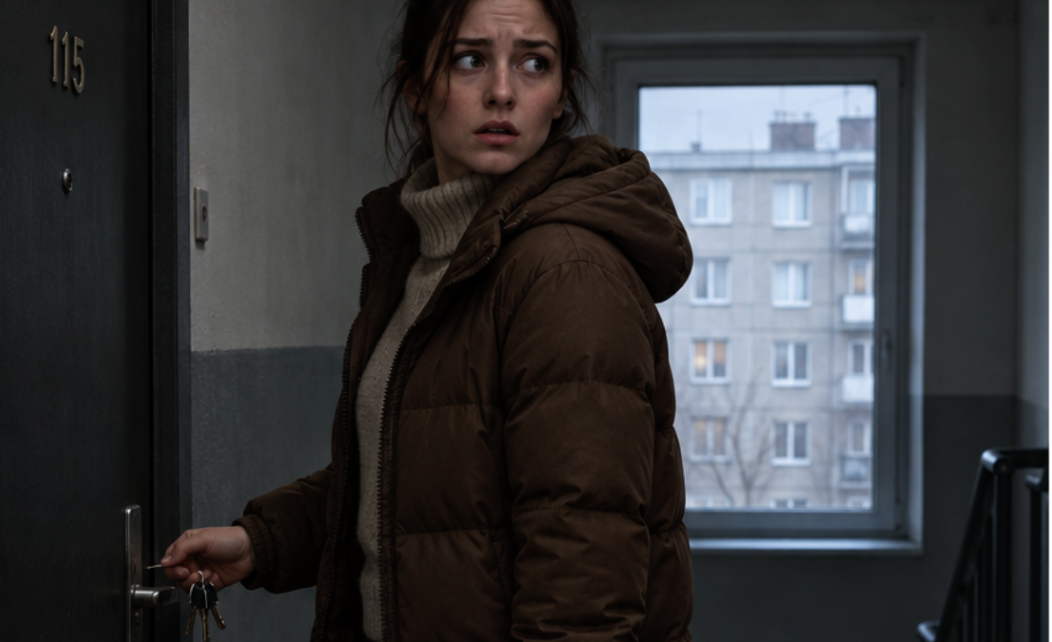
“Take your things off the landing! This isn’t a dormitory!” barked the elderly woman as Valya trudged up the stairs for the second time with a heavy bag.
“We’re bringing everything in right now,” Valya replied, a bit out of breath. “Give us ten more minutes and there’ll be nothing left out here.”
“You all say that! Then you keep your junk at the door for years!”
Valya kept quiet. The bag was pulling at her arm, her back ached since morning, and she still had three boxes of dishes and an old TV to carry up from the car.
She was forty-two, and for the first time in years, she was moving by herself—without her husband, without anyone’s help. Or, not quite by herself: thirteen-year-old Artem was right there, doing his best to act all grown up.
“Mom, let me carry it,” the boy said, reaching for the bag.
“You’ve already carried three boxes. Go get some water.”
“I’m not tired.”
“Well, I am. So don’t argue with me, alright?”
Artem took the bag before she even finished. The elderly neighbor scoffed and shut her door.
That’s how their new life began.
Valya bought a small apartment: two rooms, fourth floor of an old five-story building. There was no money for renovations yet. The bathroom had old tiles, the kitchen floor creaked, and in the living room, one wall was covered with wallpaper featuring big brown flowers.
But it was their apartment.
After splitting up with her husband, Valya spent nearly three years saving up. She worked as a marketer at two small companies, took extra gigs, skipped buying new clothes and vacations.
Artem knew why his mom worked so much. So, when they stepped into the empty apartment for the first time, he walked around, knocked on the windowsill, and solemnly said:
“Well, Mom, at least now no one can tell us to leave.”
Valya turned to the window then, so her son wouldn’t see her tears.
On their first evening, they ate pizza sitting right on the floor. The table wasn’t put together yet and the plates were somewhere at the bottom of a box.
“It’s not bad here,” Artem said, glancing around. “The only thing is that neighbor lady’s kind of mean.”
“Maybe she just had a bad day.”
“Looks to me like every day’s a bad day for her.”
Valya laughed. But a week later, she wasn’t smiling. The neighbor’s name was Iryna Tymofiyivna. She lived across the hall and seemed to know every step the newcomers took.
One morning she knocked because Artem slammed the front door too loudly. The next day, she complained about a wet footprint from their shoes.
Then she had something to say about the garbage bag Valya left by her own door while searching for her keys.
“Do you even realize people live here?” Iryna Tymofiyivna scolded.
“I do. We live here too.”
“Then act like it!”
But what bothered her most was Artem. The boy was quiet, did well in school, and played football after class. But for the neighbor, the simple fact that he was a teenager was enough.
“Just make sure your son doesn’t start bringing his friends over!” she warned Valya. “I know what boys that age are like!”
“He has a right to invite friends home.”
“And I have a right to peace and quiet!”
One evening, Valya came home from work and found a message from the head of the homeowners association. Iryna Tymofiyivna had complained yet again, saying the new neighbors were constantly noisy, creating a mess, and bothering everyone else.
Valya sat in the kitchen for a long time, staring at her phone.
“Mom, is something wrong?” Artem asked.
“Oh, nothing. The neighbor’s upset again.”
“Because of me?”
“No, sweetheart. It’s just how she is.”
“Then let’s complain about her, too.”
“And what will we say? That she grumbles all the time?”
“Yes, exactly.”
“Artem, we moved here to live, not to get into fights.”
She really didn’t want any quarrels. There had already been enough drama in recent years. On Saturday, Valya baked a plum pie.
It was a recipe passed down from her mom: a simple kefir dough, plenty of plums, and a hint of cinnamon. The apartment smelled so good, Artem peeked into the kitchen three times.
“Can I have some now?”
“It’s still hot.”
“How about now?”
“Artem!”
The boy grinned and reached for a plum on the baking tray. Valya cut a big piece, placed it on a plate, and covered it with a napkin.
“Who’s that for?”
“For Iryna Tymofiyivna.”
Artem even stopped chewing.
“Mom, are you serious?”
“Why not?”
“She literally said yesterday that I stomp up the stairs on purpose!”
“Maybe if she tastes something delicious, she’ll be a little kinder.”
“Yeah. Especially if the pie is magic.”
Valya laughed and stepped out onto the landing. Iryna Tymofiyivna didn’t open the door right away.
“What do you want?”
“Good afternoon. I baked a plum pie. I wanted to share some with you.”
The woman looked first at the plate, then at Valya.
“Why?”
“Just because. We’re neighbors. I don’t want any bad blood between us.”
“I don’t need your pie.”
“It’s really from the heart.”
“You should better teach your son some manners. Yesterday he almost knocked me over on the stairs.”
“He was just rushing to school. I’ll talk to him.”
“Yes, you do that.”
The door closed. Valya stood for a few more seconds with the plate in her hands. When she went back into the kitchen, Artem glanced at the pie and immediately understood.
“So, the cinnamon didn’t work its magic?”
“No, it didn’t.”
“Give it here. At least I’ll appreciate your hard work.”
Valya set the plate down in front of her son, but she didn’t eat herself. She felt hurt—not because of the pie, but because she had tried to do a good thing and was only met with complaints again.
Later on, Valya learned something about her neighbor. She once ran into Halyna Petryvna from the second floor outside their building. Halyna asked how they were settling in at their new place.
“We’re doing well,” Valya replied. “It’s just that Iryna Tymofiyivna and I can’t seem to get on the same page.”
Halyna Petryvna sighed.
“She’s always been strict. Even back when she was working.”
“Where did she work?”
“At a kindergarten. She was a teacher, then the head teacher. Spent forty years with children, I’d say.”
“That’s surprising. She can’t even stand my Artem.”
“These days, she doesn’t really talk to anyone much.”
“Do any relatives visit her, at least?”
“Not really… She doesn’t have a husband or children. I think there’s some distant niece, but I’ve never seen her here.”
“She’s all alone?”
“Completely alone. Her old colleagues used to visit, but now they’re all elderly, each with their own worries.”
Valya thought about this. That evening, she spent a long time listening to the sounds coming from the other side of the wall.
From Iryna Tymofiivna’s apartment, you could barely hear anything. Sometimes the TV hummed quietly. Sometimes there was the clatter of dishes. In the morning, she would go out to the store and come back with a small bag before shutting herself in again.
Valya tried to imagine what it was like—to wake up every day in an empty apartment, cooking only for yourself, and having no one to share how your day went.
But as soon as the neighbor complained to Artem about his sneakers again, Valya’s sympathy faded a bit. That November evening, Valya stayed late at work.
It was almost nine when she entered the building. Outside, a cold drizzle was falling; in her bag she had bread, milk, and a packet of buckwheat. Artem was at home already, heating up his dinner.
On the fourth floor, Valya heard a strange noise. It sounded like someone had dropped something heavy on the floor. She stopped. Then came a faint groan.
“Iryna Tymofiivna?” Valya called out.
There was silence behind the door.
Valya was about to head home, but suddenly she heard:
“Help…”
The voice was weak, barely audible.
“Iryna Tymofiivna, it’s Valya! What happened?”
“I fell… I can’t get up…”
Valya immediately set her bags down on the floor.
“Can you open the door?”
“No… The keys… are on the nightstand…”
Valya rang the doorbell of her own apartment.
“Artem, come out, quick!”
The boy came running out in his sweatpants and t-shirt.
“What?”
“The neighbor fell. Call an ambulance. I’ll phone the building manager—maybe someone has her spare key.”
Artem grabbed his phone right away. While Valya explained the situation to the building manager, another faint groan came from behind the door.
“Iryna Tymofiivna, can you hear me?”
“I hear you…”
“Don’t try to get up. Help is on the way. I’m here, I won’t leave.”
“Water…”
“Just hold on, we’ll get the door open soon.”
The building manager said she didn’t have a key. Valya told the emergency dispatcher that the woman was locked inside and couldn’t get up. The rescuers arrived and helped unlock the door.
Iryna Tymofiivna was lying next to the kitchen table. An overturned chair was nearby. She looked pale and confused—not at all like the strict neighbor who’d been scolding them that very morning.
The medics checked her. Fortunately, there were no serious injuries, but they advised her to get more tests and not to stay home alone until she felt better.
Iryna Tymofiivna refused to go to the hospital.
“I’ll be just fine. I just slipped, that’s all.”
“You really scared us,” Valya said.
“How did you even hear me?”
“I was just coming home.”
The old woman looked down.
“I thought no one would hear.”
Valya didn’t know what to say. The next morning, Iryna Tymofiivna was awakened by the doorbell. On the doorstep stood Valya holding a small pot.
“I brought soup. Chicken with noodles. It’s better you don’t have to stand at the stove for a while.”
“You didn’t have to do that.”
“I did. You barely ate anything yesterday.”
“How did you know?”
“You said so yourself when the medics were checking you.”
Iryna Tymofiivna wanted to argue but just stepped aside.
“Come in already.”
It was Valya’s first time inside her apartment.
The place was spotless. Small rugs lay on the floor, and although the furniture was old, it was obviously well cared for. A pendulum clock hung on the wall. Inside the glass cabinet, there were cups that looked like they hadn’t been used in ages.
Valya noticed a photograph on the dresser.
A young Iryna Tymofiyivna stood in the center of a big group of children. She wore a light-colored dress, and her hair was neatly styled. She was smiling so widely that Valya hardly recognized her at first.
“Are these your students?”
The elderly woman glanced at the photo.
“Graduating class. Nineteen eighty-nine.”
“You look so beautiful here.”
“I was young then.”
Valya looked closer.
“The children look so happy. They must have loved you.”
Iryna Tymofiyivna adjusted the edge of the tablecloth.
“They were all kinds. Some well-behaved, some mischievous. One boy, Sasha, always lost his slippers. We searched for them every day, the whole group.”
She smiled faintly.
“And a girl, Olenka, would always cry whenever her mom was late. I sat with her by the window until someone came for her.”
Valya listened, amazed.
Sitting before her was a completely different woman. Not the one who’d scolded her about the rug, but just an ordinary elderly person who remembered her students even after decades.
“You must have really loved the children.”
“I did,” Iryna Tymofiyivna replied quietly. “I raised so many that weren’t mine, I can’t even count. But God never gave me my own.”
She fell silent. Valya didn’t ask any more questions.
After a few minutes, the old woman suddenly asked:
“What’s your boy’s name? Artem?”
“Yes.”
“He’s thirteen?”
“Thirteen.”
“He’s tall for his age. Still acts like a kid, though.”
Valya smiled.
“He’s a good kid. Just a teenager.”
Iryna Tymofiyivna sighed.
“I know teenagers. Back at preschool, all the kids had older brothers and sisters. They used to come pick up the little ones, walking around like they owned the place.”
She paused and added:
“Tell him I say thank you. For calling the ambulance.”
Since then, Valya would stop by to visit her neighbor every now and then. Not every day, and never for long.
Sometimes she’d bring something from the store, or ask if she needed bread. At first, Iryna Tymofiyivna grumbled that she didn’t need anything, but eventually she stopped shutting the door in Valya’s face.
One day Artem saw her near their building. The old woman was standing by the bench, catching her breath with a big trash bag in hand.
“Let me take that out for you,” the boy offered.
“No need. I can manage myself.”
“It’s fine, I’m heading out anyway.”
He took the bag and went to the dumpsters. When he came back, Iryna Tymofiyivna was still there by the entrance.
“Where did you go?” she asked.
“Took out the trash.”
“I see that. And now, where are you going?”
“To practice.”
“Football?”
“Yeah.”
“Put your hat on.”
“It’s not cold yet!”
“It’s windy outside.”
Artem rolled his eyes, but he pulled his hat out of his pocket anyway.
That evening, he told his mom:
“Guess what, Iryna Tymofiyivna gave me another lecture today.”
“Was she yelling again?”
“No. She told me to put my hat on. And not to walk around soaked after practice.”
Valya laughed.
“Well, that’s progress.”
“And she gave me a tangerine, too.”
“Why?”
“No idea. She just said, ‘Take it, otherwise it’ll go bad here.’”
Artem was quiet for a moment.
“Mom… is she always alone?”
“Yes, son.”
“Even on holidays?”
“Probably.”
The boy thought about that.
“It’s strange. She spent so many years raising kids, and now no one comes to visit her.”
Valya sighed.
“Sometimes things are just like that.”
Artem looked at his mom and suddenly asked,
“Mom, what if you hadn’t come back from work that day? Who would have helped her?”
Valya didn’t answer. She had thought about that herself more than once. In early December, Artem came home from school with an assignment: to prepare a short story about the profession of someone from the older generation.
“Mom, I could write about Grandpa, but he’s far away. Do you think I could ask Iryna Tymofiyivna instead?”
“Give it a try. Just be polite.”
“I’m always polite.”
“Especially when you ask not to wear your hat.”
The boy laughed and went out to the courtyard. Iryna Tymofiyivna opened the door in her housecoat.
“What do you need, Artem?”
“We have to do a school project about a profession. Mom said you used to work as a kindergarten teacher. Can I ask you a few questions?”
The woman seemed flustered.
“What could I possibly tell you?”
“I just want to know what your job was like. What was the hardest part? And what was the most interesting?”
“Is this for school?”
“Yes. I could even show some photos if you like.”
Iryna Tymofiyivna tucked a stray hair behind her ear.
“Come in. Just wipe your shoes.”
Artem disappeared behind her door for almost two hours.
Valya started to worry when her son finally returned with his notebook and a whole bunch of notes.
“Mom, did you know Iryna Tymofiyivna used to sew costumes for the kids’ holiday events herself?”
“I didn’t know that.”
“And she remembers the year they built the new playground at kindergarten. She also knows tons of funny stories.”
The next day, Artem went back to the neighbor’s apartment, but this time not for a school project. He was just returning an old photograph she had let him borrow for his project.
The day after that, Iryna Tymofiyivna herself knocked on Valya’s door.
“Do you have a printer?”
“Yes, I do. Why, is something wrong?”
“Artem said he wanted to add photos to his report. I found a few more. Maybe he’ll want to pick some.”
She was holding a thick album. Valya invited her into the kitchen. While Artem looked through the photos, Iryna Tymofiyivna sat at their table for the first time. There was a teapot on the table, potatoes baking in the oven, and the TV playing in the background.
“Is it always so lively at your place?” the neighbor asked.
Valya became alert.
“Artem will turn off the TV if it bothers you.”
“Oh no,” Iryna Tymofiyivna replied quickly. “It doesn’t bother me at all.”
She glanced around the kitchen.
“It’s just that my place is so quiet, you can hear the clock ticking from the other room.”
And for the first time, Valya had nothing to say. One evening, when Artem was late coming home from practice, Iryna Tymofiyivna stopped by Valya’s place again.
She brought a jar of raspberry jam.
“Here you go. It’s from last year. I made it myself. You drink tea, right?”
“Thank you. Have a seat, I just put the kettle on.”
The woman sat quietly for a while, then suddenly spoke up:
“Valya, you probably think I’m a terrible person.”
Valya was surprised.
“Why would you think that?”
“Because I chased you off from day one. And I wrote complaints. And I didn’t take your pie.”
Valya smiled.
“Well, a good neighborly relationship didn’t exactly work out at the beginning.”
“I know.”
Iryna Tymofiyivna stirred her tea for a long time, even though she hadn’t put any sugar in it.
“I used to love having people at home. Kids everywhere at the kindergarten all day. I’d come home and still hear their laughter in my ears. I’d think, tomorrow they’ll come again, tell me what they saw, what toys they brought…”
She fell silent.
— And then I retired. At first, I was actually happy about it. I thought I’d finally get some sleep, catch up on reading, tidy up my place. But after a year, I realized that nobody really needed me anymore.
— Oh, come on now…
— Don’t interrupt me, Valya. I know how it really is.
She looked out the window.
— My coworkers used to call at first, but then it became less and less. Everyone has their own families, grandkids, lives to worry about. And I just sit here. Some days I go the whole day without exchanging a single word with anyone. Just asking at the store how much the bread costs.
Valya listened quietly.
— When you all moved in, at first I thought it would just be more new people. Noise, hustle and bustle. But then I heard your Artem laughing. You were telling him something and he was laughing so hard, I could hear it right through the wall.
The elderly lady wiped the corner of her eye.
— It made me feel so sad. Not at you. At myself. Because I never had that. A son calling from the kitchen, ‘Mom, come here.’ Someone waiting for me to come home from work.
Valya gently covered her hand with her own.
— Irina Timofiyivna…
— And instead of just saying hello and getting to know you, I started nitpicking you. I thought maybe someone would talk to me that way. Silly old woman.
— Don’t say that.
— Forgive me, Valya. Especially about the pie. You brought it with such kindness.
Valya smiled.
— I’ll bake another one.
— And this time, I’ll accept it.
Before New Year’s, Valya’s apartment was filled with the smell of tangerines and fresh baking. Artem was decorating their small artificial tree that they bought a few years back. Some of the ornaments had broken during the move, so he made a few paper snowflakes and hung them alongside the baubles.
— Mom, is Irina Timofiyivna going to celebrate alone? — he asked.
— Probably. She said she isn’t expecting any visitors.
— Then let’s invite her.
— I’m not sure she’ll agree.
— Well, let’s just ask her.
Artem put down the garland and looked at his mom.
— Didn’t you say that no one should be alone on the holiday?
— I did.
— Well, there you go. We have three plates. Actually, more than that.
Valya burst out laughing.
— We have plenty of plates.
That evening, they went together to visit their neighbor. Irina Timofiyivna opened the door and looked at them both in surprise.
— Did something happen?
— Something did, — Artem answered seriously. — We’re inviting you to spend New Year’s with us.
— Me?
— Yes, you. At our place. Mom’s making salads, and I’m going to bake potatoes.
— You know how to bake potatoes?
— I’ve done it twice already.
— How did it go?
— The first time they burned a bit. The second time was fine.
Irina Timofiyivna laughed. It was the first time Valya had heard her laugh—a soft, slightly husky, but very warm sound.
— Oh, I’d feel awkward, kids. It’s a family holiday for you.
Artem raised his eyebrows in surprise.
— Are you saying you’re not family?
Irina Timofiyivna froze.
— What do you mean?
— You’re our neighbor. And now we’re friends. You even bake me cookies.
The elderly woman lowered her head.
— Oh, Artem…
— So will you come?
She nodded.
— I’ll come. But I’m cooking something too.
On December 31, Irina Timofiyivna appeared at the door right at seven in the evening. She wore a dark blue dress with a white collar, her hair neatly done, and she carried a small bowl of homemade salad and a package.
— This is for Artem, — she said, holding out the package.
— What is it? — the boy asked right away.
— Open it.
Inside was a warm gray scarf.
— I knitted it myself. You’re always walking around without a scarf.
Artem wrapped it around his neck.
Awesome! Thank you!
Suddenly, he hugged Iryna Tymofiivna. She froze in surprise, then gently patted the boy on the back.
Valya noticed their neighbor blink quickly a few times.
At the table, everyone chatted about school and work, recalling funny stories. Iryna Tymofiivna shared how a little boy in her group once decided to give his mom a live beetle in a matchbox as a gift, and Artem burst out laughing, completely forgetting his manners. Later, he ran to the room to check on the string lights.
Valya stayed in the kitchen with their neighbor.
“Thank you for coming,” she said.
“No, I should thank you, Valya.”
Iryna Tymofiivna glanced toward the room where Artem’s voice was coming from.
“You know, I spent the whole day getting ready. Ironed my dress, styled my hair. Just like I used to for holidays at the kindergarten.”
She smiled.
“It’s been a long time since I’ve had a reason to get ready like this.”
Valya felt a lump form in her throat.
“Well, now you do. We still have Christmas coming up. And Artem’s birthday is in March.”
“In March? What day?”
“The twelfth.”
Iryna Tymofiivna reflected on this.
“I’ll write it down. My memory isn’t what it used to be.”
“No need to write it down, we’ll invite you ourselves.”
The elderly woman was silent.
Then she quietly said:
“I spent forty years raising other people’s children. Heard so many of them call for their moms, dads, grandmas. But no one ever came home to me and said, ‘We’re waiting for you.'”
Valya took her hand.
“We’re waiting for you now.”
Iryna Tymofiivna began to cry. Not loudly, not in great sobs. She just sat at the kitchen table and wiped her cheeks with a napkin.
Artem came back from the room, saw her, and asked with concern:
“Iryna Tymofiivna, what’s wrong? Did something happen?”
“No, Artemchyk. Everything’s fine.”
“Then why are you crying?”
She tried to smile.
“Because today, I’m just very happy.”
The boy thought for a moment, then came over and put his hand on her shoulder.
“Don’t cry. I haven’t even brought out the cake yet.”
Iryna Tymofiivna laughed through her tears.
Several months went by.
On the fourth floor of the old five-story building, almost nothing had changed. The stairs still creaked, the old intercom still buzzed, and when it rained, water would collect on the windowsill between the floors.
But now, the apartment door across the hall was often ajar.
Iryna Tymofiivna would wait for Artem after school if Valya was running late at work. Sometimes she fed him lunch, sometimes she just listened as he told stories about soccer, tests, and his classmates.
She still loved order. She might comment on wet boots or a water bottle left on the stairs.
Artem would just smile:
“Okay, Iryna Tymofiivna, I’ll clean it up right away.”
Valya didn’t take offense anymore. She knew that the stern voice now hid genuine care. One spring day, she came home early and saw their neighbor sitting on the bench near the entrance.
Next to her sat Artem, chatting excitedly, waving his hands. Iryna Tymofiivna listened so attentively, as if his words were of utmost importance.
When he saw his mom, the boy waved to her.
“Mom! We’re here with Grandma Ira!”
Valya stopped in her tracks. Iryna Tymofiivna froze too.
“With whom?” she asked quietly.
Artem became embarrassed.
“Oh… Sorry. I just…”
The elderly lady gently took his hand.
“Don’t apologize, Artyomchik,” she said.
Her voice began to tremble.
“You can call me that. If you want to.”
“Alright then, Grandma Ira,” the boy smiled. “Shall I keep telling you the story?”
“Go on, sweetheart. I’m listening.”
Valya quietly headed back to the entrance, not wanting to disturb them.
She remembered that first day, standing on the stairs with a heavy bag, when Iryna Tymofiivna had angrily demanded she move her things off the landing.
Back then, Valya thought it was impossible to have a worse neighbor.
But now, this same woman was waiting for her son to come home from school, knitting him scarves, and for the first time in over seventy years, she heard someone call her ‘grandma.’
Sometimes Valya thought: how lucky she hadn’t walked past those closed doors that autumn evening. And how grateful she was that Artyom never learned to answer rudeness with rudeness.
Because sometimes, the person who complains the most about others’ noise is simply someone who can’t cope with the silence in their own home. And what they need most is not much at all: just for someone to knock on their door—not with a complaint, but with a simple question:
“How are you today? Would you like to come over for some tea?”