Twenty years ago, Elena knew everything there was to know about Viktor Petrovich—at least, everything a good secretary should. He liked his coffee without milk, always with two teaspoons of sugar. The cup had to be placed to the right of the phone, because on the left he’d inevitably knock it over with his elbow. His wife was only to be called back after lunch, not a minute before. Yet in all those twenty years, Viktor Petrovich never bothered to remember Elena’s patronymic.
“Lenochka, coffee!” his voice would call out from behind the slightly open office door. He wouldn’t even look up from his paperwork.
Order coffee
And Elena would bring it.
Back then, the entire company fit into just two offices and a small reception area on the first floor of what used to be a design institute. They mainly built custom homes, and occasionally took on office renovations. Elena was twenty-nine at the time. She had an ordinary notebook and one very useful habit—she listened attentively.
And she really listened to everything. How Viktor Petrovich bargained down brick prices from suppliers. How he convinced buyers that a flat in a building under construction was a third cheaper than one in a completed new development. How he scolded foremen over the phone for missing deadlines. In the evenings, after everyone else had left and the office was quiet, Elena would take out her notebook and jot down unfamiliar professional terms: ‘general contractor,’ ‘hidden work report,’ ‘estimate,’ ‘shared participation.’ Next to them, in pencil, she’d write simple explanations, so she wouldn’t have to ask again the next day.
Seven years later, she left the reception and moved to the sales department. Four years after that, she became head of the department. The company had grown so much that only the old sign at the entrance reminded anyone of the previous two offices. Elena’s division became the largest one: selling apartments in three residential complexes at once, offering turnkey renovation for buyers, and providing legal support for every deal. She had forty-three people reporting to her. Deputy directors would come to her for advice—and sometimes, even the boss himself would seek her counsel.
Viktor Petrovich continued working at the company too. But three years ago, his department was merged with Elena’s, and a new advisor role was created just for him. He was given his own office, but no team. Now, he would show up around ten in the morning, leave by about four, and usually kept quiet during meetings—at least when Elena was in the room.
The company celebrated its twenty-fifth anniversary at the end of October. They chose a restaurant with huge windows and grand crystal chandeliers for the occasion. Outside, a light drizzle fell, yellow maple leaves stuck to the wet sidewalk near the entrance, and guests shook water from their umbrellas onto the carpet as they walked in.
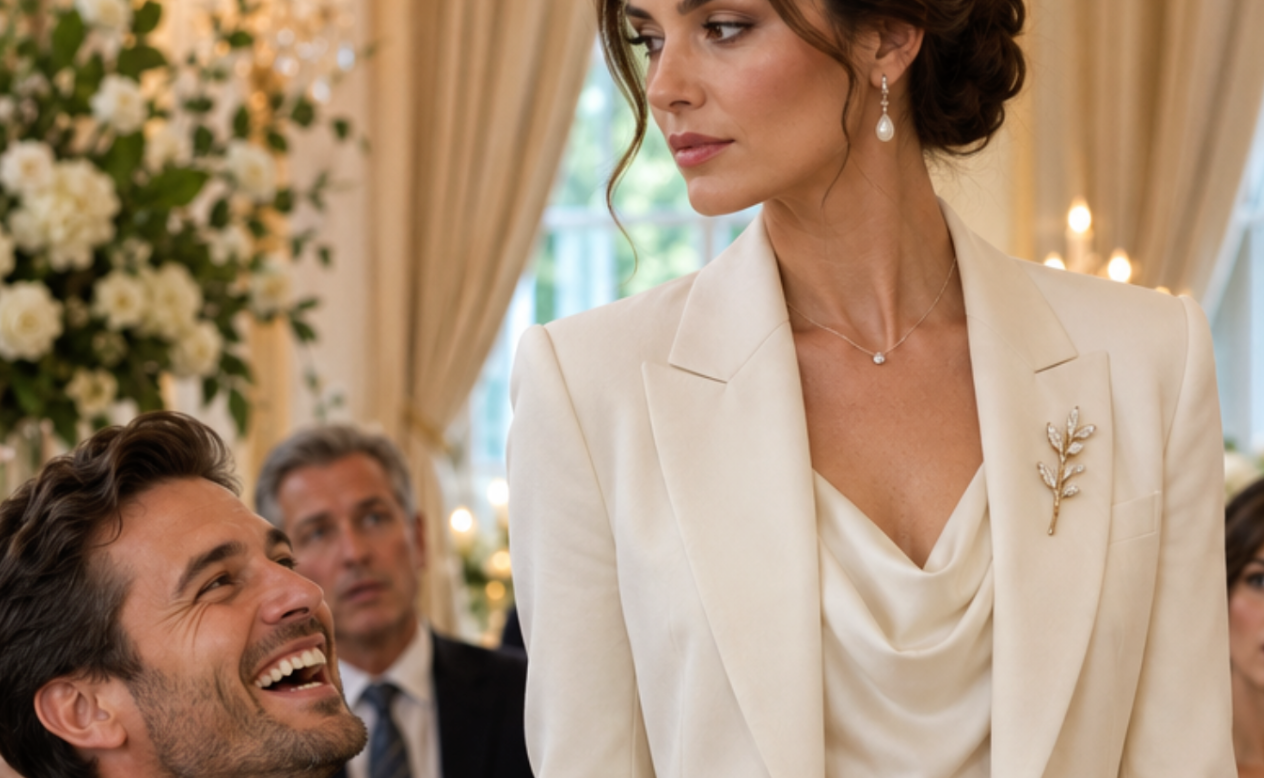
Elena put on her white pantsuit. She had bought it back in the spring, tried it on in front of the hallway mirror, then carefully hung it in the closet—waiting for the perfect occasion. When her husband saw her all dressed up, he let out an admiring whistle and told her the taxi had already arrived. She styled her own hair, without going to a salon. Twenty years ago she didn’t have money for a hairdresser, and her hands still remembered exactly how to twist her hair into a neat bun that would last all night.
They seated her at the second table, next to the financial director. Across the aisle, closer to the stage, was Viktor Petrovich. He had already managed to raise his glass several times—to the company’s prosperity, to its founder, to “the people who started it all.” After each toast, he would glance around as if checking to see whether everyone noticed that he was one of those people, too.
The host, a young guy in a bow tie, kept the guests entertained with jokes, handed out honorary certificates, and called up foremen, accountants, and other employees to the stage. Finally, he pulled out another envelope, paused for dramatic effect, and then announced with great ceremony:
— The Best Manager of the Year… Elena Nikolaevna Kovalchuk!
The room erupted in applause. Someone at her department’s table let out a joyful cheer. Elena stood up, grabbed her purse—she didn’t want to leave it on her chair—and made her way to the stage between the festively decorated tables.
And it was right at that moment that Viktor Petrovich burst out laughing. So loudly that the entire room could hear. He leaned back in his chair, pointed a finger at Elena, and exclaimed:
— Now, just listen to that! Elena! Best manager of the year! — He looked around at the nearby tables, clearly seeking support. — I remember perfectly when she used to bring me coffee! Two spoons of sugar, no milk! And now, look at her, she’s the boss! Times sure have changed!
Someone gave a hesitant chuckle—the kind people give when they can’t tell if something was a joke or just plain rude. The woman sitting next to Viktor Petrovich covered her mouth with her hand. Several guests quickly looked down at their plates. Ulyana, Elena’s assistant who had only been working with her for six months, blushed as if the humiliating words had been aimed straight at her. The company’s founder, Yaroslav Mikhailovich, slowly set his glass down on the tablecloth.
The music stopped abruptly. The host stood frozen, microphone in hand, at a loss for words.
Elena stopped right in front of Viktor Petrovich’s chair.
She could have told everyone in the room a lot. For example, how in the spring of 2008 he tossed a presentation for a major investor onto her desk at six in the evening with a curt, “Have it ready by morning.” And then the next day he gave the presentation himself, not even mentioning that Elena had reworked the slides until nearly three in the morning. She could have reminded him that half the clients he proudly considered “his” had been calling the front desk for years, because only there could they get clear answers to their questions.
She remembered every story like this. But she didn’t say a single word she could have said.
Elena calmly adjusted the sleeve of her white blazer, shifted her purse for comfort, and looked at her former boss. She gave him the same composed look she would use with dissatisfied clients who started raising their voices about the price per square meter.
“Yes, Viktor Petrovich. I did. Five times a day for seven years. And do you know what I’m still grateful to you for?”
He smirked smugly and waved his hand dismissively, as if giving her permission to go on.
“It’s because in all those seven years, you never once said the simple word ‘thank you.'”
The restaurant became so silent you could clearly hear the sound of a plate clattering from the kitchen.
“Back then, standing in your reception area with a tray in my hands, I made myself a promise,” Elena continued in that same even voice. “If I ever have my own office, every person who walks in—whether they bring a cup of coffee, a folder of documents, or even bad news—will always hear a ‘thank you’ from me. I have forty-three people working in my department now. You can ask any of them.”
But there was no need to ask anyone.
From the table where her team sat, Ulyana’s small voice piped up:
“There’s never been a single time when Elena Nikolaevna didn’t say thank you!”
Someone laughed. But this time the laughter was totally different—warm, genuine, and without any of the earlier awkwardness. Then someone started clapping, and in just a second, the whole restaurant joined in applause.
“That’s why I truly am grateful to you,” Elena said, waiting until the applause had quieted a bit. “You taught me a lesson that no management course ever could.”
She nodded politely to Viktor Petrovich—the kind of nod you give to a familiar colleague when you pass in the hallway—and then calmly made her way to the stage.
But he stayed there, sitting awkwardly with his hand in the air. Now his pointing finger wasn’t aimed at anyone. Finally, Viktor Petrovich slowly lowered his hand to the table and stared at the white tablecloth for a long time.
Yaroslav Mikhailovich himself handed Elena the glass statuette, even though, according to the pre-approved script, the award was supposed to be given by the host.
“Twenty years have passed,” the company’s founder said quietly, only loud enough for her to hear. “And I still remember you with that checkered notebook.”
“It’s still in my desk drawer,” Elena answered in the same quiet voice.
Her thank-you speech was short. There was no way she could list every employee by name, so she made special mention of those who had managed to close the toughest deals this year. She thanked the lawyers who sometimes checked documents late into the night. And at the end, she said she would always be grateful to the people who, twenty years ago, gave her the chance to take a modest seat at the reception desk.
She didn’t mention any names.
But those who needed to get the message understood it perfectly well.
Later, after the guests had drifted to their tables and the dance floor, Elena went up to the bar.
She asked for a cup of coffee.
She paused for a second, then added:
“And please, add two spoons of sugar.”
When she received the cup, she carefully carried it across the room.
Viktor Petrovich was sitting alone. The other people at his table had already left to dance. In front of him lay his mobile phone, turned face-down.
Elena placed the cup to the right of his phone.
“No milk. Two spoons of sugar,” she said calmly. “I remember.”
He looked up at her.
He stayed silent for a long moment, absently twisting the small spoon between his fingers.
“Elena… Nikolaevna,” he finally managed to say, as if trying the combination of names for the first time. “Forgive me. I drank too much tonight.”
“Drink it before it gets cold,” she replied.
And then she returned to her colleagues.
Elena was on her way home after eleven at night. A light drizzle had turned into a real autumn downpour, and the taxi’s wipers were barely keeping up with the torrents of water streaming down the windshield. On her lap rested an award statuette, carefully wrapped in a restaurant napkin so the glass wouldn’t get scratched by accident.
Her husband asked how the celebration went.
Elena thought for a moment and said everything was wonderful. She told him that she’d received an award, that Ulyana was glowing with happiness all evening, and that the celebratory cake was far too sweet.
She didn’t mention Viktor Petrovich at all.
And only at home, as she stood in front of the hallway mirror taking off her earrings, did she unexpectedly smile at her own reflection.
It had taken Viktor Petrovich twenty years to finally remember her patronymic.
But Elena had never been in a rush all those years. She simply followed her own path.