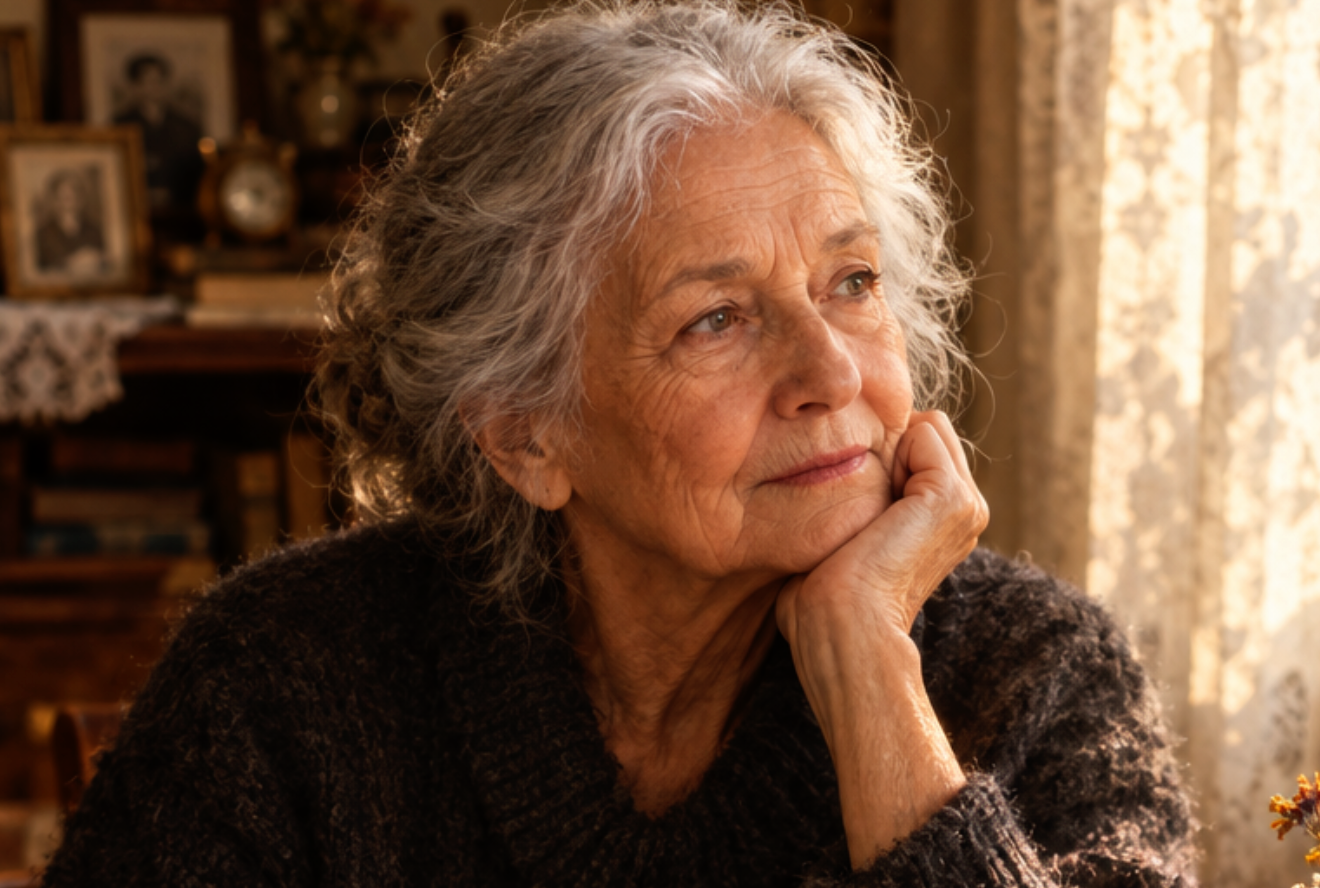
— Lenka, you have no idea what just happened. I found a receipt in her makeup bag. And everything changed from that moment.
There was a long pause on the line. Then my friend’s voice came through, groggy with sleep:
— Katya, what’s up? It’s not even ten yet… Did something happen?
— Something did. But you better sit down for this, don’t faint.
But I’m getting ahead of myself. Because the receipt was yesterday, but the story started much earlier. Back when Andrei first brought her to my two-room apartment in Yuzhnye Vorota and looked at her in a way that made me want to look away. Not because I was ashamed. Because I was afraid.
I put the kettle on, brought out the oatmeal cookies I always baked on Saturdays, and kept trying to figure out—what was it about this girl that caught my attention? She was good. Really good. Dark hair pulled back, light makeup, a soft gray wool sweater. She sat up straight, hands resting on her knees. She smiled exactly as much as she needed to.
— Ekaterina Petrovna, your home is so cozy, — she said, and her voice was warm. Almost genuinely warm.
A License for Deceit
— We get by, — I replied, pushing the cookies toward her. — Go on, have one. I made them myself.
— Oh, really? I can’t bake at all. I keep wanting to learn.
Andrei looked at her and smiled. He hadn’t smiled like that in a long time. Thirty-one years old, always single. He tried, of course, dated other people, but nothing ever worked out. Sometimes he liked someone and she didn’t. Or the other way around. I never interfered. Only every now and then I’d say, “Andryusha, why won’t you introduce me to someone?” and he’d just laugh it off.
And now, here was Svetlana.
I poured tea and kept glancing at her. She was beautiful. Polite. She asked about my job at Tochmash, wondered if being a woman in engineering was hard. I answered. I told stories about the factory, my colleagues, how in the eighties we did all the blueprints by hand, no computers. She listened carefully, nodding along.
But something felt off.
I couldn’t figure out what it was for the longest time. Her gaze, that was it. When she looked at Andrei, her eyes were soft, almost tender. But when she looked at me, her expression changed. It became a little colder. Like she was sizing things up, assessing. I told myself: Katya, you’re imagining things. She’s just shy. It’s her first visit, your first meeting.
That evening, after they left, I called Lenka.
— Well, what’s she like? — she asked right away.
— She’s a good girl, — I said. Paused. — But she’s a little strange.
— You’re always picky. Remember, you said the same thing about Nastya?
— Nastya was different. She was just nervous. This one, — I hesitated, searching for the word, — she’s calculating, I think. When she looks at me, it’s like she’s weighing something.
— Katya, don’t be so hard on the girl. Let your son live his life.
And I did. I always did. I gave over thirty years to Tochmash, then buried my husband, then raised Andrei on my own. I knew how to keep quiet and hold things in.
They dated for about three months, no longer. Andrei would stop by almost every week, on Fridays after work. He worked as a systems administrator at the eighth school in Yuzhnye Vorota, just down the street from my place. Sometimes we ate together. He would talk about the computers always breaking, about the teachers who were terrified of technology. I listened, happy that he was around.
“Mom, I really want to introduce her to you properly,” he said one day. “Just please don’t pressure her.”
“When have I ever pressured anyone?”
“Mom.” He looked at me with gentle reproach. “You look at her like she’s taking an exam and you’re the one grading her.”
“I’m just looking. It’s not like I’m blind.”
“She’s a good person. Really. She’s been through so much. Her first husband left her, and she was left completely alone in a strange city.”
I’d already heard this story. Svetlana was from another city, somewhere down south. Her first marriage, as she explained, didn’t work out. She still had her first husband’s last name, Kovalchuk, and, according to her, just hadn’t had time to change her documents. Andrey was understanding about it. I nodded, too.
Something was itching inside me. Softly, almost imperceptibly. But it was there.
She started visiting more often. She’d bring a store-bought pie, and once she brought some yarn and sat knitting on my couch while we watched a show. She was knitting a scarf. The ball of yarn kept rolling from side to side on the wooden floor, and our cat Kuzya would chase it. Svetlana would laugh—really laugh, from the heart.
“Let me bring you some tea, Ekaterina Petrovna,” she’d say, getting up herself before I even had a chance.
It was nice. I’d gotten used to doing everything myself, never waiting for anyone. And now, here was someone caring.
But one day she asked:
“Ekaterina Petrovna, have you been living in your apartment long?”
“Since eighty-nine. My husband and I got it back then.”
“A two-bedroom?”
“Yes, a two-bedroom.”
“Is it big?”
“Fifty-four square meters. It’s enough for me.”
She nodded and fell silent. But I remembered. I held onto that detail, not really sure why yet, but I did.
The next time, she asked about mortgages for retirees. She said she’d read an article and wondered if elderly people actually could get loans. I told her I didn’t really know, hadn’t looked into it.
“I was just looking,” she said, her voice calm and matter-of-fact. “Turns out, you can get really good terms if you use your apartment as collateral. Even for retirees. Interesting, right?”
“Interesting,” I agreed.
Kuzya jumped onto my lap. I stroked him and wondered: why does she want to know this? Why.
But I didn’t say anything.
They got married in April. Quietly, without a big celebration—they just signed the papers and invited a few friends to a café. I wore a blue dress I’d bought for Lena’s anniversary and tried my best to smile. Svetlana wore white, and she looked beautiful. Andrey was glowing so brightly it almost hurt to look at him—in the best way.
At the wedding, she came over to me and took my hand in both of hers.
“Ekaterina Petrovna, I’m so happy that you’re my family now,” she said softly, just for me to hear. “I’ll do my best to be a good daughter. Honestly.”
I squeezed her hand.
“I’m happy for Andrey,” I replied. That was all I said.
She paused for a moment. Then she smiled. And stepped away.
The first months after the wedding went smoothly. They lived in a rented apartment, a small one-bedroom not far away. Andrey stopped by every week or two. Svetlana came over less often, but always brought something: a cake, some homemade jam (though I kept wondering whose jam it actually was), or a potted plant.
“She wants to win you over,” Andrey said.
“I can see that,” I answered.
He looked at me with that patient gaze I remembered from his childhood. That’s how he used to look when he wanted to say, “Mom, please.”
“You still don’t trust her, do you?”
“Andrey, I just don’t know her. We’ve only known each other for a few months. It takes time.”
“How much time? A year? Five years? You’re always waiting for some kind of proof.”
“Maybe I am. But that’s not a bad thing.”
He sighed. I sighed too. We both knew how to sigh and still stick to our own opinions.
Summer passed quietly. In the fall, she called me herself. For the first time ever.
“Ekaterina Petrovna, do you mind if I come by? I want to talk. Just the two of us, if that’s okay.”
I said, come by.
She came on Thursday, at two in the afternoon. I had just gotten back from the clinic. The line there was awful, I sat for an hour and a half at the therapist’s office, my legs were aching. But of course, I made tea and brought out some cookies.
Svetlana sat across from me. She clasped her hands together. She was silent for a moment.
“Ekaterina Petrovna, I want to be honest with you. Adult to adult.”
“Go ahead.”
“Andrey and I are thinking about having a baby,” she said, her voice getting quieter. “And we’re thinking about housing. Because the three of us in a one-bedroom… you understand.”
I understood.
“We’ve been looking at options,” she continued. “There’s this residential complex, ‘Green Valley.’ Townhouses. It’s nice there: your own yard, a quiet area, the school is nearby. It’s great for kids.”
“That sounds good,” I agreed cautiously.
“But the mortgage is big. We can’t afford it on our own. You know what Andrey earns—teachers’ salaries aren’t high. I’m not working right now, I’m still looking.”
She looked up at me.
“We wanted to ask you. Not for money. Just… if you could use your apartment as collateral for the loan. Then the bank would approve it with good conditions, the mortgage for retirees with real estate as collateral, the rates are different.”
There it was.
I sat and listened, and something inside me tightened. Not much. Quietly. As if someone deep inside turned on a small but persistent alarm.
“Sveta,” I said slowly. “I only have one apartment. I live in it. If something happens…”
“Nothing will happen,” she leaned forward a little. Her voice got warmer. “We’ll pay on time, every month. It’s for Andrey, too. For your son. He needs a home for his family.”
It was the right move. She knew exactly what to say.
“I’ll think about it,” I said.
“Of course.” She leaned back and smiled. “I’m not rushing you. It’s just… Andrey wants it so much. You know, he’s really worried that he can’t give me a proper home. He feels awkward.”
After she left, I sat in the kitchen for a long time. Kuzya came over and pressed his head against my knee. My ginger, heavy, smart cat. I scratched his ear.
“What do you think, Kuzya?” I asked him aloud. “Is it worth it?”
The cat looked at me seriously. Then he walked over to his bowl.
Smart cat.
I called Lenka. She listened and was silent for a moment.
“Katya, that’s a lot of money. Your apartment is your only one.”
“I know.”
“Did you check who she really is?”
“Lenka, come on. Andrey knows her.”
“Andrey is in love like a kitten. He’s so smitten right now, he won’t see what’s right in front of him.”
“Don’t say that. He’s a smart guy.”
Smart, smart. But when smart people fall in love, they willingly turn a blind eye. You know that yourself.
I did know. But I didn’t want to admit it.
A week later, Andrey came by. Alone. He sat down at the table, put his hands in front of him, and looked me straight in the eye.
“Mom, Sveta told me she talked to you.”
“She did.”
“Have you decided what to do?”
“I’m still thinking.”
He was silent for a bit.
“Mom, I understand that you’re scared. But this is a family matter. You and I, we’re a family. I’m not some stranger.”
“You’re not a stranger,” I agreed. “But the apartment is in my name. I have to be responsible.”
“No one’s going to leave you with all the responsibility. I’ll pay.”
“Andryusha, you work at a school.”
“So what? I have side jobs too. And Sveta will find work. We can manage, Mom. We just need your help to get started.”
I looked at him. At this thirty-one-year-old man with gentle eyes who still drank tea from the same blue-striped mug he used as a child. My son, whom I raised alone for fifteen years. Who was scared of the dark until he was eight and secretly cried when his hamster died.
“Alright,” I said.
And the alarm inside me grew quieter. Almost silent.
The next two weeks were hectic. Svetlana found a bank, she found a notary, and she was the one who explained to me that I needed to sign a power of attorney first, so she could handle the paperwork on my behalf, and only then we would deal with the mortgage itself. She spoke quickly, clearly, confidently. Andrey nodded along. I listened.
“It’s a standard procedure,” she explained. “The notary will take care of it all. The power of attorney is for me, so I can sign documents for you while you don’t have to wait in long lines. It’s hard for you to go back and forth every time.”
“It’s not hard for me.”
“Well, there’s no need to worry unnecessarily.” She smiled. “I’ll handle everything. You trust me, right?”
And that’s when I should’ve been honest: not really. Something inside me was buzzing, long and insistent, like that old fire alarm in our workshop at Tochmal that nobody could fix for three months. Everyone got used to it and stopped hearing it. But one day, it really went off.
But I said:
“I trust you.”
Because what else could I say? That I don’t trust my son’s fiancée? That I feel something odd but can’t explain what? That there’s something about her look? They would call me a tyrant mother-in-law who won’t let her son live his life. Andrey would look at me with hurt in his eyes. Svetlana—with that subtle, almost invisible smile that said: See, I knew it.
She found the notary herself. The office was called ‘Notary Lipkina,’ and I even remembered the address: 7 Stroiteli Street. We had to go there the following week. Svetlana said the documents were ready, just needed to be signed.
“Mom, you’ll look over everything first,” Andrey said, sounding more reassuring than questioning.
“I will,” I said.
But my mind was racing: will you really? Have you ever actually read these documents? Six pages in tiny print, legal terms, clauses and subclauses. And everyone is watching: so, are you ready? And you’re embarrassed to take your time. You don’t want to seem like a distrustful, foolish old woman clinging to her apartment and refusing to help her son.
On Wednesday, I went to the clinic for some tests. After that, I stopped by the grocery store and picked up bread, kefir, and some food for Kuzya. While walking home, I noticed a sign in the window of a notary’s office—not Lipkina’s, a different one. It read: ‘Power of Attorney — Full Transfer of Rights.’ I stood there staring at it until someone coughed behind me.
I headed home.
On Friday evening, Andrey and Svetlana showed up together. They brought pizza. We sat, ate, and listened as Svetlana talked about a townhouse in ‘Green Valley,’ describing the yard, the view from the window, and how they’d plant tomatoes there in the summer. Andrey laughed. I ate my pizza and watched them.
Then Svetlana went to the bathroom. She stayed in there for a while. I cleared the table, and Andrey helped me.
“Mom, are you happy?” he asked quietly.
“I’m happy for you.”
“That’s the same thing.”
I didn’t answer.
Before leaving, Svetlana left a small burgundy makeup bag with a zipper in my hallway. She said she’d stop by in the morning to pick it up. “My night cream is in there, and I don’t want to keep carrying it back and forth.” I placed it on a shelf in the bathroom.
On Saturday morning, I got up early. Kuzya had been yowling since six, demanding food. I got up, fed him, put the kettle on, and then went to the bathroom to wash up.
The makeup bag was on the shelf. I picked it up to move it and free up space. The zipper came open. I tried to close it, and a small piece of paper slipped out. It was folded in half and wrinkled.
I picked it up and unfolded it.
It was a receipt. A cash register slip from the notary office “Notary Lipkina.” The date was last week, Tuesday. I looked at the amount—it was quite large. Then I read the line below.
“Power of Attorney Issuance. Principal: Svetlana Igorevna Kovalchuk.”
I stood there, staring at the receipt. Kuzya came into the bathroom and brushed up against my leg.
The receipt was shaking. I didn’t realize at first—it was my hands that were trembling.
So she had already been to Lipkina. Before me. Arranged something in her own name. Power of attorney. Kovalchuk.
A thin, cold shiver ran down my back. It wasn’t panic. It was calmer than that, and somehow even scarier. Clarity.
I wrapped the receipt back up and put it in the makeup bag. Then I went to the kitchen. I poured some tea and drank it standing up, looking out the window. October—bare trees, empty yard.
Then I picked up my phone.
On the fourth floor of our building lived Nikolay Ivanovich Bortsov. He was a former investigator, about seventy years old, retired for a long time. We’d greet each other in the elevator, sometimes talk about the weather. Once, he helped me figure out a letter I got from the tax office that I couldn’t understand. He’s a smart man. Quiet.
I had his number. Wrote it down once, just in case.
He picked up on the third ring.
“Nikolay Ivanovich, this is Yekaterina Petrovna from the second floor. Sorry for calling so early. Can I ask you about something?”
“Good morning,” he said calmly. “What’s happened?”
“I need to find out about someone. Surname: Kovalchuk, Svetlana Igorevna. She’s… she’s my daughter-in-law. I realize you’re retired, but you must still have some contacts. If I try to check something myself, I might get it wrong.”
A pause.
“Do you know her age?”
“Twenty-nine. About that.”
“Alright. Hold on.”
“How long will it take?”
“An hour. Maybe less.”
I put my phone away. I fed Kuzya a second time—even though he didn’t ask for it, I just needed to keep busy. I washed the dishes. Wiped down the stove. Rearranged the spice jars on the shelf.
Forty minutes later, Nikolai Ivanovich called me himself.
“Ekaterina Petrovna. Please sit down.”
“I’m sitting.”
“Your Svetlana Kovalchuk. She’s in the database. Twenty-nine years old, born in Rostov. She’s got two previous cases. In one region, she got power of attorney for a man’s apartment, which was then mortgaged and the money disappeared. In another case, she’s involved in microloans—loans made in another person’s name. Right now, formally wanted, but her case is stalled—no resources to pursue it.”
I listened. Sat perfectly still, clutching the phone with both hands.
“So, this isn’t her first time.”
“Not her first.”
“And she wanted power of attorney from me. For the apartment. The notary is tomorrow.”
“I hear you. Ekaterina Petrovna, you haven’t signed anything yet, have you?”
“No. Not yet. But the deal is scheduled.”
“Then you still have time. Not much, but you do.”
I set my phone down and sat there for a long time. Kuzya jumped up on the table—something I usually didn’t allow. He looked at me. I didn’t scold him.
So this is it. This is what she wanted. Not the townhouse. Not tomatoes in the garden. The apartment. My apartment. Real estate fraud, like the newspaper articles I used to read and think, who would ever fall for that?
Turns out, me.
No, not me. I hadn’t signed anything yet.
But Andrey. Andrey didn’t know anything. Or did he? No. He couldn’t have. That’s not possible. I raised him.
I stood up and called the bank—the one she picked for the loan. I found the number online, pressed the wrong options for a while in the menu, but finally reached an operator. I asked about my loan application and gave my name.
The operator said:
“Yes, we have a loan application secured by an apartment. It’s been approved, and the documents are ready to be signed.”
“Who prepared them?”
“By power of attorney. Svetlana Igorevna Kovalchuk, authorized representative.”
A cold shiver ran down my spine for the second time. Only this time, it wasn’t a shiver—it was a flood.
“When is the signing?”
“Tomorrow. Someone was supposed to call you.”
“Yes, I remember. I want to reschedule. No, wait. I want to come in person. Tomorrow. What time?”
“Eleven in the morning.”
“Okay. I’ll be there.”
I hung up and sat for another ten minutes. Then I picked up the phone and texted Andrey: “We’re going to the bank together tomorrow. I need to discuss something with you in person. Come to my place by ten.”
He answered quickly: “Mom, are you okay? How are you?”
“I’m fine. Just come.”
Then I thought a moment and added: “And don’t tell Svetlana. I want to talk to you alone first.”
A long pause. Then: “Okay.”
I spent the evening calmly. Cooked some soup, ate it. Watched TV, though I retained nothing of what I saw. Went to bed early. Kuzya settled at my feet. I lay there thinking how lucky I was not to have signed yesterday. Lucky that my makeup bag fell. Lucky that Nikolai Ivanovich turned out to be who he is.
I slept badly. But I did sleep.
In the morning, Andrey arrived at quarter to eleven. He rang the doorbell, came in, took off his jacket. Looked at me closely.
“Mom, is something wrong?”
“Sit down.”
He sat. I placed the receipt on the table.
— That belongs to Svetlana’s makeup bag. She left it at my place.
He looked at the receipt. Took it. Read it.
— Notary Lipkina, — he said slowly. — So what? She handled our document there.
— Ours? Andrey, look closely. She arranged a general power of attorney. Who is listed as the principal?
He looked again.
— Kovalchuk Svetlana Igorevna.
— Correct. She issued a power of attorney to herself. Why would she do that?
He was silent. I could see something shifting in his mind. Slowly. He didn’t want it to shift.
— Maybe it’s something else. Maybe she arranged another document.
— I called the investigator. The same one from the fourth floor, Nikolai Ivanovich. He checked her in the database. Andrey, she has two previous cases. Exactly the same scheme. Power of attorney, apartment, loan, money disappears.
Silence.
Andrey looked at the table. Then at the receipt. Then at me.
— Mom, — he said, and his voice sounded unfamiliar. Not harsh. Just not his own. — This can’t be. No. It’s not possible.
— Unfortunately, it is.
— She’s not like that.
— Andrey.
— Mom, you don’t know her. You never accepted her, from the very start you were looking for reasons to doubt her.
I didn’t reply. I looked at the clock.
— We have to go to the bank. At eleven. I called them. The deal was set for tomorrow, but they can meet us today, I asked. Let’s go. And then we’ll talk.
He stood up. Put on his jacket in silence. We left.
We rode in silence. I gazed out the window. The October city, wet pavement, people with umbrellas. I wondered how he was feeling right now. Probably worse than me. It’s easier for me. I didn’t have to love her the way he did.
The bank was called ‘Northern Shore’. Svetlana found it. Glass facade, two potted palms at the entrance, the scent of coffee from a machine at the counter. A young manager in a blue shirt came out to meet us.
— Ekaterina Petrovna? — he asked. — You called.
— I called. This is my son, Andrey. We want to discuss the application.
— Of course, let’s go.
We sat down at a table in the meeting room. The manager opened a folder.
— So, we have a loan secured by real estate, — he began. — Everything’s approved, only the final signing remains. Will the authorized representative be here today as well?
— The authorized representative won’t be coming, — I said. — First, I want to see exactly what’s been approved.
He looked a bit surprised, but handed me the folder. I took it. Read slowly, carefully. Andrey sat next to me, reading too. I could hear his breathing.
And then the door opened.
Svetlana walked in without knocking. In a coat, with a bag slung over her shoulder. Apparently, Andrey had messaged her after all. Or she was already keeping an eye on us. She saw us, and for a split second something shifted in her. Then it went back to normal.
— Oh, you’re already here. — A smile. — Ekaterina Petrovna, I told you not to worry, I would’ve taken care of everything.
— Sit down, Sveta, — Andrey said. His voice was strange. Flat.
She sat down. Looked at me. At the folder in my hands.
— Is something wrong?
I placed the receipt on the table.
— That’s yours.
She stared at the receipt. An eternity-long pause.
— Where did you get that?
— You forgot your makeup bag.
Another pause. The manager sat quietly, it was clear he didn’t really understand what was going on.
“So what?” she said. Her voice changed. Just a little, but enough. It lost its softness. “This is my document.”
“Svetlana Igorevna,” I said evenly, “you signed a power of attorney with notary Lipkina in your name. Why?”
“It’s just part of work. Legal technicalities. You don’t understand.”
“Explain.”
“It’s a technical thing. To act on someone’s behalf. Standard procedure.”
“You’re under investigation for two real estate fraud cases,” I said, letting my words fall on the table like coins. One after another. “I know that. My son knows. The bank will know soon.”
Something happened to her face. It was different now. Everything gentle and proper vanished. All in a second. Like a mask falling away.
“So you’ve made up your minds,” she said. Her voice was quiet, sharp. “From the very beginning, you decided to go against me. Old hag.”
The manager flinched.
“Sveta.” Andrey spoke her name the way you say the name of someone you no longer know. “Don’t.”
“Don’t what?” She turned to him. “Don’t what, Andrey? Do you even realize you’re taking her side? Your mother? The one who wants to control you for your whole life? Who will never give you anything? You’re an idiot. You always were.”
Silence. Complete.
I looked at her. At her beautiful, now angry face. I thought: this is it. The real one. I’m glad Andrey hears it for himself, sees it for himself. Not just from me.
The manager stood up.
“I’m going to have to ask you to calm down,” he said. “Or we’ll have to call for security.”
Svetlana stood up. Picked up her bag. Looked at me. In her gaze, there was no anger, no grief. Only calculation. She counted, she lost, she leaves.
“You won’t succeed,” she said. “The power of attorney is already done.”
“We’ll revoke it,” I replied calmly. “Through the court.”
She left. The door closed behind her. The potted palms swayed in the draft.
Andrey sat and stared at the table.
I looked at the manager.
“We need to cancel the application,” I said. “Completely. And please tell us what’s already been processed.”
The manager was young but focused. The application was canceled. Marked. He said that even if the power of attorney is in place, it doesn’t allow a lien without the owner present at the final stage. So, the apartment is still safe. This was the first good thing to happen in the past 24 hours.
But then he told us a second fact. Not a good one.
“There’s another issue. About your son. The system shows several microloans recently taken in his name.”
Andrey looked up.
“What loans?”
The manager listed the amounts. Three loans from different companies. The total was quite substantial.
“I didn’t take any loans,” Andrey said slowly.
“I understand. You’ll have to sort this out. Most likely, it’s done with document copies. This is a case for the police now.”
We left the bank. It was drizzling outside. Andrey stopped at the door and stood still. I stood next to him.
“Mom,” he said. His voice broke on that single word.
I didn’t say anything. Didn’t say “I told you so.” Didn’t say, “Do you see now?” I just took his arm, and we walked to the car.
Lenka found the lawyer two days later. Her name was Irina Sergeyevna, a young woman with a small office on the first floor just a block away. The room was cozy, diplomas covering the walls. She spoke quickly, but everything was clear.
“So, let’s assess the situation,” she began, spreading some papers on the desk. “There’s a power of attorney issued by notary Lipkina in your name, Yekaterina Petrovna. Or was it from your daughter-in-law in your name for certain actions?”
“That needs sorting out,” I replied. “I have the receipt. The trusted party is Kovalchuk.”
“So she issued a power of attorney to herself, giving her certain rights. We’ll need to see exactly what those rights were. We’ll request it from Lipkina—the notary is required to provide a copy. The power of attorney can be revoked in court or by a notary if there is cause. Fraud confirmed by an active investigation is good cause. We’ll file a police report, attaching Nikolai Ivanovich’s information as a source and data from public records. That works.”
“How much time will this take?”
“Ideally, a few months. In the worst case, longer. But the apartment can’t be seized, right?”
“It can’t. I never signed anything.”
Irina Sergeyevna looked at me with what seemed like respect. Or at least, that’s how it felt to me.
“That’s good. That makes things much simpler. That was our main risk. Since the apartment is clear, we’ll focus on revoking the power of attorney and figuring out the microloans in your son’s name.”
“Loans,” sighed Andrey, who had mostly stayed silent until now as he sat beside me. “Did she really take them out in my name with just a copy of my passport?”
“Most likely. It’s a common scheme now in real estate scams among families. First, they take out loans, then that money is used as a down payment or for something else. In the end, a person is left in debt and the money is gone. We’ll challenge it. What matters is proving you didn’t receive the money. We’ll send inquiries to the loan companies, get bank statements, and bring in witnesses if needed.”
“Will it take long?”
“It’ll take time, too. But it’s doable.”
We left Irina Sergeyevna’s office at half past one. The weather had brightened a bit outside, and the weak November sun peeked through the clouds. Andrey walked silently beside me.
At the foot of our building’s stairs, I stopped.
“Do you want to come in?”
“Yes,” he said. “If that’s okay.”
We went upstairs. I put the kettle on. Kuzya came out of his room, sniffed Andrey, and rubbed up against him. Andrey crouched down to pet the cat, staying down there for a while.
“Mom,” he said, still down low. “When did you realize?”
“When I found the receipt.”
“Before that?”
I hesitated.
“There was something. But I didn’t know what exactly. I could feel it.”
“Why didn’t you say anything?”
Good question. Why didn’t I say anything? Because he looked at her like she was the sun. Because I was afraid of being that meddling mother-in-law who ruins everything. Because ‘I felt it’ isn’t much of an argument without a receipt in someone else’s makeup bag.
“Because I didn’t want to hurt you without proof,” I said.
“Now it hurts, even with proof.”
“Yes. Sometimes that’s how it goes.”
He stood up, walked into the kitchen, and sat down at the table. The kettle boiled, and I poured the tea. I gave him the cup with blue stripes. He took it automatically, then looked at it.
“This is the cup I used as a kid,” he said softly.
“Since you were little.”
“You kept it all these years.”
“Where else would I put it?”
He set his mug down on the table, then covered his face with his hands. His shoulders shook. I could see him breathing—heavy and uneven.
I walked over and placed my hand on the back of his head. His hair was just like it was in his childhood, slightly curly at the ends. I stroked his head, just as I used to when he was seven, eight, or ten years old.
We sat together like that for a long time.
Kuziya jumped onto the chair opposite us, watching calmly and seriously. It was as if he thought this was exactly how things should be.
In November, Irina Sergeyevna filed a police report. Attached were details about the search for Kovalchuk, a receipt from Lipkina, and statements about the microloans taken out in Andrey’s name. By that time, Svetlana had vanished. She had moved out of the apartment, her phone was unreachable. This was expected.
Nikolai Ivanovich ran into me in the hallway one day and said:
“They usually disappear quickly. She worked like a pro. But traces remain. If they really want to find her, they will.”
“If they want to?”
“It depends on many things. If you have a good lawyer, there will be pressure on the investigation. That’s important.”
“The lawyer is good.”
“Then there’s a chance.”
The power of attorney was sorted out in court. Later, Irina Sergeyevna explained to me that the power of attorney they found with notary Lipkina was made out to Kovalchuk personally and allowed her to sign contracts on behalf of Irina herself to deal with other people’s property. Clever scheme. But in a criminal case, the court invalidates such things.
“It’s hard to understand,” I admitted to Irina Sergeyevna.
“You don’t need to understand every detail,” she replied. “Just understand what’s important: your apartment is safe, the power of attorney is cancelled, and a case is opened. Now the system is working. Slowly, but it works.”
“What about the loans?”
“The loans are more complicated. We’ll have to prove that Andrey didn’t get them. Most likely we’ll be able to dispute some, but unfortunately, you’ll have to pay part of them off. That’s the reality. Better to know now.”
I knew. This was that kind of ending that’s never all good. The apartment is safe, and that’s what matters. But the microloan debts are still there, and need to be paid back, even though Andrey never saw that money. Unfair. But what can you do.
In December, Andrey came over on Friday, just like old times. He brought potatoes from the market, said they were cheaper than in the store. We made soup. We watched a travel show on TV about a tiny town in Portugal with white houses and blue roofs.
“Wish we could visit,” he said.
“You will go someday.”
“Would you go?”
“Me? No. I’m too old to be traveling around Portugal.”
“You’re not old at all.”
“I’ll be seventy soon.”
“That’s not old. That’s experience.”
I smiled. He grinned. Kuziya lay between us on the couch, trapping Andrey’s sleeve with his paw, as if holding him in place.
Lenka called after New Year’s. On the morning of January 1st, she rang to wish me a happy New Year.
“Katya, how are you?”
“I’m living.”
“I heard everything got sorted out?”
“Not everything. But the main thing. The apartment is mine.”
“You did great. You acted just in time.”
“It was only because the cat scattered my makeup bag.”
“Still, well done. Someone else might have signed without checking.”
I was silent.
“I almost did sign, Lenka. Almost.”
“But you didn’t sign.”
“I didn’t.”
She was silent too.
“Tell me, Katya, did they find Svetlana?”
— Not yet. Irina Sergeyevna says they’re looking. But she’s probably already in another region. Or maybe just gone. People like that don’t stop.
— It’s scary.
— Yeah. It’s scary to think that right now she’s headed toward someone else. With that same smile. Knitting a scarf, making soup, asking about the apartment.
Lenka was silent for a moment.
— Do you think about her?
— Sometimes. I try not to.
— That’s right. She’s not worth it.
Maybe she isn’t. But sometimes I still think about it. Not about her. About how it all works. How someone learns to look so soft, say the perfect things, bring a pie and knit a scarf. How they know to keep quiet about the important stuff and talk about trivial things. How they can find your weak spot. And I had only one weak spot. Andrey. His happiness. His smile.
She knew it. She knew it the moment she saw us.
That’s why I couldn’t tell him sooner. Because in a family fight over an apartment, over money, for not trusting the daughter-in-law, the mother is always to blame. Always. They say: you don’t let your son live. You’re jealous. You’re controlling.
No one ever says: you’re protecting him.
Andrey doesn’t blame me anymore. We don’t say Svetlana’s name. Sometimes he goes to the lawyer alone, sorts out the loan issues. Then he comes back to me, eats some soup, watches TV. Sometimes he’s quiet. Sometimes he tells me about school, computers, teachers.
One day in January he came home late, around eight. Took off his coat, his shoes. Went into the kitchen. Sat down. I put the kettle on.
— Mom, — he said. — I want to say something.
— Go ahead.
— I’m sorry.
I turned around.
— For what?
— For not listening. For saying you were being picky. I could tell you felt something and still…
— Andryush.
— No, Mom, let me finish. You tried. In your way. But still, you tried. And I thought I knew better, that I was smarter than you.
The kettle whistled. I poured the tea. Put the mug with the blue stripes in front of him. He picked it up with both hands.
— It’s okay, — I said.
— You say that, but still…
— Andrey. We’ll be fine. The loans will get paid off. The apartment is safe. You’re healthy. I’m healthy. Kuzya’s healthy.
He laughed. Quietly, but he laughed.
— Kuzya, yes. Honestly, Kuzya’s the best of us all.
At that moment the cat came into the kitchen and sat by the fridge looking like he knew we’d end up talking about him.
We drank our tea. Outside, it was snowing. Light, November snow, drifting for no reason. Just falling.
I thought: this is how it goes. You live, work thirty years at Tochmash, draw up blueprints, raise your son, bury your husband, retire. You think: that’s it now, peace and quiet. No more big stories. Doctor’s appointments, the garden at the dacha, calls with Lenka, Kuzya on the couch.
And then suddenly a zipped-up makeup bag. A crumpled receipt. The name Kovalchuk. And you’re right back where you once stood in front of a tricky blueprint on tracing paper. Staring. Thinking. Searching for the mistake.
And you find it.
Irina Sergeyevna called in February. Said there’s progress in the case. Svetlana was seen in another city, they’ve opened a similar case there too. Now the investigation is combining everything. That’s good. It means she’ll have a harder time disappearing completely.
— So there’s a chance she’ll be found? — I asked.
— There’s a chance. But I wouldn’t expect it to happen quickly.
“I’m not waiting for things to happen quickly. I’m waiting for things to happen honestly.”
The lawyer fell silent for a moment.
“You’re amazing, Ekaterina Petrovna. Seriously.”
“It’s just that the cat scattered my makeup bag.”
“You would have managed just fine even without the cat.”
Maybe. Maybe I could have done it without the cat. But the cat did help. And it’s important to acknowledge that.
I put my phone away and headed to the kitchen. I grabbed Kuzya’s bowl and poured in some food. He showed up right away, as if he’d been waiting just around the corner. He ate carefully, not rushing.
It’s February outside. Gray, cold, but the days are already getting a little longer. Just a bit—but you can tell.
I stood by the window and gazed into the yard. A grandmother with a stroller below. A man in a yellow jacket clearing snow. Two girls running somewhere, laughing.
Life goes on. Everyday, other people’s lives and mine at the same time.
Somewhere right now, Svetlana Kovalchuk is heading to meet someone new. Smiling, with a scarf, chatting about townhouses and kids who need more space. I don’t know where exactly. I don’t know if they’ll find her soon.
I only know that my apartment still stands. A two-bedroom on Yuzhnye Vorota, fifty-four square meters, windows facing the yard. The very one my husband and I got back in ’89. The one where Andrei did his homework at the kitchen table and used to be afraid of the dark.
It’s still standing. And maybe that’s the most important thing.
Kuzya jumped onto the windowsill next to me. He stared out into the yard. We stood there together and watched.
“Well, Kuzya,” I said to him, “Did we manage?”
He didn’t answer. He just blinked slowly.
That’s how cats say: yes.