Svetlana woke up around 4 a.m., jolted by a sharp pain low in her abdomen. That familiar ache she’d been feeling for weeks was stronger than ever. She carefully got out of bed, trying not to wake her husband, and headed to the bathroom. Staring back at her in the mirror was a gaunt face with dark circles under her eyes.
“This pain again,” Svetlana whispered, pressing her hands to her stomach.
It all started three weeks ago with a mild discomfort. At first, she thought it was just a cold, then blamed it on exhaustion after a tough month at work. But the pain kept getting worse, and then came the morning nausea. That’s when Svetlana knew she had to see a doctor.
At the local clinic, the therapist, Anna Sergeyevna, barely examined her and simply shrugged.
“It could be something gynecological. Go get an ultrasound,” the doctor said as she scribbled something indecipherable in the medical record. “And in the meantime, take some no-shpa.”
The ultrasound revealed some dark spots, but the technician couldn’t really explain what they were.
“You need to see a specialist,” the woman in the white coat said. “This isn’t my field.”
The waiting list for the gynecologist stretched to a month. And the pain didn’t let up. Svetlana was restless at home, clutching her stomach while cooking, waking in the middle of the night from discomfort. Her husband, Andrei, noticed the changes in her behavior but just brushed it off as moodiness.
“You’re too nervous lately,” Andrei said, not looking up from the TV. “You work too much, that’s why everything hurts.”
Last week, Svetlana couldn’t stand it anymore and decided to go to a private clinic. She spent the savings she’d set aside for a vacation on the check-up. MRI, tests, and a surgeon’s consult—it all cost a pretty penny, but the outcome was worth it.
At the regional center, the doctor, Mikhail Vladimirovich, studied her scans carefully, furrowing his brow and occasionally jotting things down in his notebook. Svetlana sat across from him, clutching her purse, her heart pounding faster and faster.
“The situation is serious,” the doctor finally said, looking up from the images. “You have a tumor in your abdominal cavity. It’s quite large, and waiting any longer could lead to complications.”
The word ‘tumor’ hit Svetlana like a bolt of lightning. The room seemed to sway, and she gripped the arms of her chair.
“Is it… is it cancer?” Svetlana barely whispered.
“It’s too soon to tell what kind of mass it is. You need surgery to remove the tumor and send it for pathology. There’s no time to waste—every day counts.”
Svetlana rode home in a daze. The doctor’s words echoed in her mind: surgery, urgent, complications. Her hands shook as she reached for her apartment keys. Andrei met her at the door, but his eyes immediately shifted to the grocery bags in her hands.
“Why were you gone so long?” her husband asked as he walked to the kitchen. “I was starting to think there wouldn’t be any dinner.”
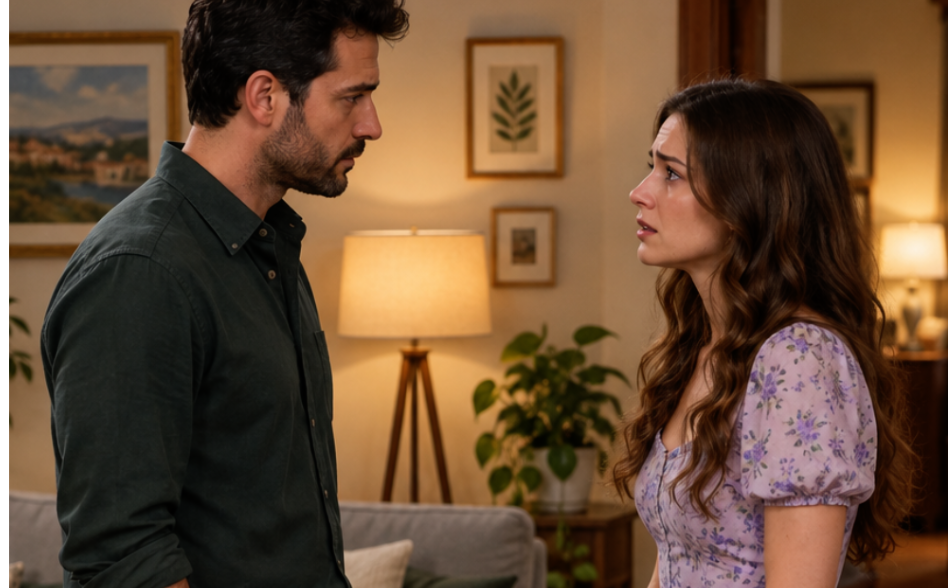
“Andrei, we need to talk,” Svetlana said, setting the bags on the floor.
Her husband opened the fridge, grabbed a beer, and only then took a good look at his wife’s face.
“What happened? You look like you just came back from a funeral.”
— I went to the doctor. In the regional center. — Svetlana walked into the living room and sat down on the couch. — I need surgery. An urgent one.
Andrey froze with an open bottle in his hand.
— What surgery? What are you talking about?
— I have a tumor. A big one. The doctor says I can’t delay. — Svetlana’s voice was shaking, though she tried hard to stay calm. — I need to go to the hospital, get medical leave. And we’ll need money — for medicine, for the hospital room…
Andrey put the bottle on the table and paced around the room.
— A tumor… Are you sure this doctor knows what he’s talking about? Maybe he’s just playing it safe? — He stopped in front of his wife and looked at her skeptically. — You know how these private clinics operate. Their main goal is to get as much money out of you as possible.
— I have all the scans and test results in my hands. Mikhail Vladimirovich is an experienced surgeon, Andrey. He wouldn’t make things up.
— Mikhail Vladimirovich… — her husband mocked. — And how much money did you spend on all these tests, anyway?
Svetlana felt something tighten inside her. Instead of support, her husband was interrogating her.
— That’s not important right now. What matters is that I need help. — She got up from the couch and walked to the window. — The surgery is scheduled for next week.
Andrey was silent for a moment, then suddenly slapped his forehead.
— Oh man, I totally forgot! My mom’s birthday is next week! Sixty-five years old! — He brightened, as if remembering something truly pleasant. — We’ve already talked it over. It’s going to be a huge celebration — restaurant, guests, presents.
— Andrey, did you hear what I just said? I need surgery.
— I heard, I heard. But Mom has her heart set on a jewelry set. Do you know how much it costs? Thirty thousand! — He took out his phone and showed her a photo of gold earrings and a necklace. — It’s not every day a woman turns sixty-five.
Svetlana looked at the phone screen in disbelief. While she was talking about her health, her husband was focused on jewelry.
— Andrey, do you realize the tumor might be malignant? That every day of delay is dangerous?
— Oh, stop working yourself up. — He waved his hand dismissively. — Doctors say all kinds of things. You’ve always been healthy, and you aren’t going to die now. But this gift for Mom — that’s a matter of honor. A son’s got to prove himself in life.
— What if I really am seriously ill?
— Sveta, you’re a born worrier. Remember how you got all upset over that mole? And it turned out to be nothing. — Andrey sat in an armchair and turned on the TV. — Mom’s waiting for her gift. Her birthday is a big deal.
Svetlana stood in the middle of the room, feeling a mix of anger and despair rise inside her. Her husband was watching the news, occasionally making comments about what was happening on screen, as if their conversation about her illness had never even happened.
— We need those thirty thousand rubles for something else right now, — she said quietly.
— For what? Your tests? Sveta, how much more are you going to spend on doctors? — Andrey turned to her with a disgruntled look. — Money is tight already, and you’re always going to hospitals.
— I want to live, Andrey. Do you understand? I just want to live.
— And you will live. Just don’t make a tragedy out of every little sickness.
At night, Svetlana lay awake, staring at the ceiling while her husband slept peacefully beside her. Quietly, she got up, went to the kitchen, and took out a folder with her medical documents. The scans, test results, and the doctor’s recommendations all pointed to one thing: she had no time left to hesitate.
Svetlana picked up her phone and dialed her friend Lina’s number.
“Hello?” a sleepy voice answered after the fifth ring.
“Lina, it’s me. Sorry for calling so late.”
“Sveta? What’s going on?” Her friend immediately sounded wide awake. “You sound… different.”
“I have a tumor. I need surgery. And Andrey…” Svetlana’s voice trembled. “Andrey thinks his mother’s birthday present is more important.”
“What?!” Lina was openly outraged. “Has he lost his mind?”
“I don’t know what to do. The doctor says it has to be urgent, but my husband… Maybe I’m just panicking?”
“Sveta, listen to me carefully,” Lina’s voice became firm. “I know a surgeon at the regional hospital. You’re going to see him tomorrow. And for now, start packing—you’re staying at my place. No arguments.”
“Lina, I don’t want to trouble you…”
“Trouble me? We’ve been friends for twenty years! You can come right now if you want. I have a bed for you and money for your treatment if you need it.”
Svetlana felt tears well up in her eyes. For the first time in a long while, someone was offering real help—without judgment or conditions.
“Thank you,” she whispered. “I’ll come in the morning.”
In the morning, Svetlana silently packed her things in the bedroom. Andrey sat on the bed with his phone, scrolling through the news and occasionally glancing at his wife.
“Where are you going?” her husband finally asked.
“To Lina’s. I’ll stay with her until the surgery,” Svetlana replied, placing the necessary documents into her bag.
“What’s all the fuss about? I’m not saying you shouldn’t get treated. Just wait a little. After my mom’s birthday, we’ll take care of your health.”
“Andrey, every day we wait could cost me my life.”
“Why are you being so dramatic!” Her husband waved his hand irritably. “Mom is expecting her celebration, and you’re making a scene.”
Svetlana zipped up her bag and looked at her husband. After twenty years of marriage, she finally realized just how different they really were.
“I’m leaving to get treated,” Svetlana said firmly.
“You could have at least waited,” Andrey muttered without looking up from his phone.
Svetlana picked up her bag and walked to the door. At the threshold, she looked back—her husband was still sitting on the bed, glued to his phone. No hugs, no good luck wishes, no words of support.
She left the apartment, ordered a taxi, and sat on the bench outside the building. There were no tears. Just a strange sense of freedom and a determination to see this through.
The train to the regional center took two hours. Svetlana stared out the window at the passing scenery, thinking about how strange life had become. Just yesterday, she thought there was no way she could handle this without her husband’s support. Today, for the first time in a long while, she felt confident about her future.
At the station, Lina greeted her friend with a bouquet of wildflowers and a big, bright smile.
“So, fighter, ready for battle?” her friend asked, hugging Svetlana.
“Ready,” Svetlana replied, and for the first time in a week, she smiled for real.
Lina set Svetlana up in her daughter’s room, since her daughter was studying in another city. The room was bright, with a big window looking out onto a yard filled with old linden trees. Diplomas and photos from her daughter’s graduation parties decorated the walls. The atmosphere smelled of calm and care.
“Tomorrow morning we’ll go see Igor Borisovich,” Lina said as she brought in tea with honey. “He’s a miracle worker of a surgeon. If I trust anyone with you, it’s him.”
Igor Borisovich turned out to be a man around fifty, with kind eyes and confident hands. He looked over the scans, listened carefully to Svetlana’s complaints, and nodded.
“It’s a serious situation, but not critical. We’ll operate tomorrow. The tumor is large, but it’s in a good spot,” the doctor said, looking at Svetlana intently. “Are you scared?”
“Yes, I am,” the woman admitted honestly.
“That’s right. Fear keeps you sharp. But panic—panic is your enemy. Do you have support?” he asked.
Svetlana looked at Lina, who was holding her friend’s hand tightly.
“Yes, I do,” Svetlana replied.
The operation was a success. Svetlana woke up in the intensive care unit, surrounded by drains and IVs. Igor Borisovich visited her an hour after she woke up.
“Everything went well. The tumor was completely removed, no complications. Preliminary results show it’s benign, but we’re waiting on the histology report,” the doctor said. “You’ll spend a week in the hospital, then two weeks recovering at home.”
Lina came to see her every day, bringing homemade food, fresh newspapers, and stories about what was going on. No one else visited Svetlana. Her phone stayed silent. Andrey didn’t call even once.
A week after her surgery, while scrolling through social media, Svetlana stumbled upon photos from her mother-in-law’s birthday. The whole event was there: tables set in a restaurant, guests with champagne glasses, the birthday woman in a new gold necklace and earrings. Her mother-in-law was grinning ear to ear, hugging her son. The photo was captioned: “The most important thing in life is family. Thank you, son, for a wonderful celebration!”
Svetlana stared at her phone’s screen for a long time. Andrey stood next to his mother, looking happy and content. There was no sign of worry for his wife. Svetlana closed the app and set her phone aside.
A month later, Svetlana returned to her own apartment. The place smelled musty and dusty. There were no men’s shoes in the hallway and only her makeup in the bathroom. Andrey, she later discovered, had gone to stay with his mother “to help out after the party.”
She opened the windows, turned on some music, and started tidying up. Funny enough—the apartment felt more spacious and cozy without her husband.
Andrey only showed up three days later. He called late in the evening.
“Sveta, how are you? How did the surgery go?” his voice sounded guilty.
“It went well. The tumor was removed. Benign,” Svetlana replied briefly.
“Well, thank God… I got overwhelmed back then, I didn’t realize it was that serious. Mom was having her birthday, guests, all that chaos… You’re not mad at me, are you?”
“I’m not mad, Andrey.”
“Really? I was afraid you’d be angry…”
“I have different priorities now,” Svetlana said calmly.
The divorce was settled quickly and without drama. There wasn’t anything to split — the apartment was in Svetlana’s name, they didn’t have a car, and there were no joint savings. Andrey just took his tools from the closet, his dumbbells, and sports gear. The paperwork said “mutual consent,” though in truth Svetlana was the one who made the decision.
“Maybe we should think it over a bit more?” her husband tried to persuade her, standing in the hallway with his bag in hand.
“I’ve already thought it all through,” the woman replied.
Andrey left, quietly closing the door behind him. Svetlana sat down in the armchair and felt an unexpected calm. For the first time in twenty years, her life truly belonged to her.
Returning to work was surprisingly easy. Her colleagues greeted her warmly, asked about her health and offered their help. Svetlana signed up for a fitness club near her house, started getting regular checkups, and even created a calendar for her medical appointments. Her health became her number one priority.
“You’ve changed,” her coworker Marina said over lunch. “You seem… more put-together.”
“Being sick taught me to value my time,” Svetlana replied.
Marina nodded in understanding.
“Hey, do you want to go to an exhibition this weekend?” Marina suggested. “It’s modern art — everyone says it’s interesting. I don’t want to go alone.”
Svetlana thought about it. In the past, weekends were always filled with chores, cooking, and doing the laundry. Now, she had more free time.
“Okay, let’s go,” the woman agreed.
The exhibition was held at a new cultural center. There were paintings by modern artists, unusual installations, and people of all ages. Svetlana lingered for a long time in front of one piece—an abstract composition in red and golden tones.
“Do you like it?” a male voice asked nearby.
Svetlana turned around. Next to her stood a man, about forty-five, with a pleasant face and attentive eyes.
“Very much. There’s something in these colors… something life-affirming,” she replied.
“I’m Dmitry,” the stranger introduced himself. “Radiologist. And you?”
“Svetlana. Economist.”
Their conversation flowed easily. Dmitry turned out to be an interesting person—an avid reader with a passion for art. He talked about his work without any boasting, but with genuine enthusiasm for his profession.
“Do you know what I value most in my work?” Dmitry asked as they sat in a café after the exhibition. “The chance to help people catch a problem early on, when it can still be fixed.”
Svetlana nodded. His words resonated with her on a deep level.
“Do you get checkups regularly yourself?” the woman asked.
“Of course. In our profession, that’s sacred. And you?”
“Now I do. I recently had surgery. I realized that health is the only thing you can’t buy or fully get back.”
Dmitry gave her a thoughtful look.
“And do you regret taking it so seriously?” he asked.
“Not at all. My only regret is not understanding sooner that taking care of yourself isn’t selfish—it’s a responsibility.”
Svetlana got home late in the evening. The apartment was peaceful, tidy, and filled with a sense of calm. Only her shoes stood neatly in the hallway, only her cosmetics were in the bathroom, and only her books were stacked on the bedside table in her bedroom.
A woman opened her desk drawer and took out a folder filled with medical documents. The latest test results, doctors’ notes, and a schedule of follow-up appointments were all neatly organized inside. Next to it was a notebook where Svetlana faithfully logged how she felt each day, just as her doctor had advised.
Outside, the evening city buzzed—people hurrying, solving problems, making plans. But here, in this quiet apartment, lived a woman who had learned to treasure the simple things: her own health, the freedom to choose, and the chance to live life on her own terms.
Svetlana closed the folder, turned off the light, and went to bed. Tomorrow is a new day, filled with its own challenges and joys. And waiting to greet it is a woman who knows her own worth.