“Inheritance Shadows”
I stood in the center of my aunt’s living room, unable to get enough of it. The warm walls, the scent of old wood, the bookshelves stuffed with worn-out tomes—all of it belonged to me now. Aunt Lida had left me not just an inheritance but an entire world where I used to hide from childhood troubles and my mother’s reproaches. That place smelled of calm. And of money.
The sum announced by the notary made me lose my balance for a moment. It was enough to pay off my mortgage, quit the job I disliked, move somewhere by the sea and find peace. Or finally open my own little gallery—the dream I’d carried for years. When I left the office, something that felt a lot like happiness was blooming inside me. At last, I had a footing. At last, I was free.
That evening, Artyom came over. My fiancé. The very one I’d been choosing kitchen colors with for a year, debating whether we should get a cat. He hugged me, buried his nose in my hair, and whispered, “You’re rich now. I’m so happy for you.” And I truly believed he was happy for me—not for the numbers in my bank account.
We went over to his place to celebrate. Artyom lived in a cozy one-bedroom apartment he’d been renting since university, and he just couldn’t bring himself to leave it. “This place is perfectly me,” he’d always say. I laughed, but deep down I longed for something else—my own space, where I wouldn’t have to adapt to someone else. Now I finally had it.
In the kitchen, Artyom brought out a bottle of champagne he’d been saving ‘for a special occasion,’ and we toasted. Then, out of the blue, he said: “You know, I was talking to Pashka. He thinks you shouldn’t spend it all right away. You should invest. Or at least save some, so your money works for you.” I shrugged, “I haven’t even thought about it yet. I just want to take a breath first.” He nodded, but I noticed a flicker of something new in his eyes—impatience.
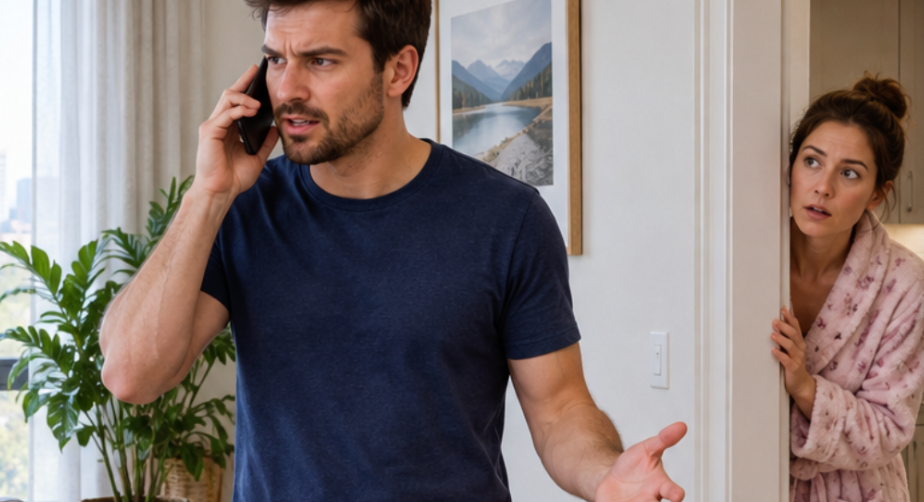
He went into the other room to get some plates and I stood by the window. From there, I heard his voice drifting in—he was on the phone with someone. I didn’t mean to eavesdrop, but his words snuck into my ears, cold and sharp as shards of ice.
“Yeah, she got it. Yeah, it’s a good amount. Listen, here’s the thing… I think we need to use this smartly. I have an idea for a franchise, but I’m short on working capital. If she invests, we could get started this year. I mean, it’s our future, right? Otherwise, she’ll just blow it on useless stuff—art, trips… She wants experiences, but I want stability. Let it be beautiful, but it should make sense.”
I froze. My chest felt tight, like someone had laced it in an invisible corset. “Our future,” “make sense”… But what about my wish to just breathe, to simply live without worrying about the budget, to finally hang that painting I’d seen in the little shop on the edge of town—does that not matter? Isn’t that a future too?
Artyom came back in smiling, set the plates down, and started talking again about Pashka and how well he did investing in that coffee shop. I nodded, feeling my smile turn into a mask. My mind kept spinning: “He didn’t say anything wrong. He just wants the money to work. He cares about us.” Yet for some reason, that care left me feeling cold.
I didn’t sleep that night. I watched the moonlight trace patterns on the ceiling and thought about Aunt Lida. She never talked about money in such calculated ways. For her, money was a tool, not the goal. She could give her last five hundred rubles to a neighbor whose fridge broke, then sit and drink tea with jam, acting like it was the most normal thing. “If you can help someone, help. The rest will follow.”
In the morning, Artyom acted like nothing had happened and suggested going to his parents’ for the weekend. “Mom wants to see you. Anyway, we should discuss plans.” I nodded, but inside I felt crushed. Plans. More plans.
On our way, I asked if we could stop by a little bookshop so I could buy myself something as a keepsake. Artyom sighed, “We’re running late. Can we do it later?” I stayed silent, but felt that familiar pang in my chest.
Artem’s parents welcomed me warmly, as always. His mom, Nina Sergeyevna, sat me down in my usual favorite spot, poured me some mint tea, and started chatting about the dacha—how the fence needs a fresh coat of paint—and then about her nephew, who’s dreaming of opening a tire shop but can’t quite gather the startup money. I nodded along, listening, while feeling the air grow dense around us.
Then, almost casually, Nina Sergeyevna said, “So, I hear you’re well-off now. Your aunt took good care of you. You know, if you ever want to invest in something reliable—we’re all here, we can advise you. The main thing is that nothing gets wasted.”
Artem sat beside me, staring into his plate without looking up. All at once, I realized: to them, I’m no longer just the future daughter-in-law. I’m a resource. Welcomed, warm, one of their own—but a resource nonetheless. That look, that tone, the concern with a hint of calculation—it was all about money, not about me.
When we stepped outside, I stopped by the car and said, “I don’t want to invest. I want to spend on myself. On what matters to me.” Artem frowned, “Are you serious? That’s foolish. You’ll regret it later.”
“What if I regret not doing what I wanted?” I asked quietly.
He was silent for a moment, then said, “You’re just emotional right now. Let’s not decide anything when you’re upset.”
We drove in silence. The streets outside the window blurred by, familiar yet suddenly foreign. As I watched them pass, it hit me: it’s not about the money. It’s about how differently we see the world. For Artem, the future is about stability, calculations, investments. For me, it’s about the freedom to choose—even if that choice looks impractical to someone else.
At home, I took out an old scrapbook: it held photos of paintings I’d want to hang, places I dreamed of visiting, a list of books I meant to read. Aunt Lida once gave me this album and said, “Write down everything you wish for. Even if it seems silly. It’s not. That’s your soul talking.”
I sat down and began to write—not a shopping list, not a business plan, just the things that warmed me from the inside. An art gallery. A trip to the north, where the nights are white. Art classes. A house with a window seat, where I could sip cocoa without thinking about its price.
Artem walked in, looked at me and the scattered pages, and sighed, “You’re at it again. Can’t you just live normally?”
“And what is ‘normal’?” I asked, meeting his eyes. “Is it what you think is right? Or whatever makes me happy?”
He sat on the edge of the bed, rubbing his face. “I just want us to be okay. I don’t want us to end up with nothing.”
“And I want us to stay true to ourselves. Even if we have money.”
He fell silent. The quiet in the room was heavy and clear at the same time. After a while, he got up, walked over to the window, and stared out at the city like he was searching for answers out there. “I don’t want to lose you,” he finally said.
“Then don’t try to change me,” I replied.
We didn’t fight. We didn’t shout. We just sat in different corners of the room, each lost in our own thoughts. Later, I packed my things and went to my aunt’s house. Not to hide, but to find my own space, my own decisions, my own life.
That evening, I lit some candles and placed my aunt’s favorite cup on the shelf. I realized inheritance is so much more than just money. It’s about having the freedom to choose. The freedom to be yourself. And if Artyom can’t accept that, then maybe it’s time for us to learn how to communicate all over again. Or to admit that our paths are heading in different directions.
But right now, as I sat in the quiet of this house, I felt something I hadn’t in a long time: I could finally breathe deeply again. And honestly, that’s the most valuable thing I have.