On Saturday morning, Mom posted a message in the family group chat:
“Starting on the first of the month, I’ll need fourteen thousand from you and Pavel every month. I’ve calculated everything.”
A photo of an open notebook appeared right after it. The page contained neat rows listing utility bills, groceries, transportation, hair appointments, pharmacy expenses, and gifts for the grandchildren. Mom had circled the final amount twice in blue ink.
I read the message again and placed my phone face down.
My mortgage statement was lying in front of me. Beside it, Pavel had left a back-to-school shopping list. Our son, Matvey, needed trousers, two shirts, sneakers, and a sports uniform. He had outgrown everything over the summer.
My husband poured himself some tea, sat across from me, and studied my face.
“Asya, what happened?”
“Mom has decided we’re supposed to give her money. Every month.”
Pavel pulled the phone toward him. He read the message, opened the notebook where we tracked our expenses, and flipped through several pages.
We paid thirty-seven thousand toward the mortgage each month. On top of that came utilities, school lunches, petrol, and Matvey’s extracurricular activities. We had enough for everyday needs, but any major purchase forced us to postpone everything else until the next payday.
“Why fourteen thousand exactly?” Pavel asked.
“She included everything she’s used to spending money on.”
Mom had acquired her one-bedroom apartment eight years earlier. Her older sister, Aunt Nina, had gifted it to her while she was still alive. Mom continued living in her own two-bedroom apartment and rented the new one to a married couple.
The rent covered a significant portion of her expenses. Mom bought good shoes, went to the hairdresser regularly, and occasionally visited a health resort. She often brought the grandchildren gifts that we ourselves only bought for special occasions.
At the time, Irina and I were busy building our own lives.
I married Pavel, gave birth to Matvey, and took out a mortgage. My sister lived with Nikita in a rented apartment. After Kira was born, Irina left her job. Since then, she had talked about going back several times, but there was always some reason to wait.
Whenever the subject of Mom’s property came up, the conversation ended the same way.
“I need the apartment for my old age,” she would say. “There’s no point dividing anything before the time comes.”
I never argued. The apartment belonged to her.
Once, we needed help ourselves. A pipe burst in our new-build apartment. The leak wasn’t discovered immediately, so the workers had to remove part of the flooring and open up the wall in the hallway.
Matvey was four at the time. He woke every morning to the grinding sound of tools. At night, he was afraid to walk to the bathroom past the buckets and the removed skirting boards.
I asked Mom to let us stay in the one-bedroom apartment for two months. I offered to negotiate with the tenants, pay for their move, and compensate them for the inconvenience.
Mom listened and shook her head.
“They’re decent people, Asya. They always pay on time. I’m not going to ask them to move out because you’re having renovations done.”
We rented a room from a woman we knew. Matvey and I slept together on a fold-out sofa, while Pavel travelled to our apartment every evening to meet with the workers. Seven weeks later, we finally moved back home.
At the time, I decided Mom had been consistent. The apartment provided her with an income, the tenants respected their agreement, and our difficulties did not give us the right to control her property.
With Irina, however, Mom had always behaved differently.
Even as a child, my sister quickly understood when to complain that she was tired or say she wasn’t feeling well. Mom would let her stay home while sending me to do whatever needed to be done.
Once, we were told to go to Grandma’s house to pick blackcurrants. Just before we left, Irina pressed a hand to her stomach and said she couldn’t go. Mom let her remain at home and put me on the bus alone.
That evening, I returned carrying two full buckets. My sister was sitting in front of the television, eating biscuits and telling a neighbour what had happened in the latest episode of a TV series.
“Is your stomach better?” I asked.
“It stopped hurting this afternoon.”
She reached for another biscuit.
Mom heard the conversation but continued sorting berries into jars.
After we both married, my sister and I saw each other less often. At family celebrations, we talked about the children, chose gifts for our parents, and exchanged photographs. I thought about our childhood grievances less and less, and eventually stopped expecting Irina to take advantage of every situation.
Then, in May, she posted a photograph in the family chat.
Kira was sitting on the windowsill in Mom’s one-bedroom apartment. Boxes, a rolled-up carpet, and pieces of a dismantled child’s bed stood against the wall.
“Finally home. Mom has helped us so much,” my sister wrote beneath the picture.
I called immediately.
“Has Irina moved into your apartment?”
“They brought the last of their things over yesterday,” Mom replied.
“What about the tenants?”
“They moved out. I warned them in advance.”
“Is Irina going to pay rent?”
Mom was silent for a moment.
“They’re going through a difficult time. Nikita’s work is irregular, Kira is growing, and almost his entire salary went toward rent. Let them live there for free and save for a deposit on their own place.”
“For how long?”
“A year. Maybe two. Don’t start interrogating them about money.”
I reminded her of our renovation.
“There were tenants living there then,” Mom said sharply. “This is different.”
I didn’t argue. The apartment still belonged to her. It was simply clear that the old rule had never applied equally to both daughters.
In June, Mom asked me to bring Irina some roller blinds that had been stored on top of her wardrobe. Pavel was at work, Matvey had gone to a friend’s house, so I drove there alone.
Kira opened the door. She was wearing a crown made of coloured paper.
“Mom, Aunt Asya is here!”
I stepped into the narrow hallway. From there, I could see the apartment’s only living room.
They had divided the space with a tall, open shelving unit. Kira’s bed and a small desk stood beside the window. Closer to the door, there was a new sofa, a round table, and a wardrobe with a mirrored door. A pale rug covered the floor.
Irina came out of the kitchen carrying two cups.
“Do you like it? We decided that, for once, we wanted to make everything look nice. We never felt like buying anything for rented apartments.”
“You managed to furnish the room in a month?”
“Not everything is new. We bought the table second-hand, and Nikita assembled the wardrobe himself. Mom gave Kira the rug.”
My sister led me toward the window.
“Kira has her own little corner now. The shelving separates her bed from the rest of the room. At least the child can have a bit of peace.”
The pink shelves were already filled with books, boxes of pencils, and toy dishes.
“Are you managing to save for the deposit?” I asked.
Irina looked away.
“We had moving expenses.”
Mom was standing in the hallway and heard the conversation. She took the roller blind from me, removed the packaging, and began reading the instructions. She said nothing in response to her daughter.
On the drive home, I opened my banking app. Our mortgage payment was due in a week. In August, we would have to buy Matvey’s school uniform.
I had no idea how much Irina had saved. But in a single month, the apartment had acquired a sofa, a wardrobe, a rug, and new furniture for Kira.
At first, I decided not to interfere. Mom had chosen to give the apartment to my sister and understood what income she was giving up.
At the end of June, however, she called and asked me to pay her utility bills.
“Everything has come at once this month,” she said. “I’ll pay you back after I receive my pension.”
I transferred the money.
After her pension arrived, Mom never mentioned the debt.
In July, she started talking about visiting a health resort.
“I’ve been advised to have the treatments again. My pension won’t cover it.”
“Could you postpone the trip until autumn?”
“I’ve already given up so much. You know I’m not receiving rent anymore.”
I told her I couldn’t pay for the trip.
After the call, I opened a cupboard and began rearranging towels. Pavel stopped in the doorway.
“Was she asking for money again?”
“For the health resort.”
“Does Irina help her?”
“Not as far as I know.”
A few days later, the message about fourteen thousand arrived.
Mom was no longer asking for occasional help. She had already included our money as a permanent item in her monthly budget.
I called her that evening.
“Where did you get this amount from?”
“I calculated everything. Utilities are going up, and so are groceries. I need a travel pass, medicine, and hair appointments. Sometimes I’d like to buy something for the grandchildren.”
“Why are Pavel and I supposed to pay for all of that?”
“Because you both work.”
“We have a mortgage and a child.”
“Matvey is already grown. Ira can’t increase her expenses right now. They need time to settle down and avoid going back to a rented apartment.”
“Are they actually saving money?”
“Stop counting their income. Help me, and I’ll deal with them myself.”
Pavel and I discussed the conversation for a long time that evening.
I felt uncomfortable refusing Mom completely. Pavel reminded me that she had given up her usual income by choice.
“She let Irina live there for free,” he said. “Now she wants us to cover the difference.”
I transferred three thousand and wrote “For July” in the payment description.
“Don’t send anything else until we reach an agreement,” Pavel asked.
The next day, Mom sent him a private message.
“Pasha, please talk to Asya. Surely you understand how difficult things are for me now.”
My husband showed me the message that evening.
Matvey was sitting at the kitchen table, assembling a model aeroplane. There were only a few weeks left before school, and boxes of new exercise books were already stacked on the windowsill.
Pavel waited until our son had gone to his room.
“Your mother is discussing our money behind your back.”
“Maybe she feels embarrassed asking me again.”
“But she isn’t embarrassed to write to me?”
I straightened the stack of exercise books and said nothing.
An hour later, Irina sent a photograph of the new sofa. Kira was lying on it with a tablet. Beside the wardrobe stood an unopened coffee machine box.
I enlarged the photograph and showed it to my husband.
“They still don’t have money for a deposit. But somehow they found money for a sofa and a coffee machine.”
Mom remained silent for a week. I assumed she had accepted the three thousand as a one-time contribution.
At the beginning of August, she invited us over for Sunday lunch.
The table was covered with pancakes, jam, and a plate of sliced apples. Irina arrived with Nikita and Kira. The children went off to draw, while Nikita sat near the television.
After the meal, Mom took out her phone and opened her banking app.
“Set up an automatic payment. Then I won’t have to remind you every month.”
She placed the phone in front of me.
The amount had already been entered. All I had to do was choose a date and confirm the transfer.
Irina slowly gathered crumbs toward the edge of her plate.
“How much have you saved for the deposit?” I asked.
My sister looked up.
“Why do you care?”
“Mom gave up the income from the apartment, and now she wants us to replace it. You were supposed to be saving for your own home. How much have you saved?”
“We only just moved. We’ve had expenses.”
“The sofa, the wardrobe, the rug, and the coffee machine?”
Nikita switched off the television. He did not enter the kitchen, but he could now hear every word.
Mom pulled the phone back toward herself.
“Stop interrogating them. They have a child. Things are hard for them.”
“We have a child and a mortgage. When the flooring in our apartment was torn up, you wouldn’t let us stay here for even two months.”
“There were tenants living here at the time. They were paying me.”
“Now Irina lives here for free, and I’m supposed to replace the lost rent.”
My sister pushed her plate away.
“We never asked you for money. Mom offered us the apartment.”
“You accepted her offer. Now she’s demanding fourteen thousand from me.”
“I’m not responsible for what she asks you.”
“Then help her yourself.”
Irina wiped her fingers on a napkin.
“You always count every little thing.”
“I’m not the one who brought calculations to the table today. Mom opened the banking app herself.”
Mom looked at me from across the table.
“No one is forcing you. I simply thought my daughter wouldn’t leave me without help.”
I was about to offer five thousand just to end the conversation. My fingers touched the phone.
Irina sat opposite me, staring at her empty plate. She had not offered to pay even the utility bills.
I pushed the phone back toward Mom.
“I’m not abandoning you. But I’m not going to support Irina’s family at our expense. There will be no automatic payment and no regular transfers.”
Pavel stood and called Matvey.
While our son put on his sneakers, I waited in the hallway.
My sister’s voice came from the kitchen.
“Well, is this what you wanted?”
Mom did not answer her.
At home, Pavel put the kettle on. I sat on the floor beside the wardrobe and leaned my back against the door.
Matvey came over and held out a green token from a board game.
“Take it. It brings good luck.”
I slipped the token into my pocket. My son ran back to his room, and a few minutes later Pavel called me to have tea.
Three days later, Irina phoned.
Her voice was calm.
“Mom has been upset because of you. You could give her at least a little money until we get back on our feet.”
“How much are you going to give her every month?”
My sister fell silent.
“We can’t afford to right now.”
“Are you at least saving for a deposit?”
“That’s none of your business.”
“So you can’t name an amount.”
“We have expenses for our child.”
“So do we.”
“It’s easy for you to talk from your own apartment.”
“We pay the bank for this apartment every month.”
Irina ended the call.
Mom did not phone for almost a month.
Several times, I opened my contact list and found her number. My finger never reached the call button. I knew how the conversation would end. I would begin making excuses for her, offer her money, and once again agree to something I didn’t want.
In September, Mom called late in the evening.
“Come over tomorrow. Alone. We need to talk.”
After work, I went to see her.
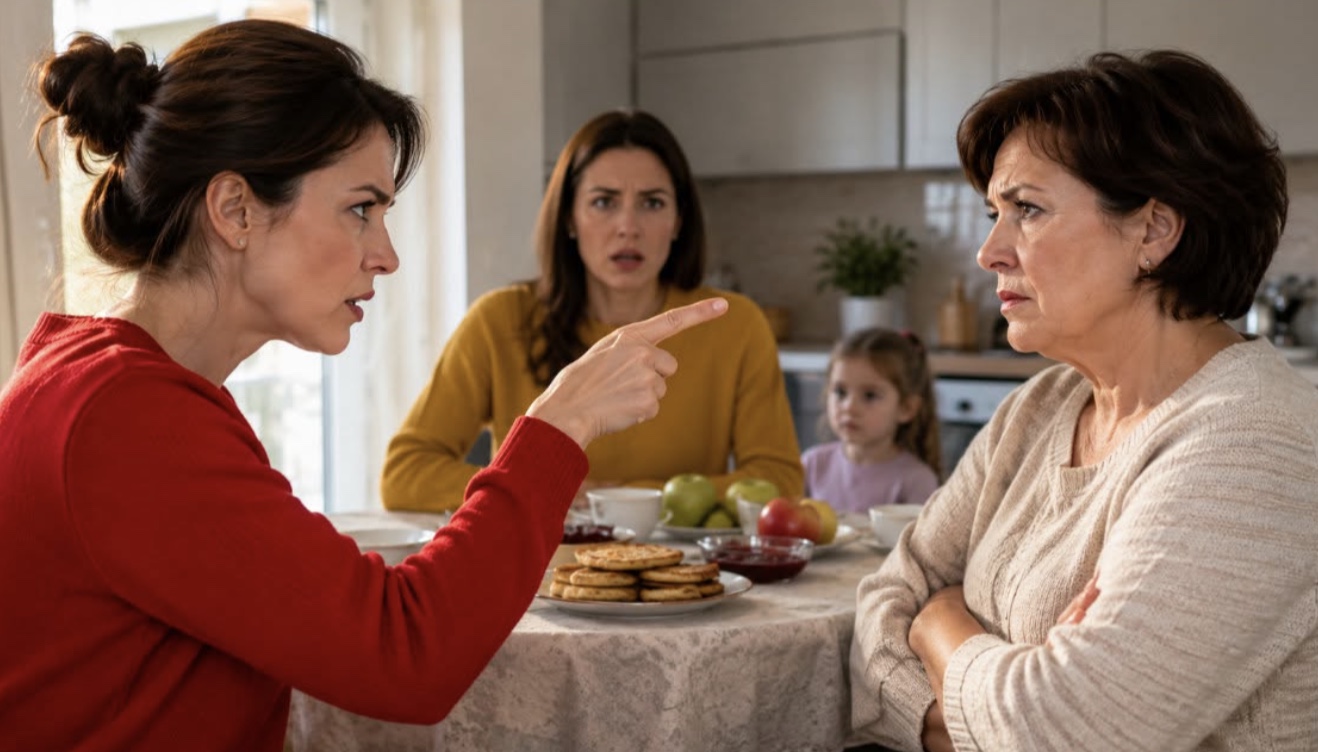
Utility bills, a sheet of paper, and a calculator lay on the kitchen table. Mom did not offer me tea. She sat opposite me and placed her hands on her knees.
“I spoke to Ira.”
I waited for her to continue.
“When I gave them the apartment, I thought I would lose the rental income for only a few months. Ira promised to get a job. Nikita was going to take on more work. They were supposed to save for a deposit and move out.”
“What changed?”
“Ira isn’t looking for work. She says Kira finds it too difficult to stay with strangers after school. Nikita wants to replace his car. He says the old one is inconvenient for visiting clients.”
Mom pushed the sheet of paper toward me. It listed her usual expenses and the amount she had previously received in rent.
“They bought a sofa, a television, and a coffee machine. They paid for several months of Kira’s activities in advance. I kept waiting for them to offer to cover at least the utility bills.”
“Did they?”
“No. Ira said that wasn’t part of the agreement.”
Mom picked up a pencil and rolled it across the table.
“Do you want me to decide for you whether to make them leave?”
“No. I’ve already decided.”
“What are you going to do?”
“I’m going to rent the apartment out again from the first of November. I’ve given Ira until the end of October.”
She took out another sheet of paper. It contained a draft rental advertisement.
“It will be difficult for her,” I said.
“It’s difficult for me too. The difference is that I tried to solve my problems with your money.”
Mom straightened the stack of bills.
“I was sure you would cope. You’ve always worked, paid everything on time, and rarely asked for anything. I’ve felt sorry for Ira since she was a child. Now she doesn’t even offer to help when she sees I’m struggling.”
I did not argue.
I moved the calculator closer to her.
“How much are you short until the first of November?”
We recalculated the cost of food, utilities, and pharmacy expenses. The result was far less than fourteen thousand.
I offered to pay one utility bill and cover her medicine. Mom agreed.
Then she stood, took two cups from the cupboard, and asked:
“Would you like some tea?”
At the end of October, she called in the morning and asked me to bring over Grandma’s blanket, which had remained at our place after a trip to the country house.
When I arrived, boxes were standing in the hallway. One was filled with children’s books, another with kitchenware. A kettle, two saucepans, and a rolled-up rug lay beside them.
Nikita was carrying things to the lift. Whenever he passed us, he stared at the floor.
Irina was fastening Kira’s jacket.
“Are you happy now?” she asked. “We’ll have to pay rent again.”
Mom stood beside the door.
“No, I’m not happy. But I can’t afford to pay for your housing anymore.”
“We were going to save.”
“You haven’t saved anything in five months.”
“We had necessary things to buy.”
“A coffee machine wasn’t one of them.”
Irina’s face turned red.
“Now you’re repeating everything Asya says.”
“I looked at my bills and your new television.”
The lift arrived, and the doors opened.
Kira stepped inside first. Irina took her daughter’s hand and followed without saying goodbye.
Nikita returned for the final box. A photograph of a coffee machine was printed on the side.
Mom closed the door and placed the keys on the hallway cabinet.
Rectangular marks from the furniture remained in the room, along with scraps of coloured paper near the window. The shelving unit had already been dismantled. Four shallow marks were visible on the floor where it had stood.
Mom took out her notebook of expenses.
She crossed out the line that read “From Asya — 14,000” with a blue pen. Beneath it, she wrote down the date the rental advertisement had been posted and the phone number of a woman who was coming to view the apartment that evening.
I carried Grandma’s blanket into the room and picked up the scraps of paper from the floor.
“Would you like some tea?” Mom asked.
“Yes.”
She took out the cups. I filled the kettle with water and pressed the button.